Obsidian Essay] The Walk - Even Commanders Debrief ft. Admiral McRaven
Personal Essay.
![Obsidian Essay] The Walk - Even Commanders Debrief ft. Admiral McRaven](https://storage.ghost.io/c/2a/9e/2a9e2b04-30f6-4166-8010-a3730d2eb719/content/images/size/w1200/2026/08/wp-GettyImages-172044198_master.jpg)
EJ's note
It was at the obelisk that my thoughts finally gathered. Walking, I have come to discover at age 14, can be the best form of meditation. Solutions pop up uninvited. Unresolved sentences complete themselves. Ideas that refused to meet at the desk get synthesized on the move. It is the subconscious mind — working the problem in the background the whole time, and then, mid-stride, it connects the dots. And there you go: the eureka moment. - EJ Elena Shin
Part I: The Grief
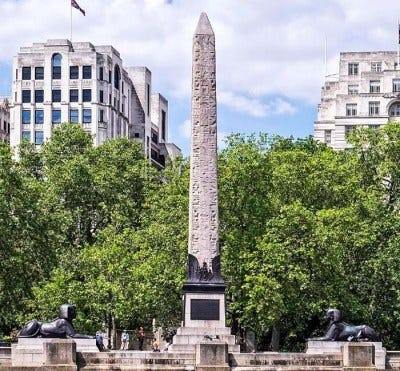
Halfway along my evening Thames walk, I stopped at the Egyptian obelisk. Carved on another continent thousands of years ago, shipped across the sea, and now standing utterly still beside the river as it goes dark. It has done its travelling. I stood at its foot for a long while, an admiral's voice in my ears, and by the time I walked on, something had finally come together.
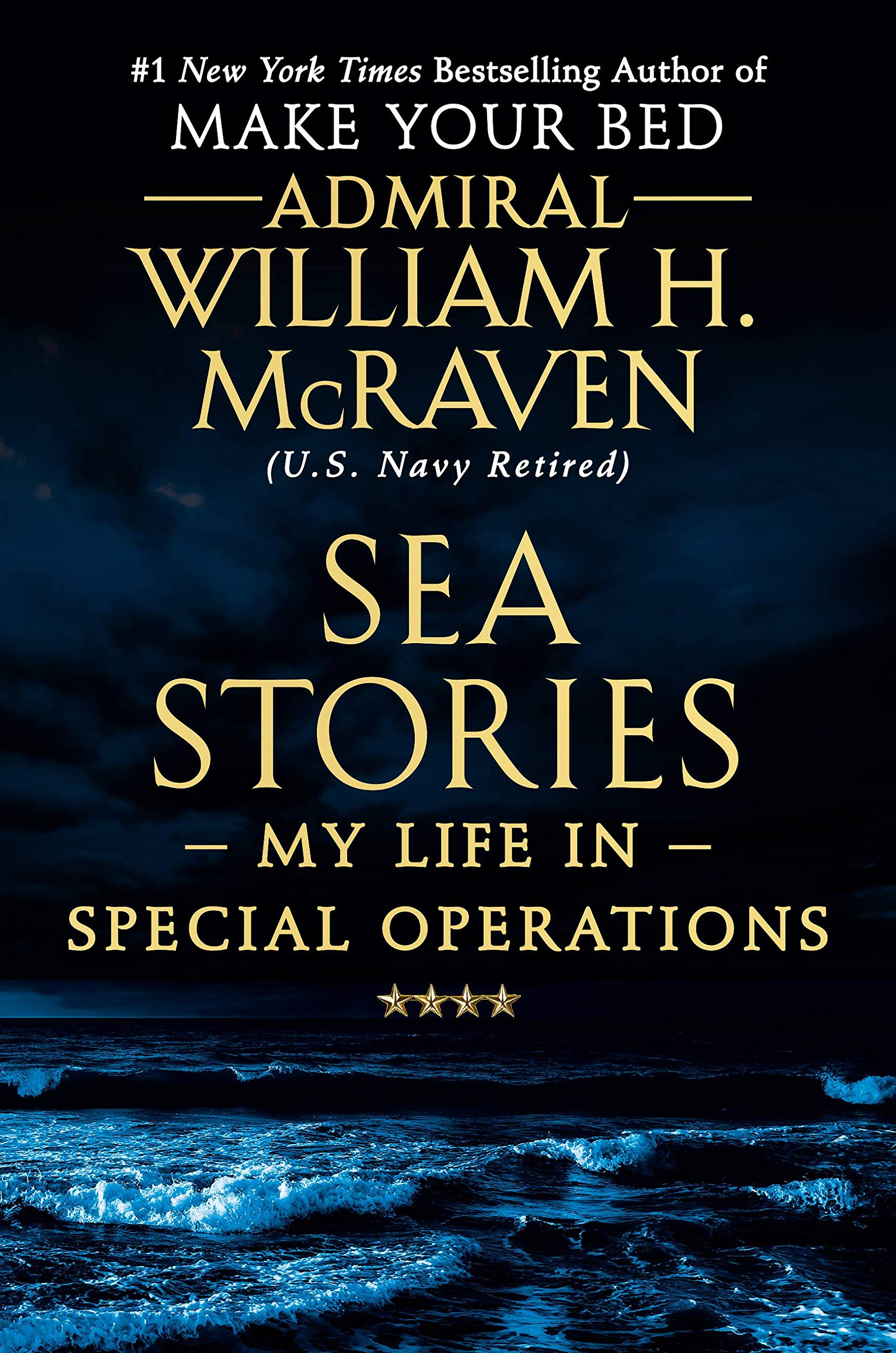
On these walks I have been listening to Admiral McRaven — Sea Stories. 37 years in the Navy SEALs, a four-star admiral, the man who planned and commanded the special operations raid that took down Osama bin Laden. When a man like that talks about how to carry things, you take him seriously. I have been trying to understand how a person carries what he carried, and I kept borrowing the discipline of soldiers to hold what cannot be held.
One thing he says stays with me. In battle, he has seen commanders make one mistake — a wrong strategy, a wrong command, or a command that was even right — and people still died. Their people. And after that, they freeze. Paralyzed by their failure, because the failure cost lives. They cannot make another big decision. The fear takes the command from them.
His answer: you keep moving forward. You keep making the tough decisions, one after the other, even after the failure. That is the job.
But then he admits the other half, the half I did not expect from an admiral. To do that job, he bottled up his emotions. Put them aside — the mission demanded it. And eventually, they seep out. The bottle does not hold. And when it opens, you need an expert's help to process what you postponed. No shame in it. The hardest man from the hardest culture, prescribing the emotional release.
Walking with his voice in my ears, I kept seeing soldiers in my mind's eye.
Delta forces...Navy SEALs in training. The camaraderie. The battlefield. And the grief — the grief of soldiers who lose a battlefield companion. The one they trained with, ate with, carried. I should admit I have never worn a uniform. And yet my inner dialogue are in military mode — the imagery, the instincts, the references I understand without ever being taught all run naval. Perhaps it is ancestral memory in the DNA that recognized these things before I did. And perhaps that is why the grief chose this language too. Losing the one who grew up beside you is losing a comrade — the one you trained with from the very beginning, your other half on this harsh planet earth.
It is this: a mission-led life only knows one way to grieve — in honor. And like the soldiers, I carry the guilt that comes with surviving. I flew across the world for my little brother. I held his hand. I loved him. And still he passed away. Some part of me believes I let him down. And the echoes of emotions surfacing weeks and weeks later in quiet moments...
Part II: The Mission
The mission-led life...The mission requires your presence and focus, 24/7. That is the manual. It is like living in the navy ship out in the ocean. The mission-led life is always transitory: one place to another, one posting to the next, your life measured in six-month increments of transition. The mission demands your deployment and dispatch without your knowing where, or when. You see the battlefields. You come out. You move on to the next one. You make tough decisions and you carry on, because you believe in the mission.
It does not have to be a warship to run like one. Inside a massive global enterprise from seven in the morning until midnight — or whatever, and whenever, weekends included — because you are covering the world: markets and news moving from the U.S. to Asia to the Middle East to Europe, and the sun never sets on any of it. Around the clock, around the globe. Surrounded by the sharpest minds, ex-militants, professional athletes — and fiercely competitive ones. You give all in. Every single ounce of your body's energy. The mission becomes the marriage. There is no room for another.
And the road...Constant deployment means constant motion — you hop on a plane, you hop on a train, business meetings on demand, always on a mission. Weekends at home stopped existing early on; for the better part of a decade, travelling cross-continent, there simply were none. It sounds glamorous from the outside. But no amount of five-star hotels compares to your own bedsheets and pillows at home. And anyone who has been on that journey knows: jet lag and time zone differences are real things. They take a toll on your body, your cognitive power, and your routines.
Then the pandemic came, and the world changed its mind.
People at the very center of the mission stepped off their ships. Today, I saw the US press secretary at the White House, Karoline Leavitt, choose life over the mission, for now, with her second baby, because she realized what the manual never admits: one cannot do it all at once. The mission requires your presence and focus, 24/7. So does a child. So does a dying loved one. So does a life. Something always goes unheld.
The mission-led life gives a great deal. Discipline, range, the ability to function through anything. And it also takes the ordinary continuities — the same city for a decade, the roots put down, the people held onto. Always in between. Arriving, already waiting to leave. Revolving-door community.
Here is what the culture teaches in that setting, and what I once believed. That emotions are a luxury one cannot afford — a sign of weakness. You get your work done. You are task-oriented. Like a racehorse. In competitive rooms, feelings are expensive. Output becomes the only currency you trust. The bottle seals so well you forget it is a bottle. You believe it is your personality.
But the bottle does what the admiral said it would.
The grief you postpone comes out on ordinary mornings — mid-run, mid-deadline, in poems written at dawn you do not remember deciding to write. It is the seep he described. The release valve, finally doing what release valves do.
Slowly but surely, I am learning the civilian way of life — after the pandemic, for the first time in two decades. No more constant deployment. No more life on the road. It is bizarre at first. You feel as if you have a kind of PTSD, because life moves at a different pace. Once a racehorse, a racehorse forever — and when the rhythm changes, you do feel disoriented for a while. But you adapt.
And here is what hindsight keeps showing me: the training was world-class, and it is useless here. The navy-ship life prepared me for everything except settlement. The domestic side — a home kept, a meal cooked, the everyday maintenance of an everyday life — none of it ever made the manual, because none of it ever served the mission. My reference = Top Gun: the best aviator in the fleet, and yet promoted to highest rank. Brilliant at the mission; a beginner at the life around it. You arrive decorated, and you start at the bottom of a new syllabus — learning to put roots down, learning the ordinary.
Part III: Seaons of Life
They call it Cleopatra's Needle, though it is far older than her. Red granite from the quarries of Aswan, raised at Heliopolis around 1450 BC on the orders of Thutmose III. Two hundred years later, Ramesses II added his own inscriptions — columns commemorating his military victories, flanking the original text. Even the monument carries a soldier's record. Later the Romans moved it to Alexandria, to the Caesareum, the temple Cleopatra built in honour of Antony — or Caesar. And at some point, it toppled. And that fall saved it. Lying buried in the sand for centuries, its hieroglyphs were protected from the weathering that wore down everything left standing. What was buried was not erased. It was preserved — waiting to be raised, and read again.
And there, at the foot of the obelisk, the two lessons became one. Keep making decisions after failure. Keep feeling after loss. The same instruction. Both are refusals to freeze. Both take more strength than the freezing does. And both are done in company — no commander debriefs alone, and no griever should either.
And there is a third lesson, one that only getting older has taught me. There are seasons of life. When you are ready, the universe offers the exact training room — the platform where your vision gets to unfold. Until then, you are in a war room with yourself, drafting a million excuses instead of taking action. The discipline is knowing which room you are in. As I get older, I have started to appreciate timing and terrain. When you run a long endurance race on trails like UTMB, you do not attack the mountain on arrival. You acclimate. Altitude first, then pace. Settlement is not a demotion. It is acclimatization.
Years ago, an MD I respected — an executive at one of the largest global financial firms in the world, a man who ran on two hours of sleep, a role model and sponsor to many — wrote publicly about the death of his brother and his grief on 'Medium'. The analyst brain of my twenties judged him for it. I thought showing emotion in public was weakness. I thought he was going too far. 15 years later, I can finally fathom what might have been going through his head. That kind of vulnerability is only possible with the right level of maturity and self-assurance. And probably it was in the writing itself, in the publishing of it, that he found his solace. He likely never expected anyone to read it, public as it was.
Just like what I am doing now.
So this is what I am taking off the river. Keep command moving after failure, and hold ceremony after loss. Respect the season, and read the terrain. A leader who never grieves is not tougher — only more sealed, and closer to the seep. And a leader who cannot live the ordinary has not finished training; she has only finished one deployment. The racehorse was never just a racehorse. She was a commander who forgot that even commanders debrief. And the composure built over decades was never the wall against feeling.
It was the vessel for carrying it.
If you have time...
![Obsidian Odyssey] Light. Brain. Heart.](https://storage.ghost.io/c/2a/9e/2a9e2b04-30f6-4166-8010-a3730d2eb719/content/images/size/w720/2026/10/nobel-prize-2026.webp)
![Obsidian Essay] Consciousness and the Universal Law...Quantum Computer](https://images.unsplash.com/photo-1614926037384-4159c33e196b?crop=entropy&cs=tinysrgb&fit=max&fm=jpg&ixid=M3wxMTc3M3wwfDF8c2VhcmNofDIzfHxnYWxheHl8ZW58MHx8fHwxNzg4NjEyNTA5fDA&ixlib=rb-4.1.0&q=80&w=720)
![Book] Consciousness | The Hitchhiker's Guide to the Galaxy (1979) by Douglas Adams: A Space Kid's Introduction](https://storage.ghost.io/c/2a/9e/2a9e2b04-30f6-4166-8010-a3730d2eb719/content/images/size/w720/2026/06/images.jpg)
Comments ()