Obsidian Essay | Leadership] The Three Lives of Jackie: Bouvier, Kennedy, Onassis — and What She Would Want Us to Know
Personal Essay.
![Obsidian Essay | Leadership] The Three Lives of Jackie: Bouvier, Kennedy, Onassis — and What She Would Want Us to Know](https://storage.ghost.io/c/2a/9e/2a9e2b04-30f6-4166-8010-a3730d2eb719/content/images/size/w1200/2026/08/230508_r42270.webp)
EJ's note
Earlier, I wrote:
I am always curious about the wives of politicians, heads of state and diplomats — women who knew exactly what they were signing up for, and who carried the duty silently, without ever making a scene. Personal life sacrificed, no complaints, all in the name of family honour and their husbands' political careers.
If only we knew.
This essay is my attempt to know.
One small serendipity before we begin: I published that Kennedy essay on 28 July — which, I only later realised, is Jackie's birthday (if you know the story, it is quite uncanny given Marilyn Monroe's 100th anniversary is being celebrated at the National Portrait Gallery in London now at the time of posting). She was born Jacqueline Lee Bouvier on 28 July 1929. I will take the coincidence as permission.
Most women in history are remembered by one name. Jackie is remembered by three — Bouvier, Kennedy, Onassis — and we usually say them as if they were one continuous person. They were not. They were three distinct lives, each one built after the previous one was taken away. That, to me, is the leadership story: not the pillbox hats, not Camelot, but the repeated act of authorship — a woman who was handed three endings and wrote three beginnings.
She never wrote a memoir. The woman who authored Camelot for her husband declined, for thirty years, to author anything for herself — and burned some of her own papers before she died, so the record would stay exactly as she had composed it. I respect the silence. But I have spent this summer with her — the biographies, the oral histories, the photographs, the books she edited — and at some point the research stopped feeling like reading and started feeling like listening. I wondered about what she would have wanted to say - to fellow modern ladies and gentlemen. She kept her silence; I am simply going to say out loud what her life, examined closely, has been saying all along.
So this is her life told the way she actually lived it: in three acts, under three names — and then a fourth act, the one with no famous name attached, which I have come to believe was the truest of them all. It is beautiful to see the arc of one's hero's journey. Homecoming.
Enjoy!
I. Bouvier: The Girl on the Horse (1929–1953)
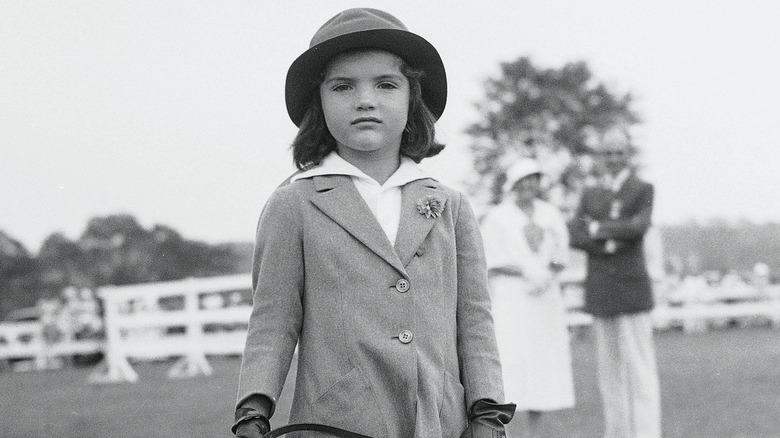
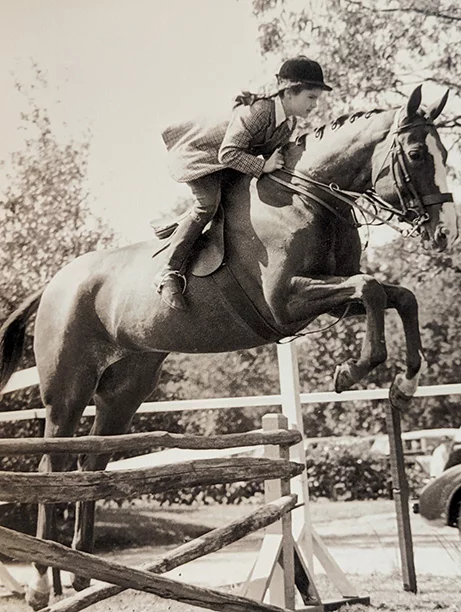
If you want to understand Jackie, start with a girl on a horse.
Her mother, Janet, was an accomplished competitive equestrienne — a serious one, with trophies and a reputation on the circuit — and she trained Jackie vigorously, the way exacting mothers pass down the one language they are fluent in. Jackie was winning medals in national competition while she was still a child. Riding was the first thing she was ever publicly excellent at, and I don't think it is a coincidence that it was also the first thing that was entirely hers.
Because at ten, her world came apart. Her parents went through a massive, public divorce — covered in the papers, whispered about in the clubs — at a time when divorce was a hush-hush, shameful business for a lady of society. Her father, "Black Jack" Bouvier, was the great love of her girlhood; she was a daddy's girl through and through. And she also had a front-row seat to what he actually was: a man with no real control over his money, his women, or his drink. Charming, adored, and unable to govern his own appetites. The marriage fell apart on those rocks, and Jackie watched it happen at an age when children see everything and can fix nothing.
Two things came out of that divorce, and I think they shaped everything.
The first is what she learned from her mother. Janet did the unthinkable for her time — she divorced him anyway, took the scandal on the chin, and then remarried, well, into the Auchincloss fortune. The Standard Oil business man. In her world, divorce was a taboo but remarriage, apparently, was not a dishonour. Jackie's first model of womanhood was a mother who made a shameful, decisive, self-preserving move in full view of society and lived to prosper from it. I suspect that is exactly where Jackie's later grit came from — the capacity to make a move the whole world will condemn, and make it anyway. She would need it twice.
The second is where she went to hide. Now shuttling between two households — a new stepfather, his children, a blended family she had to find her place in — she had her younger sister Lee as her confidante and only true ally, though anyone with a sister knows that an alliance like that always carries a thread of rivalry in it. And beyond Lee, she retreated into the two things a girl in her position could fully control: books and horses. A novel doesn't have a custody schedule. A riding ring has a fence around it, and inside the fence you are judged on form, preparation and nerve — nothing else. It looked like accomplishment. It was shelter. And it trained the skill that would define her whole life: she learned to read a room before she entered it, to know which subjects were safe at which table. People would later call it mystique. It was survival, refined.
Two details from her girlhood.
1) The yearbook: At Miss Porter's, the graduating girls declared their life's ambition, and Jackie wrote that hers was not to be a housewife. Everyone took it as wit. I read it as the most sincere sentence she published in the first forty years of her life.
2) The debut: She insisted on coming out to society later than her mother wished, on her own timing — and when she finally did, she wore a simple gown in a season of extravagance, and still made headline news. The columnists crowned her Debutante of the Year. There was simply an aura about her, and I think she noticed early what it was made of: the girl who withholds is more interesting than the girl who displays. She never forgot it.
Then, Paris. She went for her junior year abroad, at twenty — the Sorbonne, a French family's cold apartment, lectures in a language she had to live in rather than translate. She later said it was the happiest year of her life, and she said something else that I find far more revealing: that in Paris, for the first time, she didn't have to hide her hunger for knowledge — the appetite she had spent her whole American girlhood concealing. Because that is what her society expected of its daughters: to be decorative, smiling, agreeable — pouring the tea, praising the men, keeping the conversation light. A girl who read too seriously was a liability on the marriage market. In Paris, intelligence in a woman was not a defect to be managed. It was the whole point of her.
And there was the heritage of it, too. She had grown up believing — because her grandfather had written a genealogy saying so — that the Bouviers descended from French aristocracy. Modern researchers have since shown the lineage was largely invented, but Jackie, at twenty, believed it wholly, and so Paris wasn't a foreign country to her. It was a homecoming to a nobility she thought was hers. I find that almost tender: every family needs its Camelot, and hers simply wrote its own first. Perhaps that is where she learned the craft.
What matters is what she did with that year. She didn't leave it in Paris. She carried it home like contraband — the standards, the taste, the conviction that beauty and intellect were serious matters of state — and years later she installed all of it in the White House itself: the restoration, the curatorship, the French chef, the Casals concerts, the Malraux dinners, the Mona Lisa crossing the Atlantic on the strength of her French. Her whole strategy of image-making, the iconography we still live with, was Paris, repatriated. One year abroad, deployed for a lifetime. As someone shaped by my own years across three countries, I take this personally: a formative year abroad is never really about the year. It is about what you take home with you.
She wrote, at twenty-one, in her prize-winning Vogue essay, that she wished to be a sort of "Overall Art Director of the Twentieth Century." Then she declined the prize and came home, because good girls came home. She even got engaged — to a proper, suitable stockbroker — and then broke it off, reportedly because she found him short on ambition and could see the whole marriage from the doorway: comfortable, limited, and boring. The girl who didn't want to be a housewife was not going to be a bored one.
II. Kennedy: The Bargain and the House (1953–1963)
Here is the part we flatten at our peril: she knew what she was marrying.
Jack was twelve years her senior — she was twenty-four to his thirty-six, young enough to be treated like a kid at his family's table (that is what Jack called her in fact, as a dear term) — a war hero, a senator, the most charming man in any room. And Jackie had grown up as the daughter of exactly such a man. Before the wedding, she reportedly confided her fear to a priest: that she was marrying her father over again — rich, famous, magnetic, and constitutionally unfaithful. She was told, in the manner of the age, that love and duty would settle it. She married him anyway.
Before we judge that from the comfort of our century, we owe her generation some honesty about the arithmetic. In her world, in 1953, this was the understood contract of marriage to a powerful man: his drifting would be tolerated and the wife's dignity preserved, so long as both stayed private. It was not a betrayal of the bargain — it was the bargain. The wives of presidents, ambassadors and magnates all kept the same protocol: no scenes, no scandal, no tears at the table. Jackie knew about Jack's affairs from the beginning of the marriage to the end of it, and she held the protocol the whole way: he spared her public humiliation; she kept the house. That was the treaty. I don't ask you to admire it. I ask you to see that a woman can look at her circumstances with perfect clarity and still choose to endure them — and that endurance with open eyes is not weakness. It is iron.
The match had the family's fingerprints on it. Joe Kennedy Sr. encouraged it warmly, and it isn't hard to see why: the Irish Catholic dynasty, still snubbed by the old Protestant establishment, wanted exactly what Jackie carried — the polish, the languages, the supposed noble blood. Whatever it takes, remember, was the family creed. And into that family she now had to prove herself: the compound at Hyannis filling beyond counting at the holidays, the freezing Thanksgiving sails, touch football on the lawn, dinner debates run like hearings, scores kept always. Loud where she was quiet. Collective where she was solitary. She would arrive with a novel in her bag, which tells you everything about the fit. They found her too upper-class, too precious, a touch pretentious — and she did adjust, dialled herself down to meet them where they were, learned the games, took the teasing. But she kept her spine intact. She was, after all, a Bouvier — and that is what I adore about her. She knew where she came from. She knew, unmistakably, who she was. You can adapt your manners without surrendering your posture.
And the women of that family had their own ledger. Their worth was measured by the number of offspring and heirs produced. Rose (Jackie's mother-in-law) had borne nine children, Ethel (her sister-in-law, wife of RFK a.k.a. Bobby), went on to have eleven children; in the Kennedy book, children were the currency and sons were the fortune, and a wife's standing was measured in heirs. Against that ledger, Jackie's account read: a miscarriage, a daughter — Arabella — born still in 1956, two living children, and a son, Patrick, born in August 1963, who lived two days. In a family that counted, she knew what her count was said to be. What it cost her, she kept, as she kept everything, off the books.
One entry from those private books has to be spoken, because I think it is the moment the terms of her life became clear to her. When they were still in their early marriages, three years in, Arabella was delivered stillborn, Jack was on a sailing holiday in the Mediterranean — and it was days before he came back, reportedly despite a friend on board urging him to turn the boat around. She woke from the anaesthetic to her sister's face, not her husband's. She was twenty-seven. I don't raise it for pity — she detested pity. I raise it as coordinates: that hospital room is where a woman learns, fully and finally, that she will have to be the author of her own dignity, because no one else has been assigned to the post.
And yet — fairness is also a discipline — there was something real between them, and the caricatures always miss it. They were both readers. Jack read history and poetry; he could drift out of a loud room mid-sentence, gone somewhere inside a book he'd read years before. Jackie read literature — never much cared for poems — and recognised, across the dinner table, another person who had learned young to live in his own head. In their letters and in the accounts of people who knew them privately, you can see it: underneath the presidency and the protocol, two people who bonded like teenage souls — teasing, competitive, tender in ways they were both too trained to show in public.
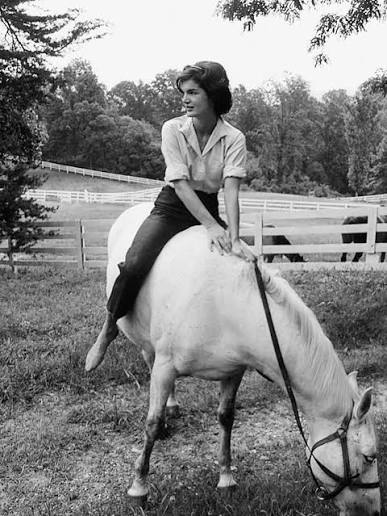
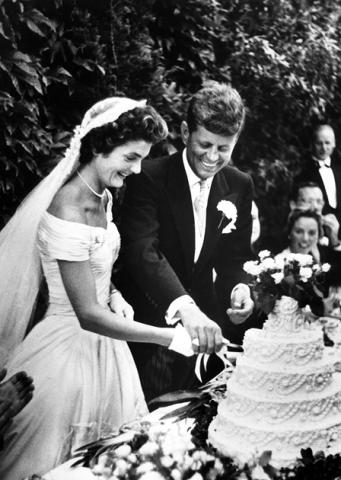
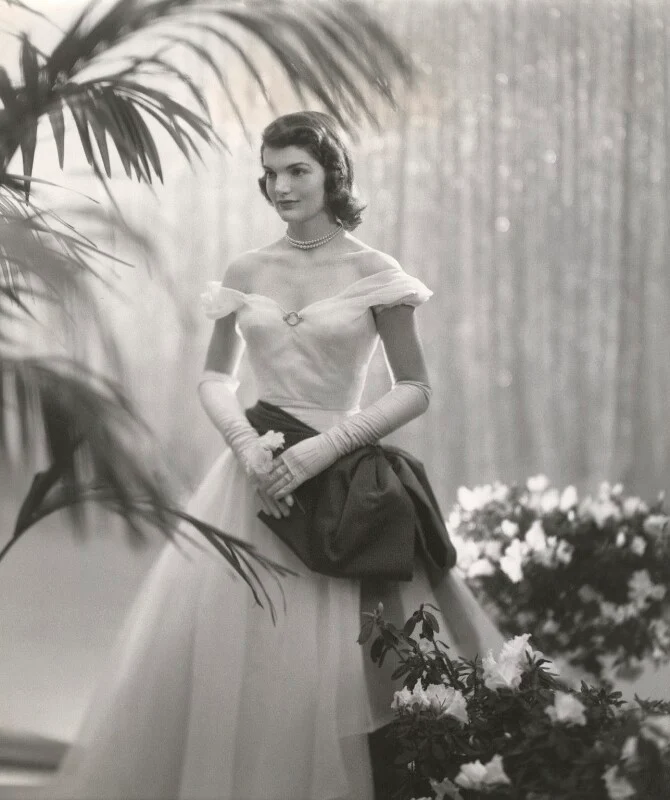
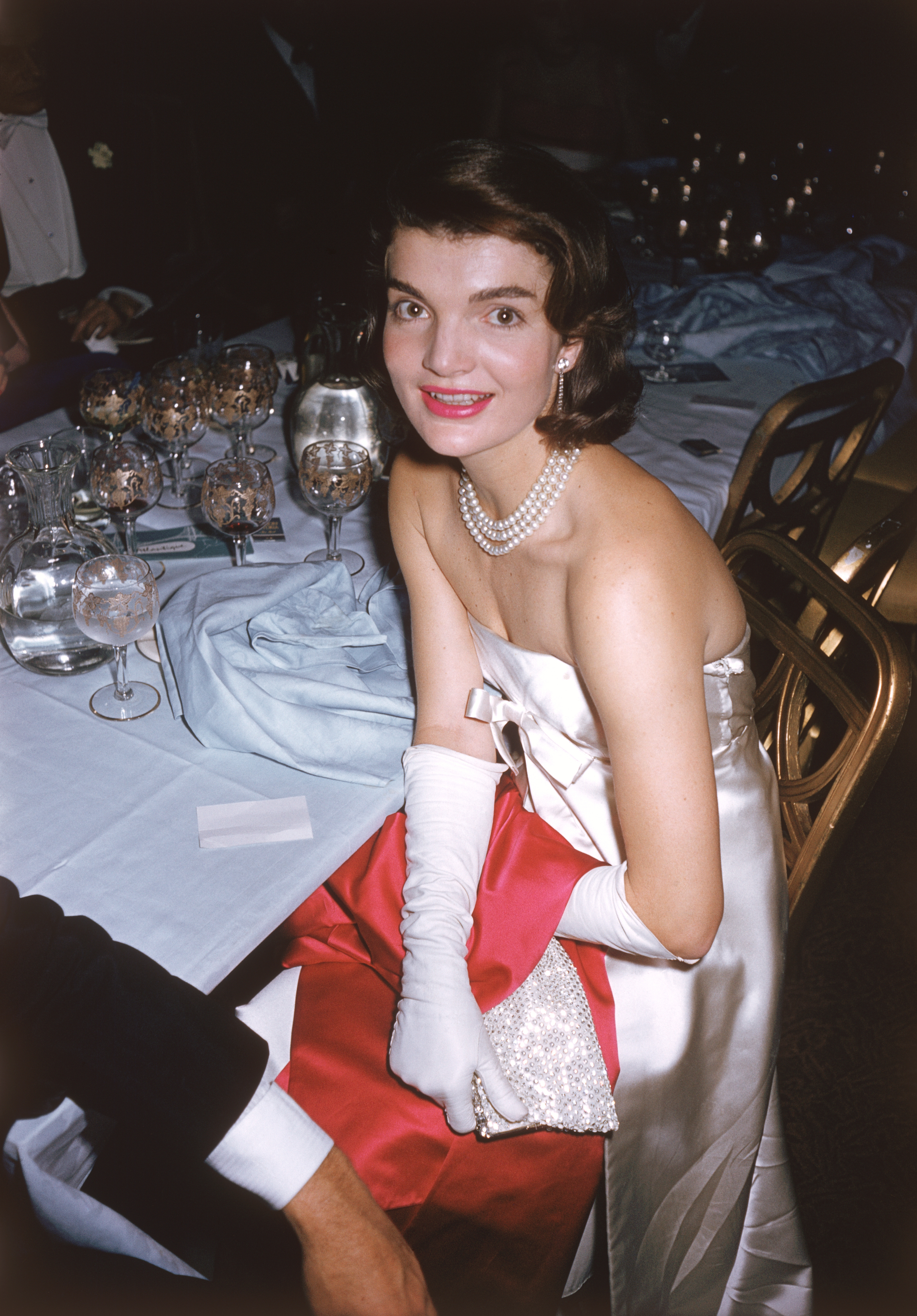
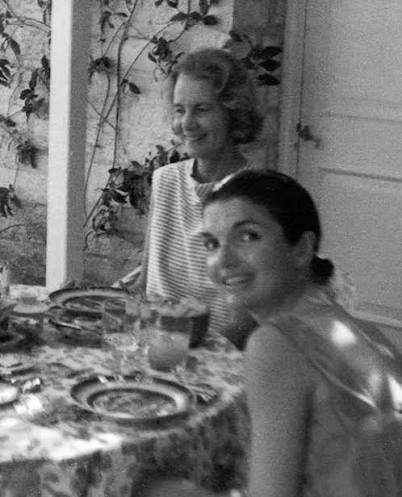

Because Jack's interior had its own cold weather. He once confessed that he could not remember his mother ever telling him she loved him — and I think he spent his whole life chasing that missing warmth in every wrong place he could find it. He was the second son, the spare; the presidency had been designed for his older brother, who flew off to war and never came back, and the whole weight of his father's ambition dropped onto Jack like an inheritance nobody asked him about — the same story, almost exactly, as George VI, the Queen Elizabeth II's father, another second son shoved onto a stage built for someone else. He carried a ruined back (the surgeries in the mid-fifties nearly killed him), lived in pain and illness the country never knew, and under all that pressure he needed escape — constant escape. The boats, the crowds, the women. I don't say it to excuse him. I say it because you cannot understand her marriage without understanding that she was married to a wound with a beautiful smile — and that some part of her, the daddy's girl who had already loved one such man, knew the species by heart.
There was envy in it too, and this detail I find so human: Jack, for all his charm, had to work at polish — the Irish family climbing into rooms that didn't want them — while Jackie's elegance was simply native to her. When Paris lost its mind for her in 1961 and he had to introduce himself as "the man who accompanied Jacqueline Kennedy to Paris," it lands as gallantry. I suspect it was also a husband conceding, through his teeth, that his wife outclassed him without trying. Imagine holding that dynamic steady, in public, for ten years, while also holding his secrets, his health, his affairs, and your own grief. Secrecy, secrecy, secrecy. She became a vault. (Note to readers: this is the story of our grandparents' generation - don't mistake it for the destination. You don't.)
And I wondered, reading all this, how she handled the rougher edges — because more than one account has claimed the Kennedy men could get physical, that the aggression in that family wasn't only verbal. I have no way to know what she absorbed behind closed doors, and she made sure we never would. But she must have felt trapped at times — inside the marriage, and more than that, inside the public marriage: first as a senator's wife, then as First Lady, the object of everyone's jealousy while being the very thing she had sworn at seventeen she'd never be. A housewife. And yet — here is the twist — she took the job gladly, because her ambition allowed it. A housewife to a senator, then to a President of the United States, is no ordinary role. It was royal. And royal, frankly, was fitting for her — the girl raised on an invented French aristocracy, finally handed a real court. I sometimes wonder if that is where the Camelot saga was truly conceived: not in the week after Dallas, but years earlier, in a woman who had understood that she wasn't keeping a house. She was keeping a kingdom.
And then the autumn of 1963. Patrick, her baby son, died in August, just two days after being born — she was still convalescing, still grieving her third lost child — and fifteen weeks later she was in the car in Dallas. I genuinely cannot fathom it: a woman in a weakened body, hollowed by a fresh loss, who then watches her husband die beside her — and who, within hours and days, stands up anyway. Refuses to change out of the blood-stained suit — let them see what they have done. Stands beside Johnson for the oath because the photograph of continuity matters more than her right to collapse. Researches Lincoln's funeral at night and composes, in her worst week on earth, the images a nation would grieve by — the caisson, the riderless horse, the eternal flame she lit herself. Holding space for her children, for a country, and somewhere underneath it all for herself — for a man she had every reason to miss and, I presume, every reason to hate, and loved anyway. What a woman of steel and backbone. Whatever leadership is, it includes this: composing the record in the very hours your own life is being destroyed, because you understand the record is where everyone else will live.
And I keep circling her late nights. As a mother — two small children, a nation watching, a family counting — what must have gone through her head in the dark? The fortitude she carried on those shoulders, the weight of holding everyone's grief in order while her own waited at the back of the queue. Immense pressure is too small a phrase. I can only imagine. That is the honest sentence: I can only imagine.
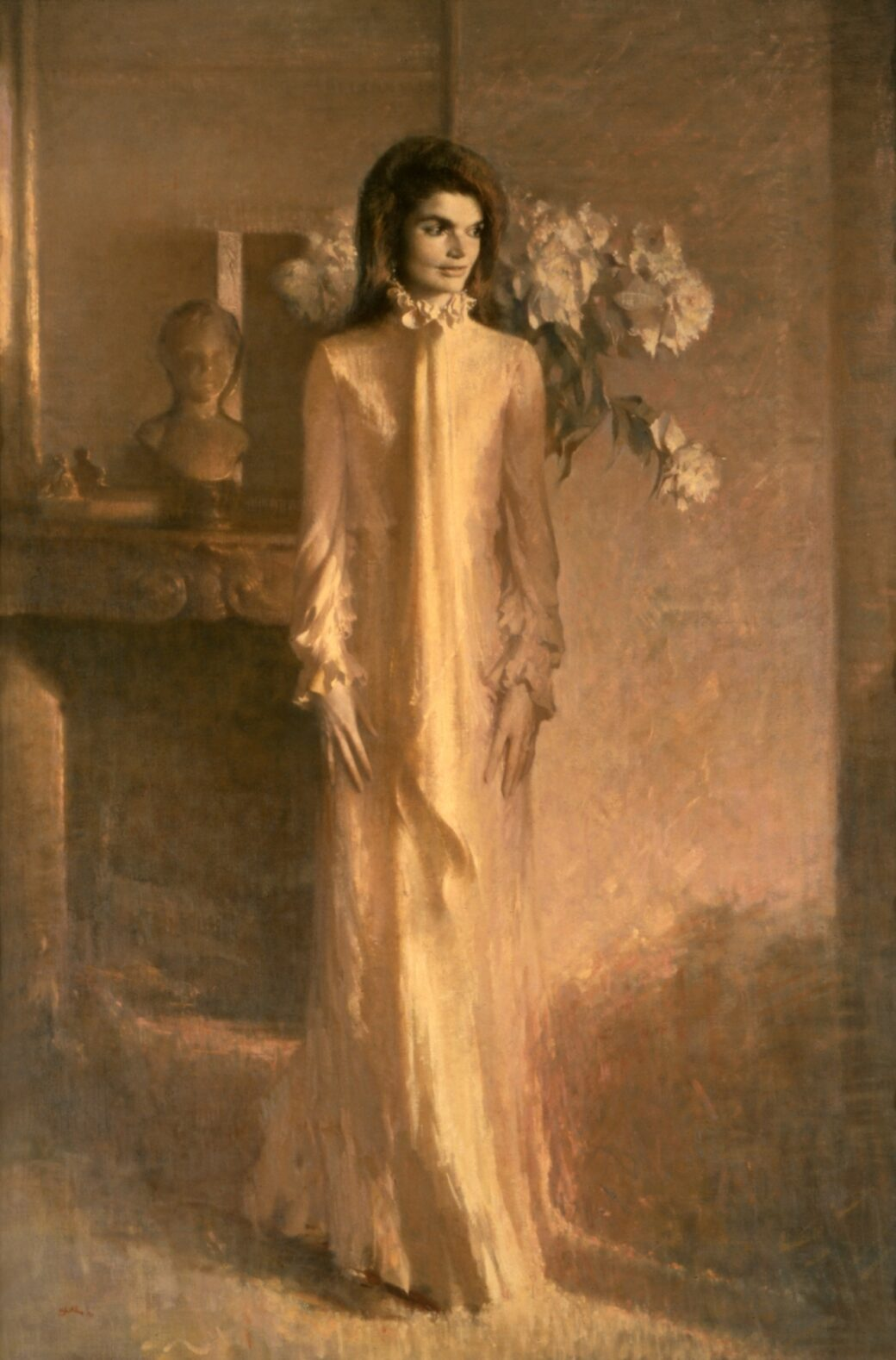
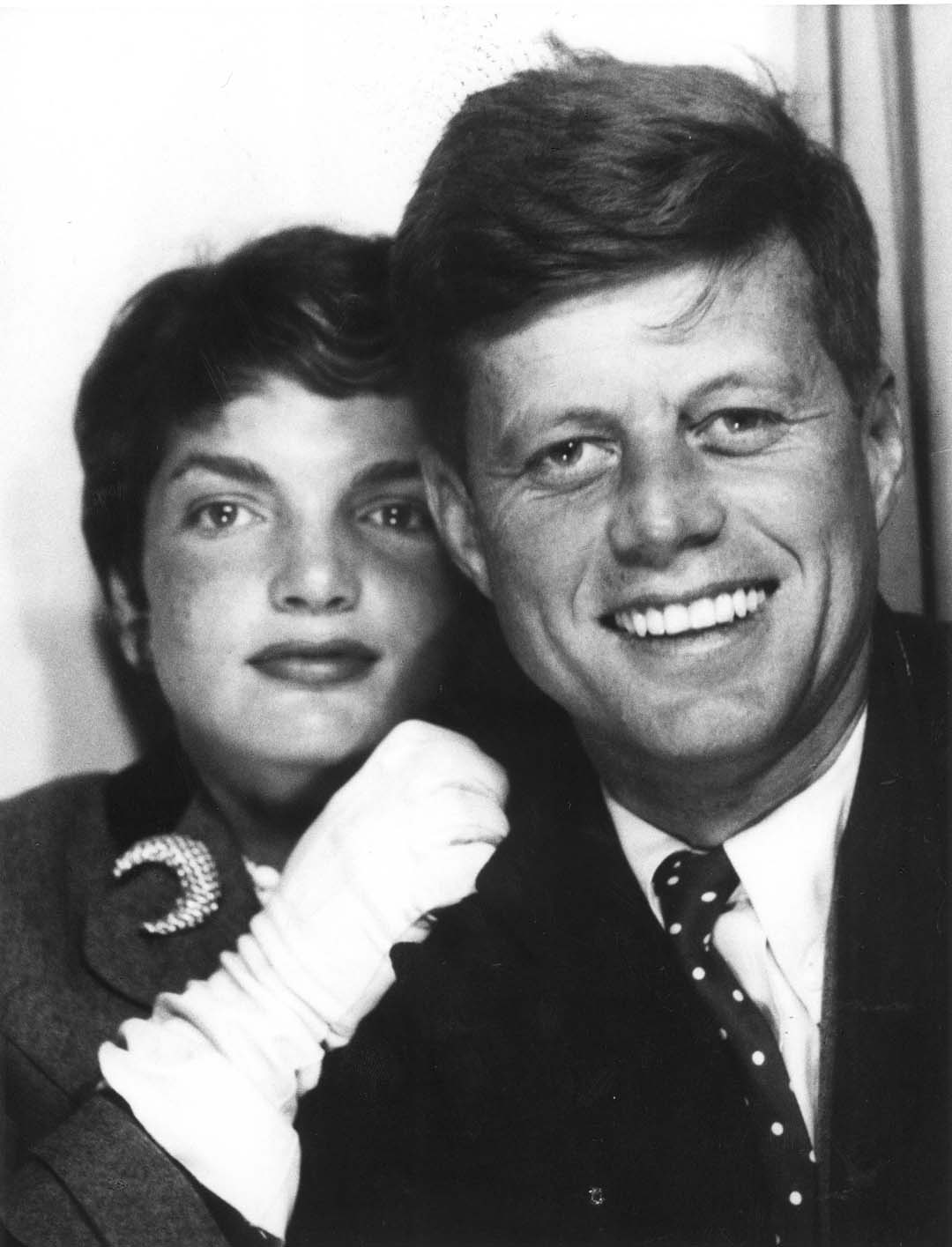
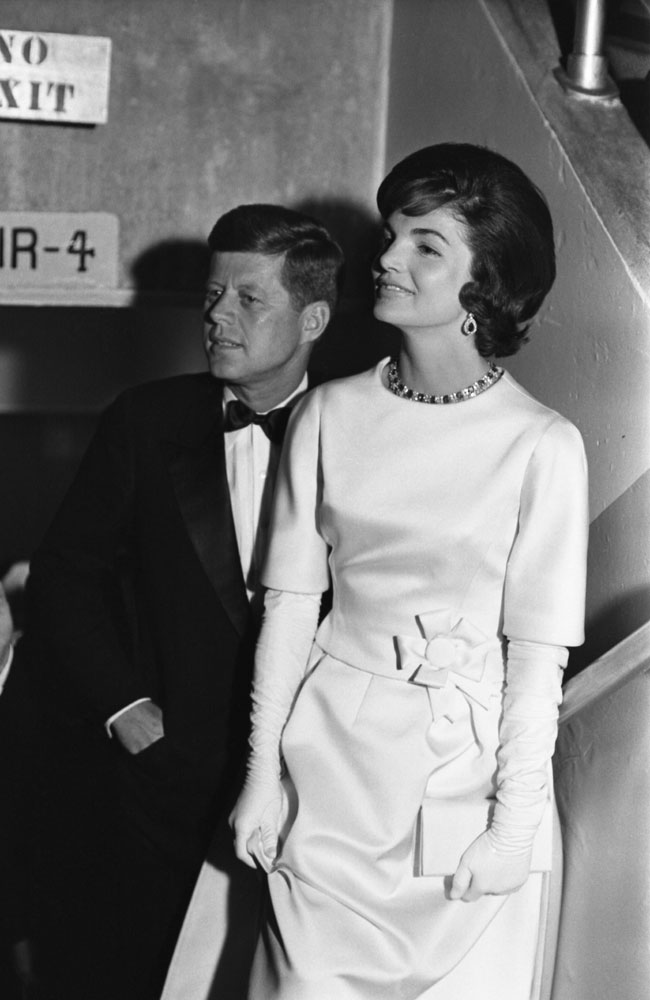
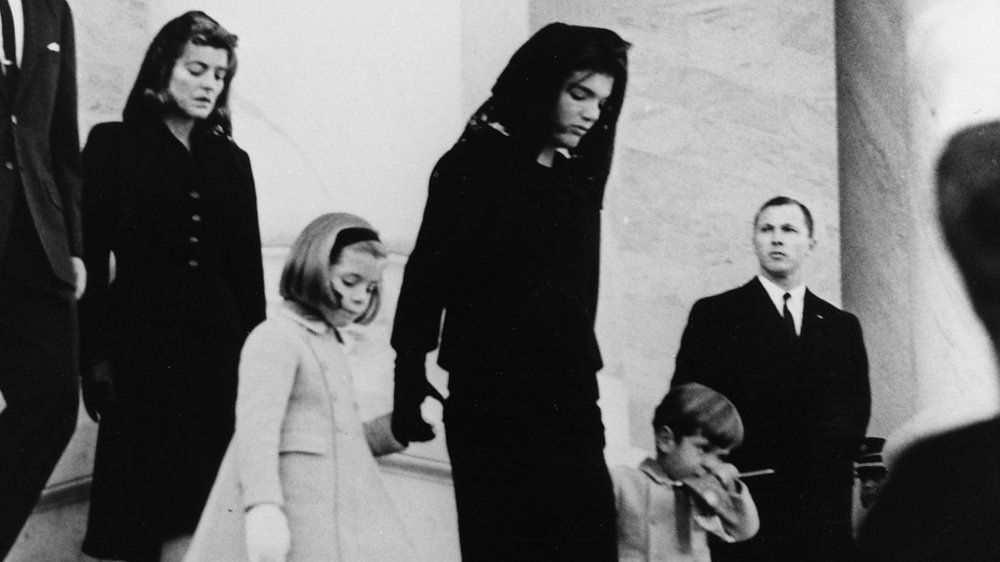
III. Onassis: The Exile (1968–1975)
Five years later, Bobby was murdered too, and with him went her last belief that America could be trusted with her children. They were killing Kennedys; her babies were Kennedys. Four months after that, she married Aristotle Onassis — more than twenty years her senior, an island unto himself in every sense: his own sea, his own security, his own laws — and the world that had canonised her un-crowned her in a single news cycle.
I want to be honest about this chapter rather than noble about it, because I think she'd prefer honesty. Yes, it was an extraction — protection for her children, a perimeter of privacy that money could actually buy. It was also, plainly, about the money itself: the lifestyle, the staff, the couture, the freedom from ever having to ask. And there is a thornier detail the tidy versions leave out: Onassis had first been involved with her sister. Lee found him first; Jackie married him. The confidante of her childhood, the only ally of the divorce years — and Jackie took the prize off her table. Thick-skinned? Scary business? I have no comment. I am not defending her; I am trying to understand her inner life, and what I see is a woman who had just watched a second Kennedy shot down and had stopped, permanently, apologising for her own survival arrangements. Her mother had taught her, at ten, that a woman may make the scandalous, self-preserving move in full view of society and live to prosper from it. Remarriage was not the dishonour; helplessness was. She had learned the lesson. She applied it.
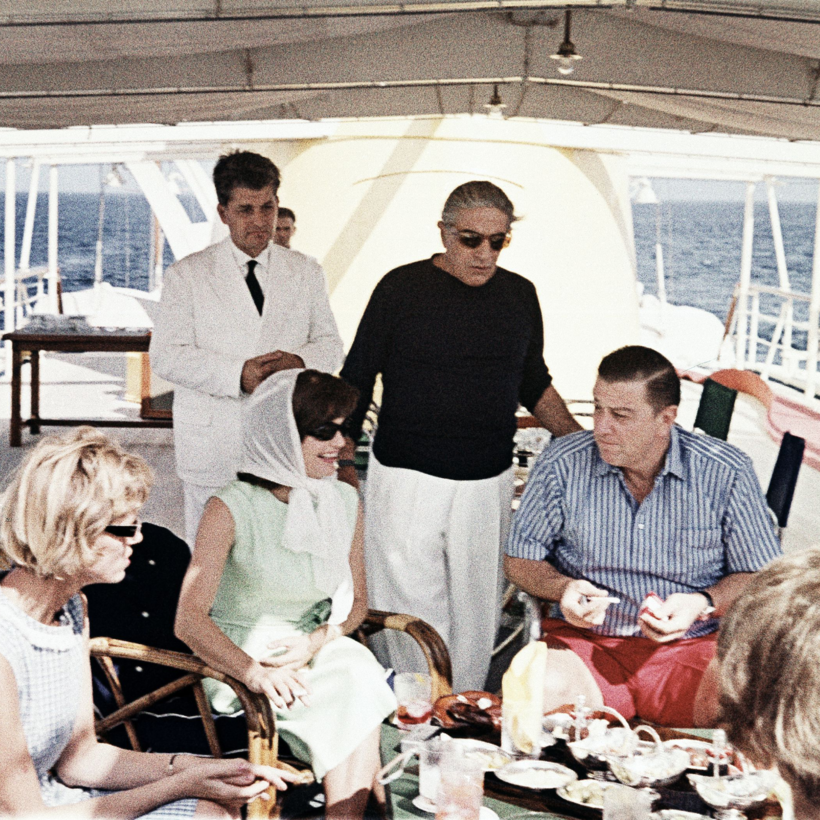
The marriage itself was a mismatch she surely saw from the doorway — the same doorway she'd seen her first engagement from, only this time she walked through anyway, because this time the point wasn't the man. The marriage lasted six and a half years, and deteriorated halfway through. Onassis was simple in his appetites and vast in his means; Jackie was the opposite. He had Maria Callas — a Greek, a voice, a woman of his own world who fit him as Jackie never would — and Jackie knew of her as she had known of all the others, and the old protocol held one last time. When he died in 1975, she was forty-five, twice widowed, financially secured by the settlement with his estate — and, for the first time since she was twenty-four, attached to no man's story at all.
Unassigned. Here is where the interesting part begins.
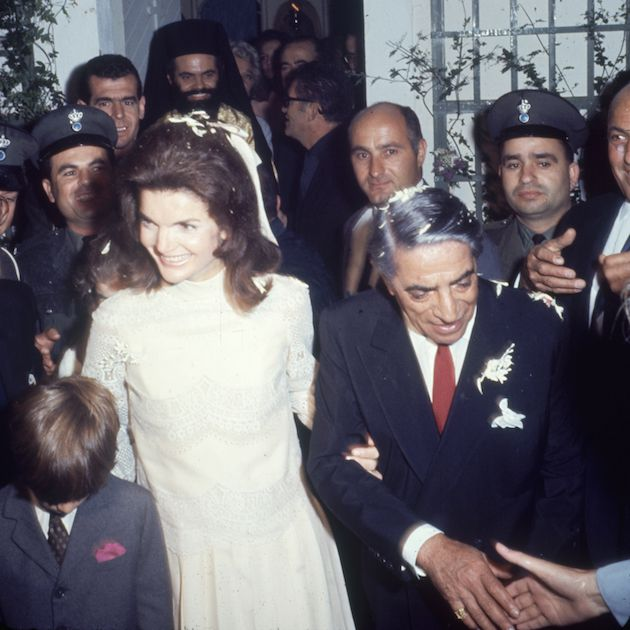
IV. The Fourth Act: Fiercely, Unmistakably Her (1975–1994)
What she did next is the reason I am writing this essay.
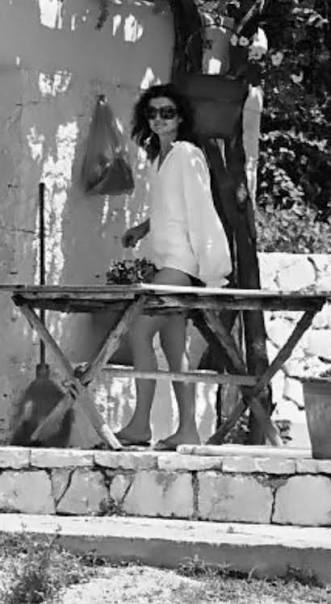
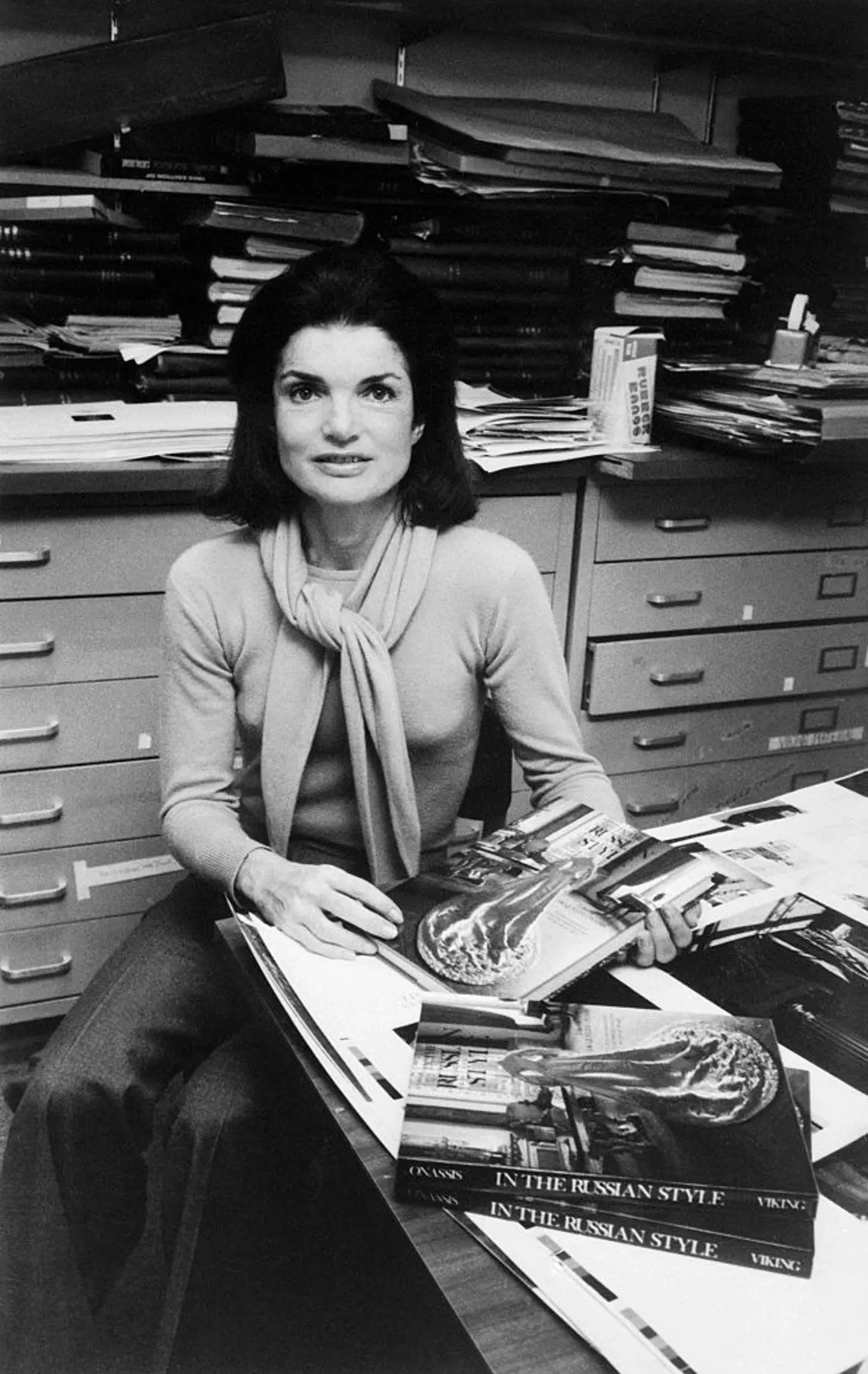
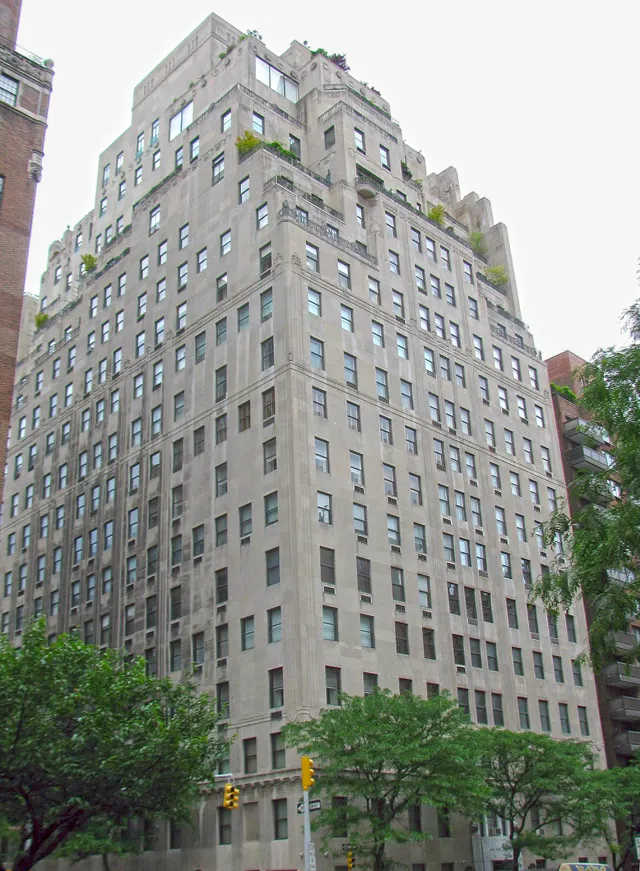
She came home — to New York, her city — bought an apartment high over Central Park, filled it with the only possessions she ever truly cared about (books, pictures, quiet), and then did the thing nobody saw coming: she got a job. Not a foundation chairmanship. Not an honorary anything. A beginner's editing desk at Viking — and when Viking published a thriller she found beneath them, she resigned on principle and started again at Doubleday. Nineteen years. Roughly a hundred books. Five days a week, in an office, walking to work, carrying manuscripts home.
Why would the most famous woman alive, who never needed to earn another dollar, choose an entry-level desk? Because she wanted to owe nothing to anyone and to be owned by no one. She had been a daughter of, a wife of, a widow of, a widow of again — carried, financially and ceremonially, her entire life — and everything that carries you also holds you. The desk was the first ground she ever stood on that no man's name had purchased. She wanted to stand on her own feet, firmly, not as someone's daughter or someone's wife but as her own — total freedom, total independence — and that is exactly how she forged the last act.
And in this act she became, at last, more herself, not less — fiercely herself, unmistakably her. Look at what she published from that desk: Joseph Campbell's The Power of Myth — she is a large part of why it exists in print at all. The English editions of Naguib Mahfouz. Russian courts, ballet, ancient civilisations, the decorative arts — the entire syllabus of that twenty-year-old's Paris and that twenty-one-year-old's Vogue essay, finally executed. She had wanted to be the Overall Art Director of the Twentieth Century. Quietly, in her fifties and sixties, editing other people's voices and claiming none of the credit, she became something very close to it. It took her forty years to hold the job she described at twenty-one. Remember that, anyone reading this in the middle of a long detour: the detour can be very long, and the ambition keeps.
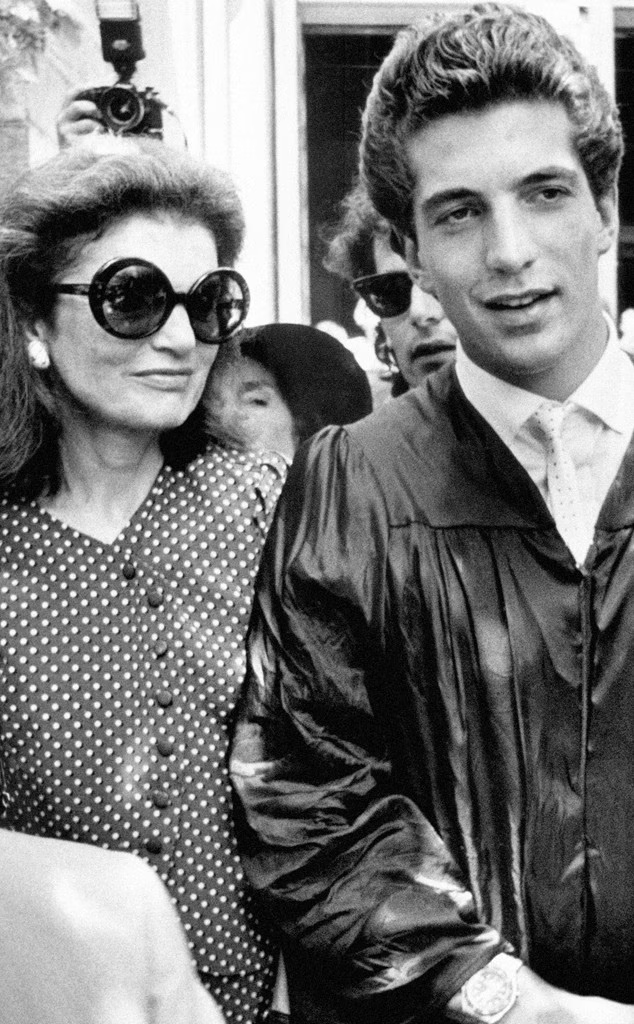
There is one more thing I have to say about her, and I say it with dark admiration: she was, almost humorously, a master of grief. Her parents' marriage at ten. A miscarriage. Arabella. Patrick. Her father. Jack, beside her, at close range. Bobby. Onassis's son, then Onassis. Loss after loss after loss, each one public, each one performed under a thousand lenses, and not once — not once in forty years — a public collapse. She must have wondered, in the private hours, whether she was cursed. Whether she had married into the wrong fate. She must have tried, as we all do, to cleanse whatever sins she imagined were hers — whatever those stupid goddamn sins were supposed to be — must have negotiated with God the way the bereaved negotiate, offering trades no one was there to accept. And then, somewhere along the way, I think she stopped negotiating and simply surrendered — not to the losses, but to her own grace. That is the only way I can explain the last twenty years: a woman who had made her peace with the fact that life would keep taking, and who decided that what it could not take was her conduct. (One mercy, at least: she was spared the last grief. John Jr.'s plane went down five years after her death. I find myself relieved, absurdly, on her behalf — that she never had to bury him too.)
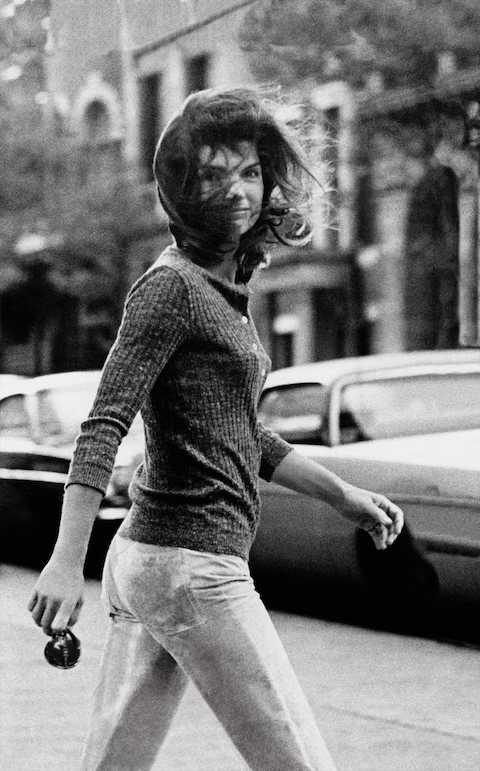
The watching never stopped, of course — the long lenses in the Park, the photographers on the sidewalk, every step and gesture of hers public property until her last breath. There was no privacy, ever, and she had long since stopped negotiating for that too. She simply declined to perform: no interviews, no memoir, no public litigation of anything, no drama, no outcry — decades of scrutiny and judgement met with nothing but her own steady conduct. And before she died, she burned some of her own records — letters, writings, the raw material historians dream of. People call it secrecy. I call it authorship. History is manufactured anyway — she understood that with total clarity, being a writer herself — and she was clever and artful enough to manufacture hers personally rather than leave the job to strangers. She built the myth, curated the evidence, and destroyed the drafts. And we still buy it. That is not vanity. That is craft.
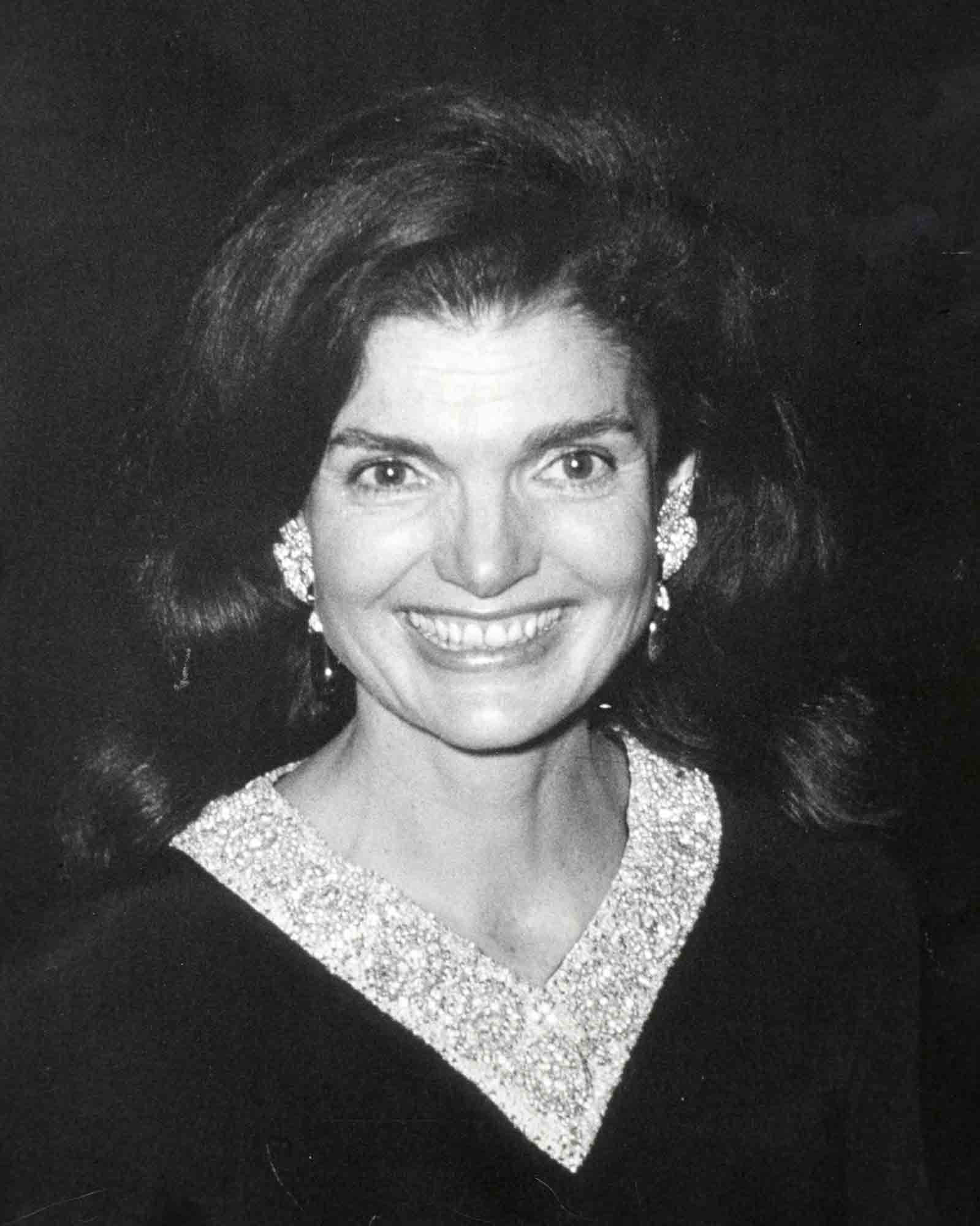
She let the world keep the woman it had invented and lived inside the one it couldn't see — among her people, her books, her city, the culture and society she loved most. The most authentic version of herself. When the illness came in 1994, she left the hospital and went home, because she intended to die the way she had finally learned to live: in her own rooms, on her own terms. She is buried at Arlington beside the President and the babies they lost, under the flame she lit.
What an icon. What a soul. What a leader. She is remembered by three names — and she answered, in the end, to none of them. Only to her own.
V. The Transmission: What She Would Want Us to Know
Lastly, I tried to put myself in her shoes — to be her, just for a moment, and ask what she might say to the women and men reading this now. And of one thing I'm certain: she would never presume to give us advice. She was too humble for that — too aware that every human being is finding their own way across this wild planet. So, not advice. A message — drawn from her lived experience, and offered the way she offered everything: quietly, and only once.
To the women:
- Your yearbook sentence is still valid: Somewhere behind every woman is the thing she declared before duty rearranged her. Jackie wrote hers at seventeen and honoured it at forty-six. A dream deferred for decades is not a dream denied. The detour can be very long; the ambition keeps.
- Build the interior estate first: Paris is why she survived everything that followed: an inner life that does not depend on the people in the room cannot be confiscated by them. Furnish yourself — before the title, before the marriage, before the mortgage. It is the only property no settlement can touch. And never, ever hide your hunger for knowledge to make a room more comfortable. She had to. You don't.
- Endurance with open eyes was her era's iron — don't mistake it for the destination: She saw her circumstances with total clarity and chose to endure them; her era gave her few other metals. Ours gives us more. Honour the grandmothers who kept the protocol — and then notice that Jackie herself, the moment history left her unassigned, chose the desk, the salary, and her own name.
- You can adapt your manners without surrendering your posture: She dialled herself down for the in-laws, learned the games, took the teasing — and kept her spine. Fit in where you must. Know where you come from, always.
- Restraint is power: She spent her public voice perhaps five times in forty years, and moved courts, Congresses and cathedrals when she did. The girl who withholds is still more interesting than the girl who displays.
And to the men — because her life is a message to you too:
- Turn the boat: A stillborn daughter waited days for her father to come home from a sailing holiday. Whatever your Mediterranean is — the deal, the trip, the season that cannot possibly be interrupted — the people in the hospital rooms of your life are keeping coordinates you will never see written down. The most important decisions of your life will not look like decisions. They will look like turning a boat around.
- Say the sentence your mother never said: Jack couldn't remember hearing that he was loved, and he spent a lifetime chasing the missing warmth in every wrong place — and the bill was delivered to his wife and children. Warmth withheld does not build strong sons. It builds hungry ones. Break the chain out loud.
- The protocol ran on a woman's silent subsidy: Every "no scenes, no scandal" marriage of that era was underwritten by a wife's unpaid composure. If you admire Jackie's endurance without asking what required it, you are not admiring her. You are freeloading on her.
- Marry the interior, not the ornament: The family chose Jackie for the pedigree; Jack, to his partial credit, loved her for the books. Choose someone for the estate inside them — and then spend the marriage adding to it, not drawing it down.
And to all of us: when you cannot choose your circumstances, you can still choose your author. It is never too late to become the person you described before the world started describing you.
So — question for you: what was your yearbook sentence — the thing you declared before duty rearranged you? And what would it take, at your amplitude, in your era, to walk back and keep the appointment?
If you have time...
- One Special Summer — the illustrated diary Jackie and Lee kept of their 1951 European trip, published in 1974. The Bouvier voice, before everything.
- Jacqueline Kennedy: Historic Conversations on Life with John F. Kennedy (2011) — the 1964 oral-history tapes with Arthur Schlesinger, released decades later by Caroline. The nearest thing to the memoir she never wrote.
- Jackie as Editor by Greg Lawrence and Reading Jackie by William Kuhn — the nineteen years at Viking and Doubleday, the act with no famous name on it.
- Jackie (2016), dir. Pablo Larraín, with Natalie Portman — the week after Dallas; grief as authorship, on film.
- The Power of Myth by Joseph Campbell — read it knowing whose desk it crossed on its way to you.
![Leadership] The Odyssey and Superhuman](https://images.unsplash.com/photo-1728076992371-659f5540a27c?crop=entropy&cs=tinysrgb&fit=max&fm=jpg&ixid=M3wxMTc3M3wwfDF8c2VhcmNofDJ8fGl0aGFjYSUyMGdyZWVjZXxlbnwwfHx8fDE3ODg0MTA0OTZ8MA&ixlib=rb-4.1.0&q=80&w=720)
![Obsidian Essay | Leadership] JFK.](https://storage.ghost.io/c/2a/9e/2a9e2b04-30f6-4166-8010-a3730d2eb719/content/images/size/w720/2026/08/231120172101-lead-image-john-f-kennedy-life-career.webp)
![Obsidian Essay | Leadership] THE KENNEDYS: Leadership Lessons Behind the Screen](https://storage.ghost.io/c/2a/9e/2a9e2b04-30f6-4166-8010-a3730d2eb719/content/images/size/w720/2026/07/7b3e2e4e6c8fec59ff2351819a61a7d3.jpg)
Comments ()