Obsidian Essay] Leadership | The Queen Behind the Screen ft. Jeongsun of Joseon (정순왕후) - Life and Leadership Lessons
![Obsidian Essay] Leadership | The Queen Behind the Screen ft. Jeongsun of Joseon (정순왕후) - Life and Leadership Lessons](https://storage.ghost.io/c/2a/9e/2a9e2b04-30f6-4166-8010-a3730d2eb719/content/images/size/w1200/2026/09/Screenshot-2026-09-13-024407.png)
The most powerful person in the room is often the one everyone mistook for decoration. -EJ Elena Shin
Lately, I have been digging into the life of a woman who was underrecognised and misunderstood by history.
Queen Jeongsun — 정순왕후. She died in 1805. I heard, in Korean historical dramas, she was often portrayed as a villain. The scheming queen. The enemy of the beloved reformist king, Jeongjo.
I think the real story is quite different from what was said to be believed. I discovered her existence during my visit to South Korea in 2023.
This writing is my attempt to look at her life: to find the truth beneath the story we were handed.
Enjoy!
I. The girl at the edge of the room
In 1759, a 15-year-old girl from the Gyeongju Kim clan was chosen as queen consort to King Yeongjo.
He was 66.
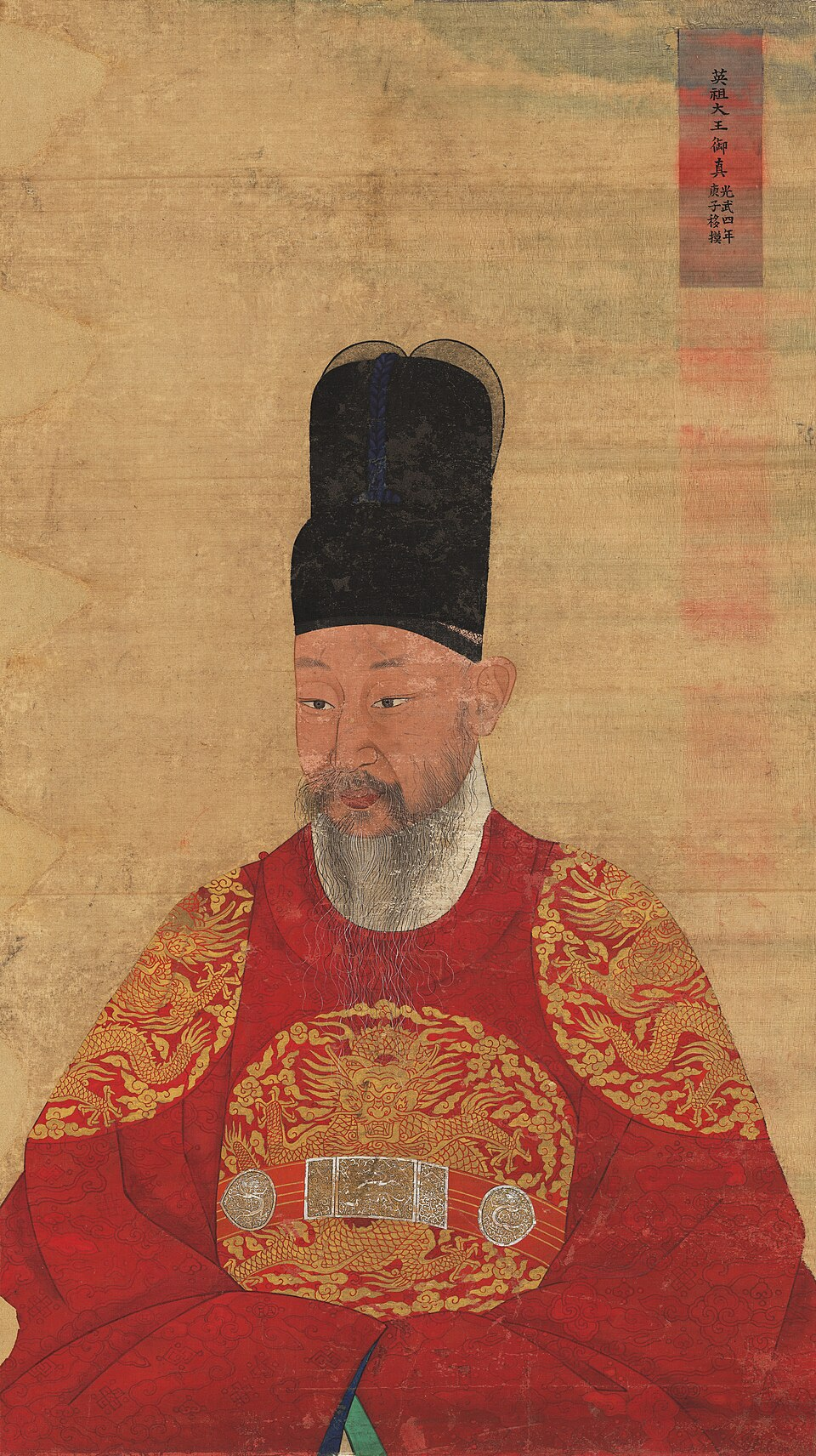
She was ten years younger than her own step-son, Crown Prince Sado — and younger than his wife, Lady Hyegyeong. A teenager in the most dangerous building in the country. No children. No natural allies. And as a queen who had borne no son — no future Crown Prince — she could be kicked out, or killed, at any moment.
Three years into her marriage, Yeongjo ordered Sado sealed inside a rice chest, where he died after eight days. She watched the royal family destroy itself before she turned 20.
I have a suspicion that Yeongjo carried a mental illness. A great king on the record, he probably harboured deep self-doubt and insecurity about his background — his mother, Sukbin Choe, was said to have entered the palace as a musuri, a water-carrying maid on the lowest rung of the servant ranks. He was forever paranoid that people doubted whether he was the rightful heir to the throne. That fear hardened into an obsessive perfectionism and the perfectionism drove Sado to his death. Yeongjo wanted Sado to spend more time studying, while Sado's passions ran to the arts and the military side.
In 1776, Yeongjo died at 81, after 52 years on the throne — the longest reign in Joseon history. Jeongsun was 30. A queen at 15, a widow at 30, with three more decades of court survival still ahead of her.
Sado's son Jeongjo took the throne — a brilliant king with every reason to distrust her. Her family's faction (the hardline Noron Byeokpa, led by her father Kim Han-gu and her brother Kim Gwi-ju) had sided with the men who put his father in the rice chest, then spent years trying to block his succession. So the reckoning came fast. Her brother was exiled at once, and died far from home a decade later, in 1786. Her faction was pushed out of power.
Yet she survived. And in a patriarchal Confucian world, what came next was unthinkable.
Think about the position she had been standing in all along. Her family had chosen its side — her clan's whole politics ran against Sado — while she had to live inside the same walls as him, as his father's wife, and later with his son on the throne. It is hard to imagine she was not torn. Whatever she privately felt, the record only wrote down her family's wars — never her heart. I personally believe she tried to support Sado in her private audiences with Yeongjo, shedding what positive light on him she could. And she survived Lady Hyegyeong (Sado's wife and boy prince Jeongjo's mother) — her political enemy living inside the same palace walls. My reading again, not the record's: she did what she could to shield the boy prince Jeongjo too, as he grew up under his grandfather's merciless scrutiny — under the open suspicion that he might follow his father's path, and the whisper from his father's enemies that a criminal's son could never be king. Because Yeongjo's guiding principle was unbending: his successor had to be an impeccable, virtuous king. A clean and honourable background, beyond question.
What the record does show is this: she survived. Beyond survival - later, she ruled the dynasty for three years.
A queen with no son, no faction left inside the palace, no leverage of any kind. She had only her words — her judgement of when to speak, when to stay silent, and how to give no one a reason. Like the young Elizabeth I (who outlived her sister Mary's reign under constant suspicion — even a spell in the Tower — before she ever wore the crown), Jeongsun's first masterpiece was simply staying alive. Persuasion as armour. Diplomacy as survival. She did it for four decades — and then, at 55, once Jeongjo passed away suddenly in the summer of 1800, she picked up the country and ruled it for three years on behalf of the boy king Sunjo, crowned at just ten years old.
So what was she doing for those forty years?
Learning everything.
How the court worked. How money moved. What each faction wanted. What each man feared. The people who dismissed her handed her a strange gift — decades of being underestimated at close range. She could speak calmly to people who were trying to kill her.
II. The world in text
She was not decoration by nature. She was a well-educated, well-read woman — at home in the 사서오경, the Four Books and Five Classics that the entire Confucian state ran on. These were books for rulers (reserved for men); leadership manuals on how to govern virtusouly. A serious mind, formed on serious texts. It was a rare thing for women to be able to read books. Let alone the books written in Chinese characters and not 'hangeul' (Korean alphabet).
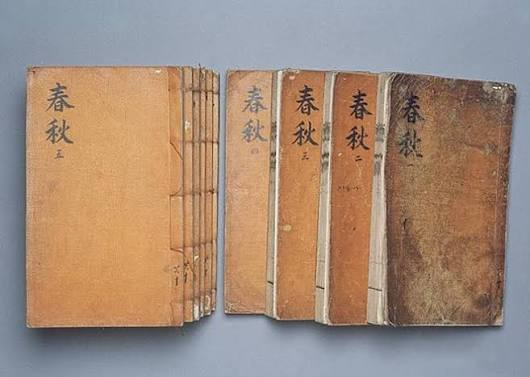
She read the world in text — but from the day she married at fifteen, her footsteps almost never left the palace again. The queen of the country saw less of it than a peddler at the market gate. Call it what it was: confinement. Imprisonment with a crown on it, for the rest of her life.
I have a suspicion that most of her life in the palace was praying (besides her passion for reading, writing, and embroidery) — praying for the best for the world, for her people, for her family, for herself. There was no room left for a private life or private emotions — only duty, responsibility, and survival. And yet I think she was a warm person at heart. She cared for Jeongjo. She was fair. She was restrained with her emotions, not empty of them.
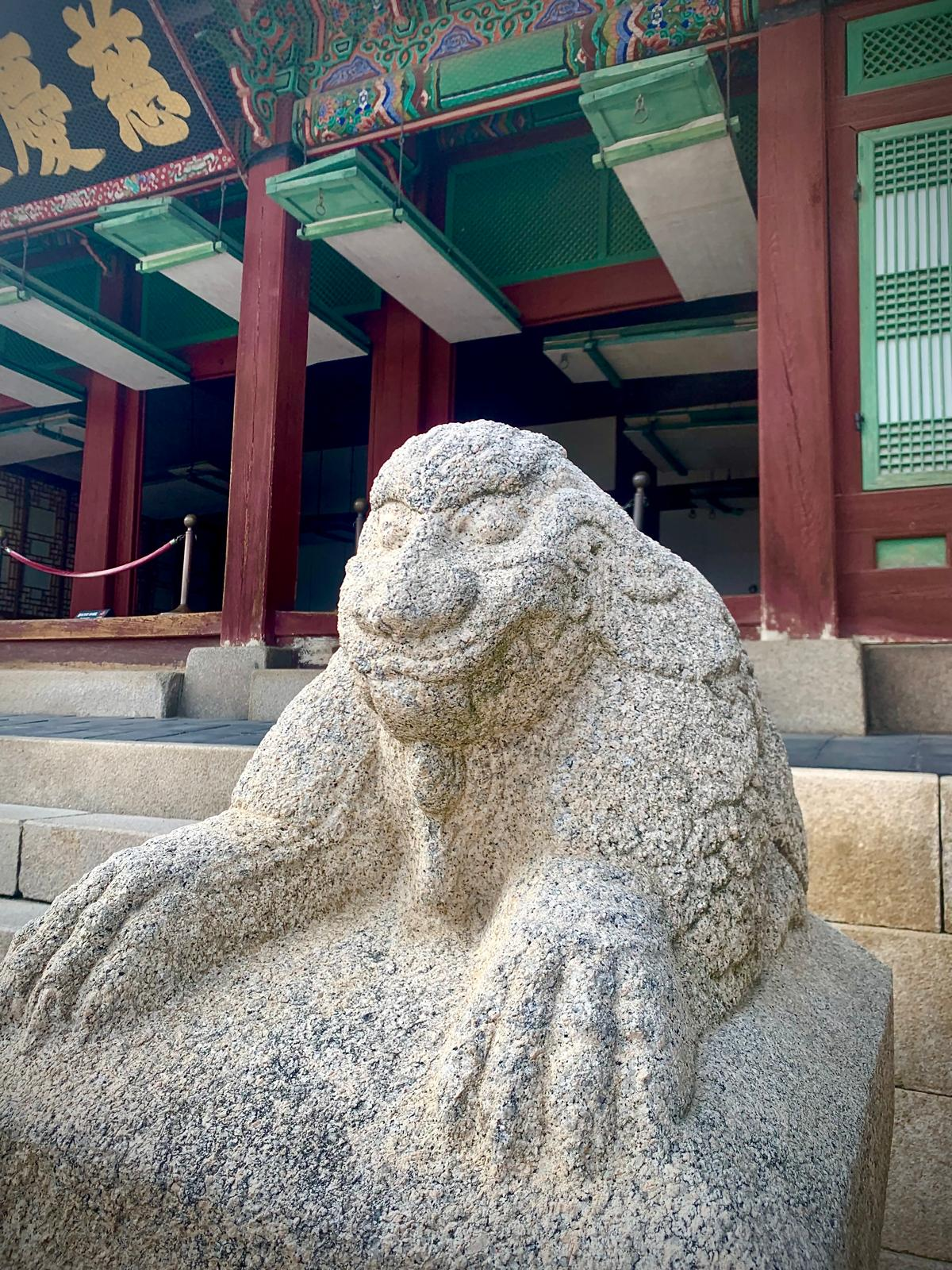
The only outlet she had was her prayers — to the dragons and tigers of the mountains of Joseon.
Yet I wonder — if she could tell me her dreams, her wishes, her hopes — what would she say?
I bet she would not recite her titles.
I imagine her praying. And I imagine that as the mother of the country, 제사 — the ancestral rites — was what she enjoyed most. The solemn rituals for the dead were the only theatre, the only production, the only entertainment her life allowed.
The records list every one of her titles. They do not record a single one of her wishes.
III. Three years behind the screen
In 1800, Jeongjo died suddenly. His heir, Sunjo, was ten years old.
And the woman everyone had discounted became the most powerful person in Joseon.
The arrangement was called suryeom cheongjeong (수렴청정) — ruling from behind the lowered screen. A queen dowager was not supposed to be seen governing. So she governed unseen — making the decisions, issuing them in the young king's name.
What she did with those three years is complicated. I want to hold all of it, because leadership history is rarely a morality tale.
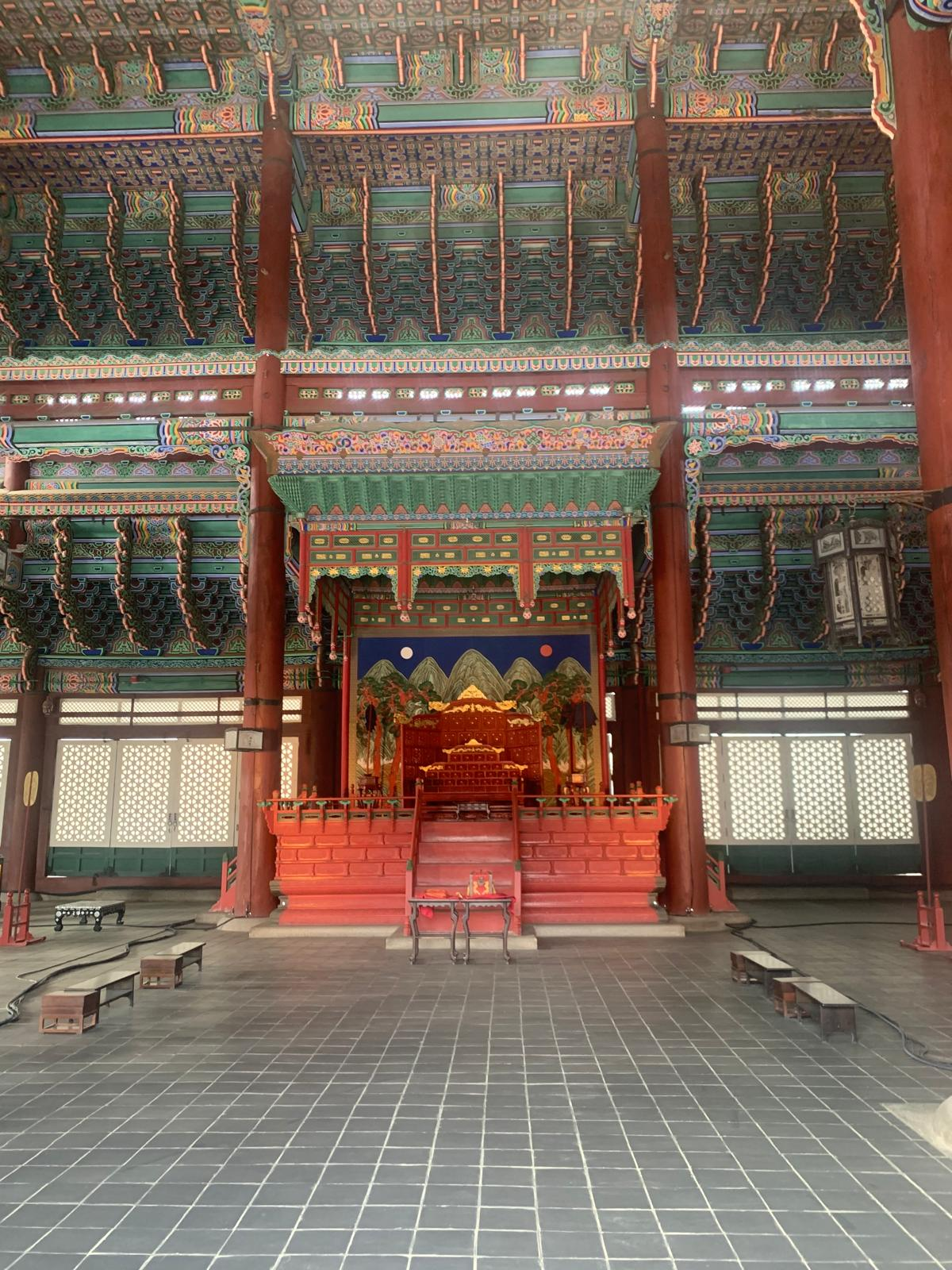
She was ruthless. She brought her hardline faction back into power and launched the Sinyu Persecution of 1801 — a crackdown on Catholicism that executed over a hundred people and exiled some of the era's best reformist minds. Religion was the stated reason. Destroying her dead rival's political base was the real move.
And in the same season, she did something no king before her had done. In the first month of 1801, an edict went out — in Sunjo's name, but the decision was hers — freeing the government's registered public slaves. Tens of thousands of people (some say ~66,000).
One more — my favourite. She issued royal edicts in hangul (Korean Alphabet). The script the scholar-officials dismissed as women's writing back then. The tool of the excluded, turned into an instrument of state.
The purge and the emancipation came from the same hand. That is what power actually looks like when someone finally gets it after waiting forty-one years.
IV. Then she lost the pen
By 1803 she had stepped back. Her allies were purged by the new queen's family. Her last year was quiet. She died in 1805.
And then something worse happened to her.
Because Lady Hyegyeong — Sado's widow — had been right there for all of it, inside the same palace, watching.
When Jeongjo died in the summer of 1800, Hyegyeong was sixty-five, living in Changgyeonggung, in quarters her son had built for her. With her son gone, she was utterly exposed. She held no rank that mattered — she had never been queen, only the widow of a crown prince who died a criminal. The court's highest woman was now Jeongsun — ten years her junior, her lifelong factional enemy, ruling the country from behind the screen. The tables of 1759 had fully turned. The teenager who once entered the palace beneath her now outranked her absolutely.
Then it got worse. In the purge of 1801, Jeongsun's regency executed Hyegyeong's younger brother — accused in the Catholic sweep, poisoned in exile on Jeju island. Hyegyeong could do nothing but watch.
Except one thing. She picked up the pen. Her memoirs — the Hanjungnok (한중록) — are a masterpiece. They are also a defence, written by a survivor with her own scores to settle. The later installments — written in 1801, 1802 and 1805, right through the regency and just after it — were addressed to young Sunjo, pleading her family's case for the day he would rule alone. And she won the long game by simply outliving everyone. Jeongsun died in 1805. Hyegyeong lived on for another decade, until 1815, with the manuscript finished.
So hold this image. For three years, one palace held two widows — one holding the throne, one holding the pen. The throne lasted three years. The pen's version of the story has lasted two hundred and twenty.
No writings by Jeongsun are left for us to see today. No memoir. No account of her own mind.
So the woman who ran a country became a supporting villain in someone else's book — and stayed one for two hundred years of history and television.
History is not what happened. History is what got written down — by whoever held the pen.
When a woman from the past reaches you only as a villainess, it is worth asking who wrote her that way, and why.
V. A poem she never wrote, but probably would have written
She left nothing in her own voice or probably all of her poems and writings must have been burned or lost over the years. So I did something presumptuous.
I picked up the pen for her.
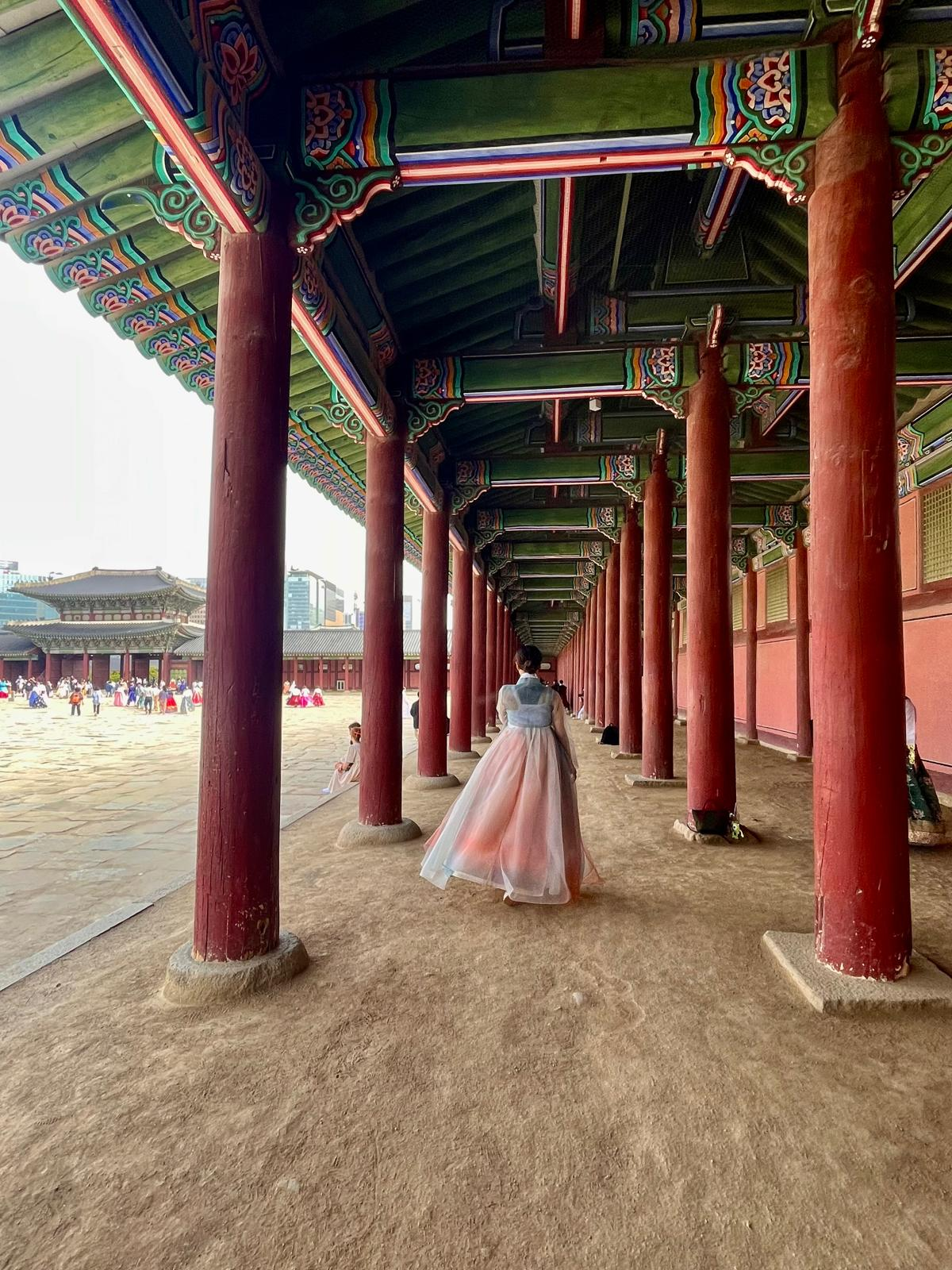
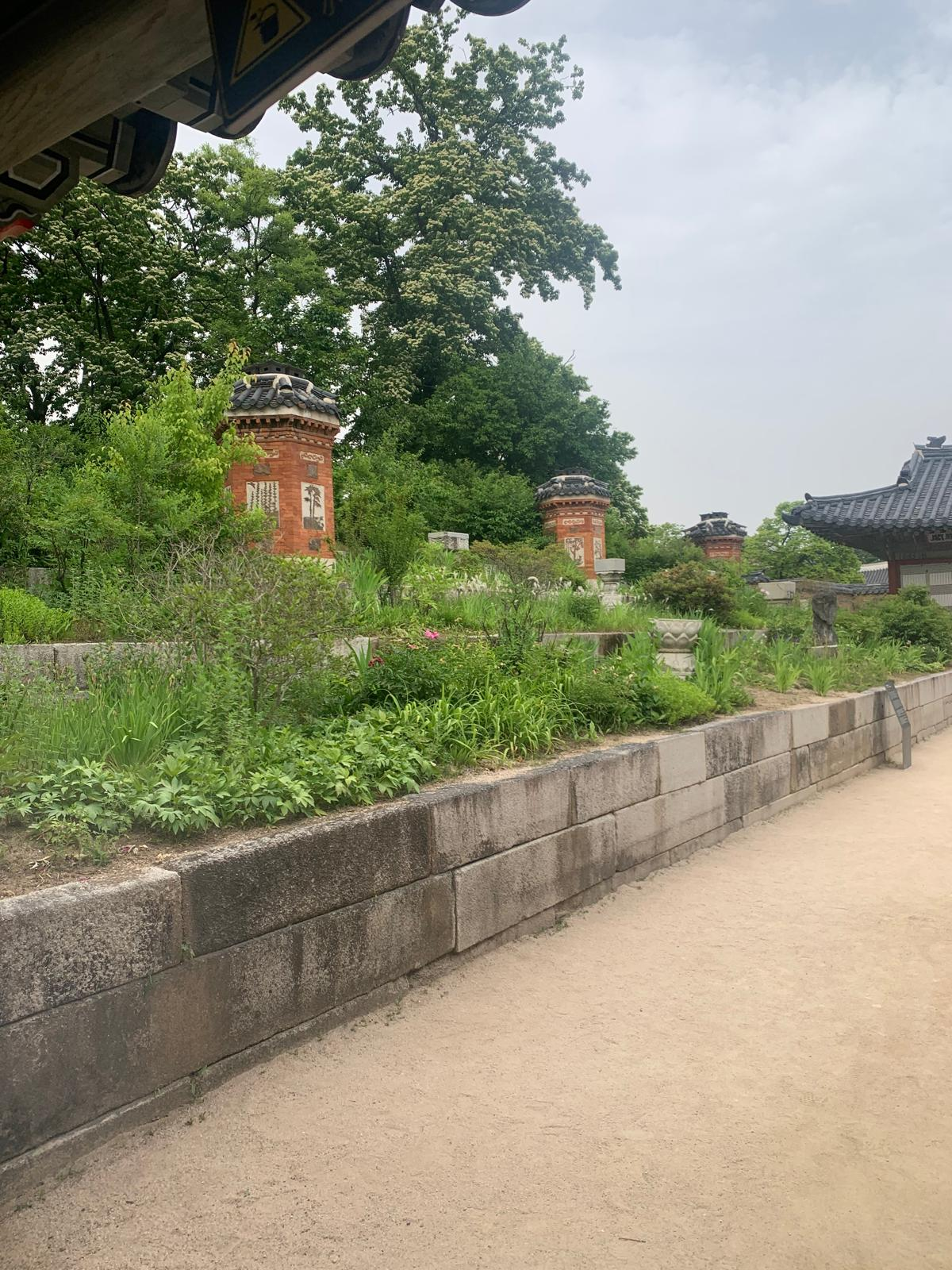
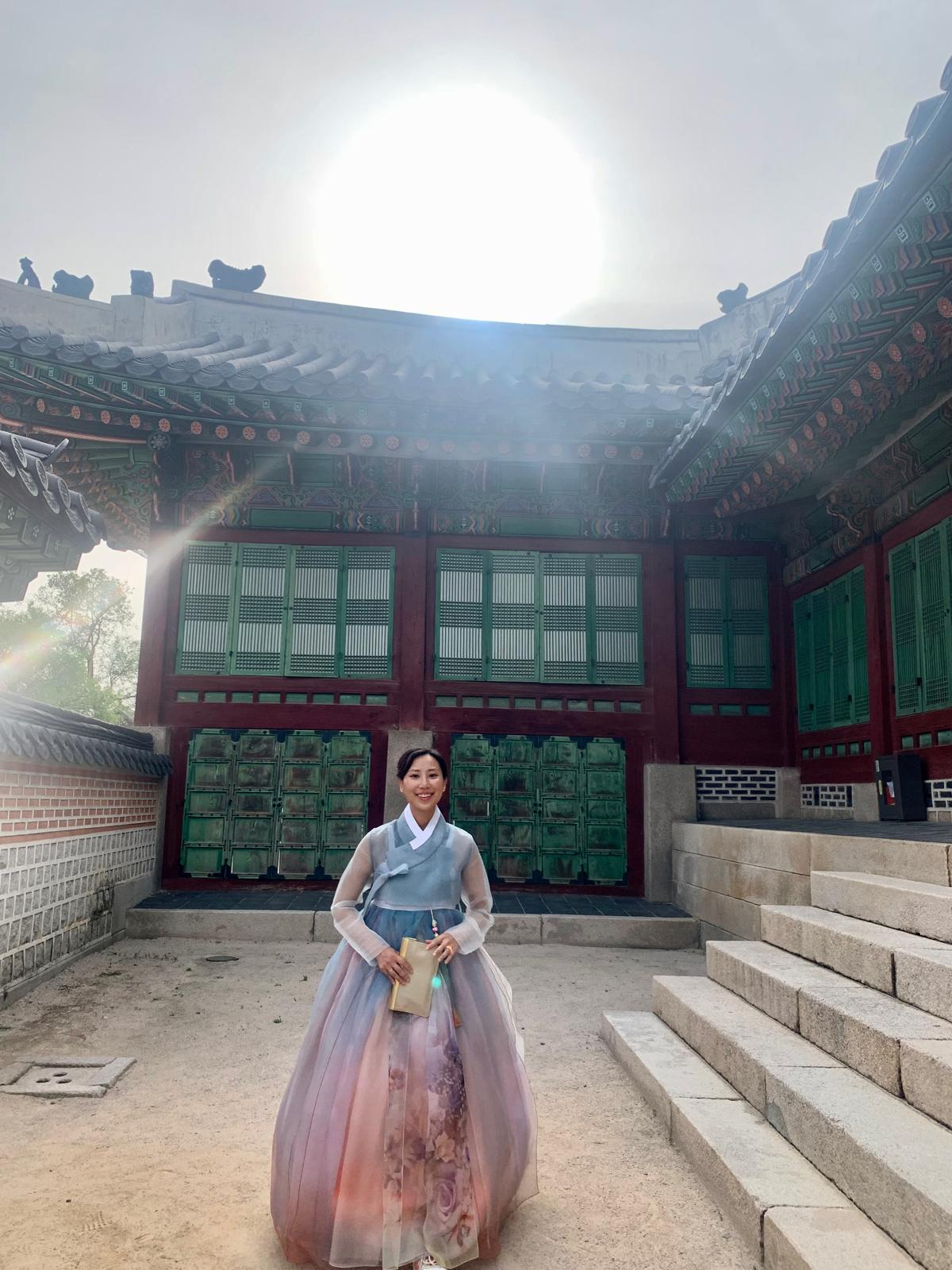
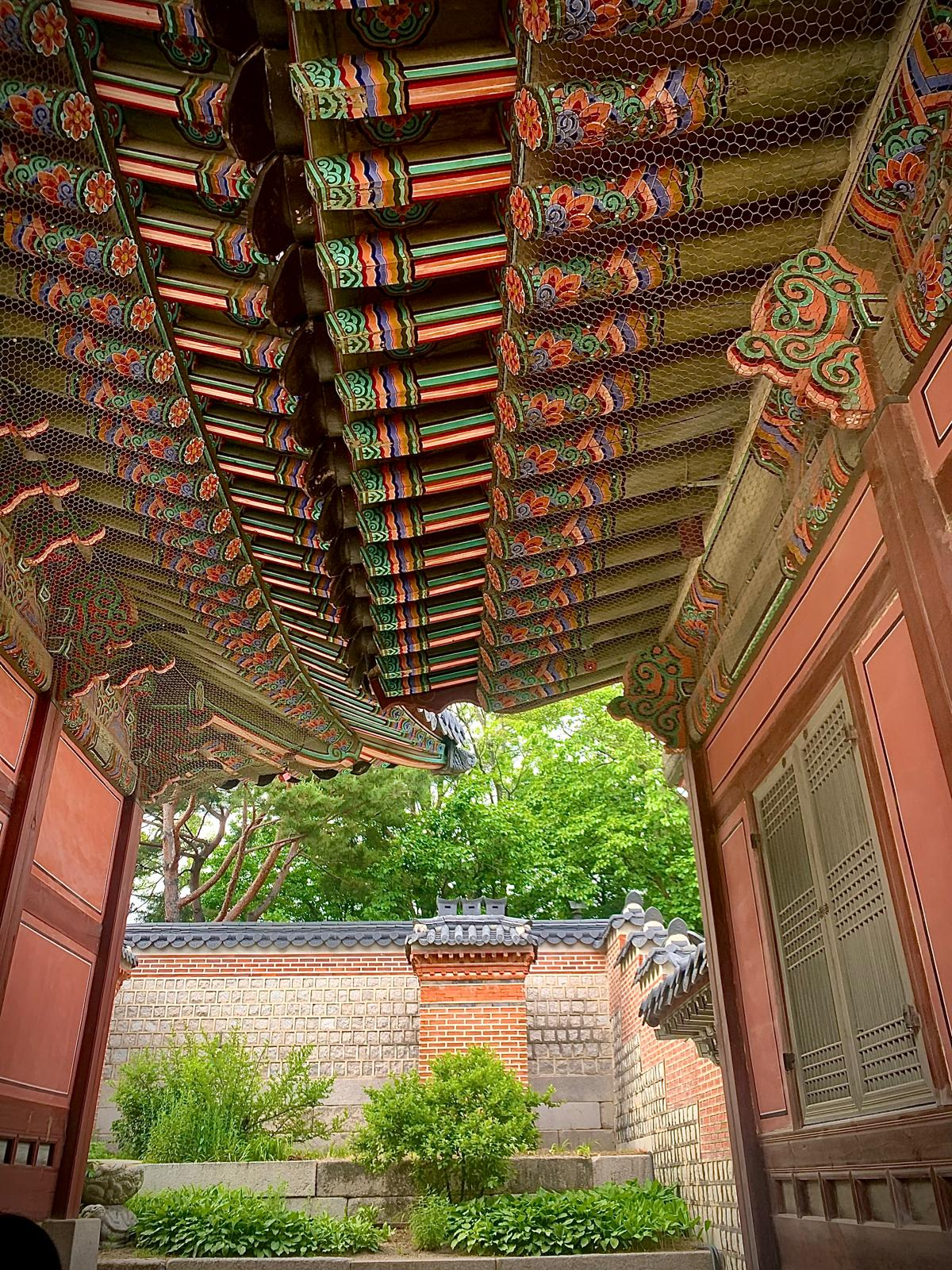
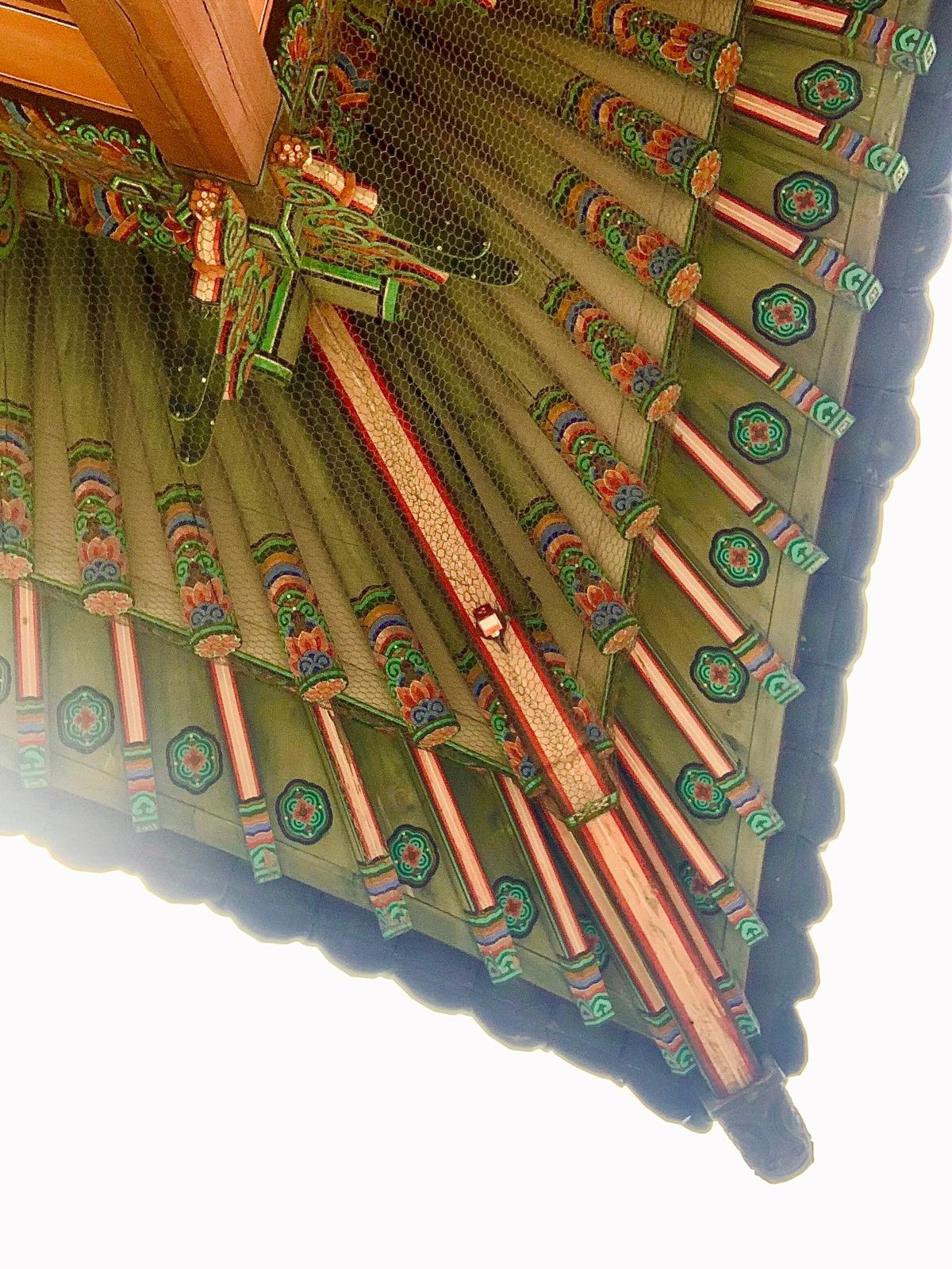
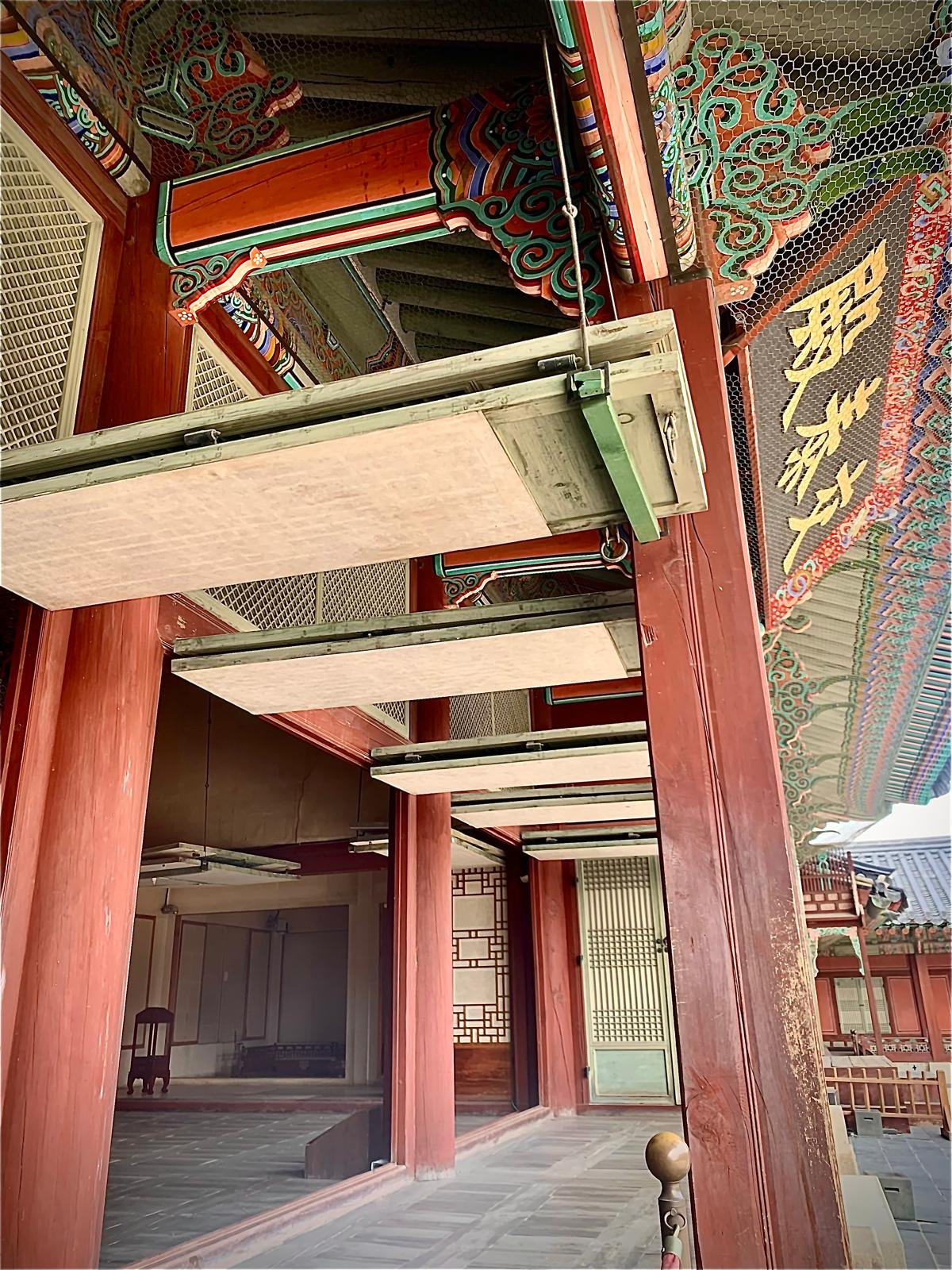
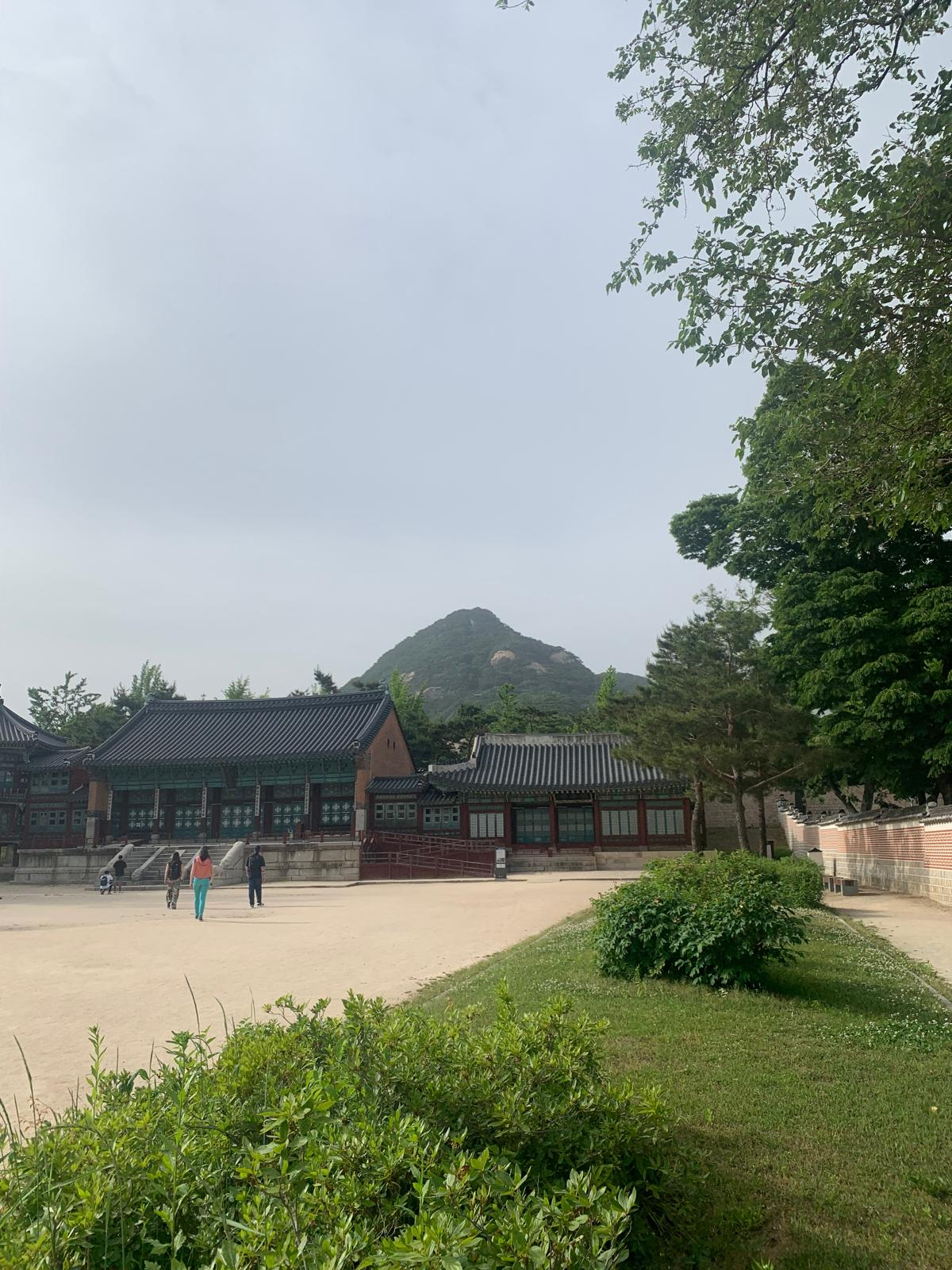
This is not a translation of any historical document — I tried to channel her voice when I was visiting the Gyeongbok Palace three years ago where she must have lived at some point. It is a poem I wrote in her voice. A woman at her window in the rain, the ridgeline of Samgaksan (Mt. Bukhan a.k.a. Samgaksan) just visible over the wall she could not cross.
송화가루가 흩날릴 무렵 (When the Pine Pollen Scatters)
삼각산 자락의
청산유수
소나무 송화가루가
바람에 흩날릴 무렵
내 치마자락을 고이 접어
처마 끝 모퉁이 풍경에
빌엇나이다.
내 방에 앉아
창문 밖으로 내다본 정원에는
빗가락들이 쏟아지는데 -
내 넋두리를 해봐야
무슨 소용이 있겠나이다만은…
푸른 잎들 사이에 피어 오르는
물방울들을
보고 있노라면
내 옛적에 키우던 고양이가
재주떠는 것을 보는 듯 하이
빗방울
한오락
한오락
잎새에 새겨질 때마다
나는 방긋 방긋 웃네요.
잠시 새겨졌다
굴러 떨어지는 옥구슬 같이
잎에 젖은 물방울은
내 님의
흰 도포에
남겨진
먹자국이 생각나게하니.
방울 방울
붓 자락
끝으로
흩어져
내려 앉으는
먹물 방울들처럼
내 정원의
잎사귀엔
빗방울
구슬들이
옹기종기
모였다가
흩어지고
내려앉았다
올랐다
천방지축
개구장이 아이같이
재롱둥이 새끼 고양이 같이
여기저기
바삐 움직입니다.
거세게
휘몰아치는
거친 빗줄기 사이로…
한없이 물방울들을
바라보다
정원 끝 담장을 보면
삼각산 등자락이
제 배불뚝이 능선을 보일락 말락.
그 곳에서 바라보는
봄날의 아침 해돋이와
안개꽃이
유난히
아름답다 들었습니다만
내 바위산 정상에 가본지도 오래된 터…
머리에 비녀를 드리운 후로는
담장을 넘어 본적이 손에 꼽히니 -
산 능선 따라
흐드러지게 핀 진달래 꽃과
따스한 햇살의 드리움이
그리울 때 마다
나는 눈을 감습니다 -
바람을 통해 전해오는 청룡들의
소식에 귀를 기울이기 위해…
내 방에 앉아
자수 한땀 한땀을
따 내려갈 때마다
창문 넘어로
소식통
까치들의
전언에
귀를 기울이곤 합니다.
저잣거리 소식부터 내 부모들의 안녕까지
그들은 세상 어디든 갈 수 있기에…
삼각산 자락의
청산유수
소나무 송화가루가
바람에 흩날릴 무렵
내 치마자락을 고이 접어
처마 끝 모퉁이 풍경에
빌엇나이다.
내 맘을 고이 접어
고개 숙임에
내 손을 포개니
만물이
진동하여
삼각산 청룡들과
도선사 신령님이
내 맘을 알아 주기를…
When the Pine Pollen Scatters (English translation)
At the foot of Samgaksan,
where green hills meet flowing water,
when the pine trees' pollen
scatters on the wind —
I folded my skirts beneath me
and prayed
to the wind-chime at the corner of the eaves.
Sitting in my room,
I look out on the garden
where strands of rain come pouring down —
though what good would it do,
to pour out my heart…
When I watch the waterdrops
blooming between green leaves,
it is like watching the little cat
I kept in the old days, turning her tricks.
Each time a raindrop —
one thread,
another thread —
etches itself upon a leaf,
I smile, and smile again.
Held for a moment, then rolling away
like beads of jade —
the raindrops wet upon the leaves
remind me of the ink stains
left on my lord's
white robe.
Drop by drop —
like beads of ink
scattering from the brush-tip,
settling as they fall.
On the leaves of my garden
the rain-bead marbles
huddle close,
then scatter —
settling, springing up,
reckless as a mischievous child,
playful as a kitten,
busy, busy, everywhere —
through the fierce
and driving
ropes of rain…
And when I tire of watching waterdrops
and look to the wall at the garden's end,
the back of Samgaksan
shows its round-bellied ridge — now seen, now gone.
They say the spring sunrise from that height,
and the flowers in the morning mist,
are beautiful beyond the ordinary —
but how long it has been
since I last stood on my rocky summit…
Since the day the pin was set in my hair,
the times I have crossed that wall
can be counted on my fingers —
so whenever I long
for the azaleas blazing along the ridgeline
and the warm light falling through them,
I close my eyes —
to listen for the tidings of the blue dragons,
carried to me on the wind…
Sitting in my room,
stitch by stitch
as the embroidery grows,
I listen past the window
for the word
the magpies bring —
my messengers.
News of the market streets, word that my parents are well —
for they can go anywhere in this world…
At the foot of Samgaksan,
where green hills meet flowing water,
when the pine trees' pollen
scatters on the wind —
I folded my skirts beneath me
and prayed
to the wind-chime at the corner of the eaves.
Folding my heart as gently as my skirts,
I bow my head
and lay one hand upon the other —
and may all creation
tremble with it,
so the blue dragons of Samgaksan
and the spirit of Doseonsa
may come to know my heart…
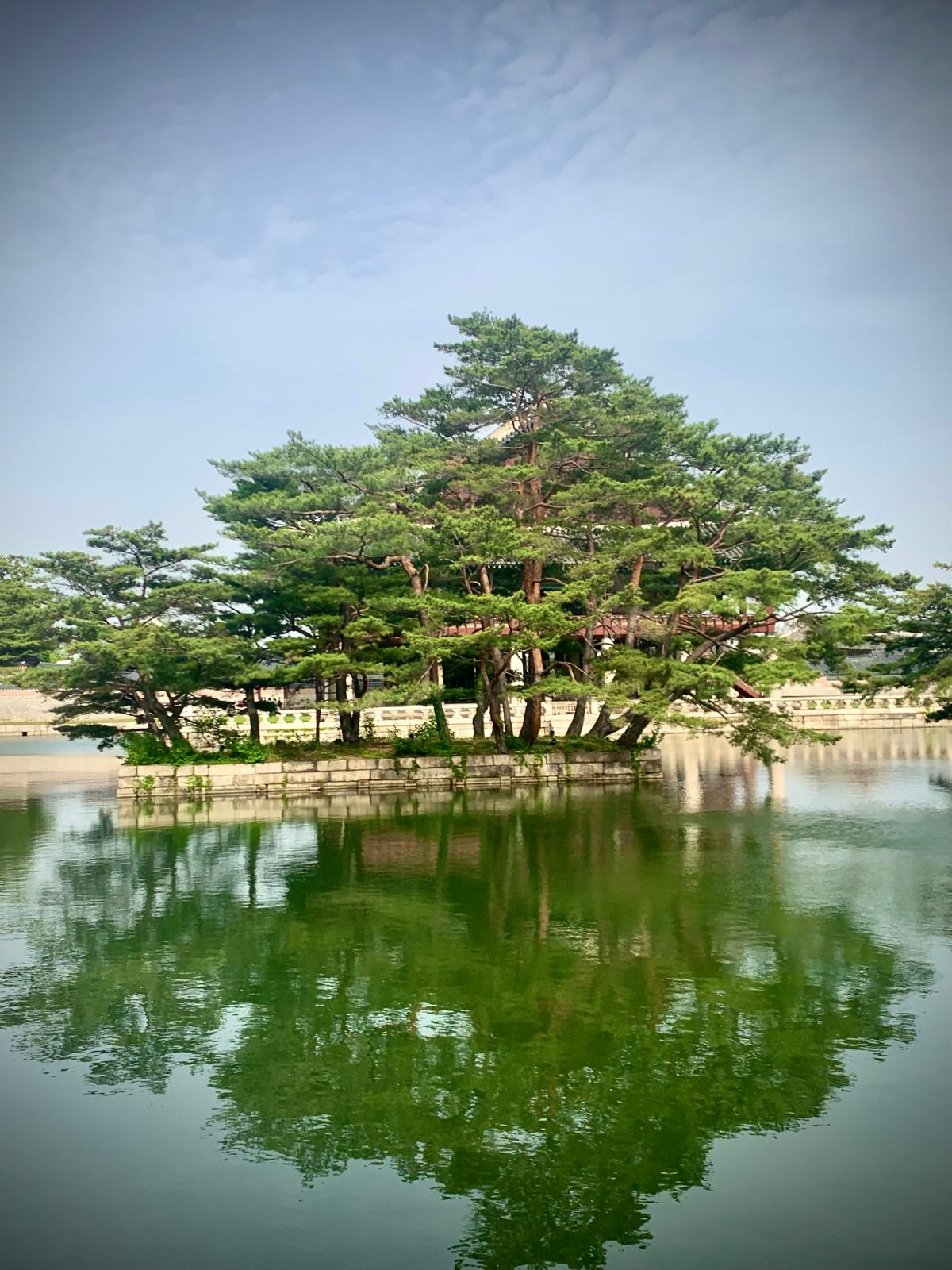
A queen who could read everything and go nowhere. Magpies for messengers. Dragons for company. A wall, a garden, and the rain.
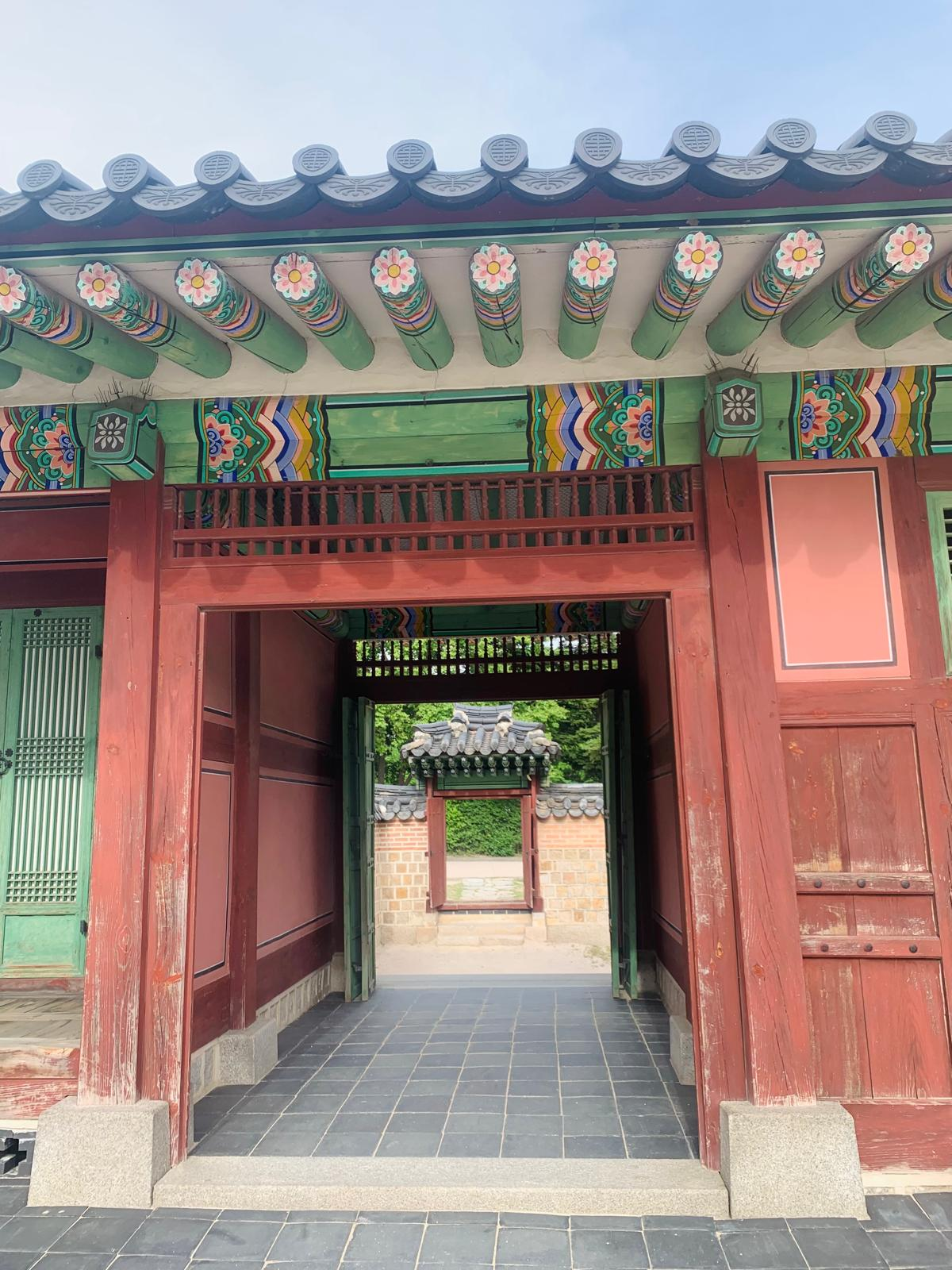
One of her garden views.
VI. Leadership Lessons: What I am taking from her
1. Power compounds in silence: Her forty years behind the screen were not wasted. They were accumulation — knowledge, judgement, an exact read of how the machine worked. If you are in a season where your work is invisible, you are not necessarily being passed over. You might be in training. The real question is whether you are collecting — or just waiting.
2. Count the people no one else is counting: The court never counted the fifteen-year-old girl. The state never counted its slaves. The scholars never counted the "women's script." Jeongsun, who had been uncounted herself, saw all three. Whoever you are not seeing right now is compounding — in markets, in organisations, in rooms.
3. Spend your season on the future, not the past: This is her tragedy, and it was self-inflicted. She waited forty-one years and got three — and spent too much of them settling old scores. The trap is that revenge never announces itself as revenge. It arrives dressed as justice — wrongs must be righted. As prudence — threats must be cleared before I can build. As loyalty — my people suffered, so I owe them this. By the time your moment comes, the old grievances are your oldest possessions, and they will scream the loudest. But look at what the purchase actually cost her. Your moment is a finite pool of capital — time, attention, goodwill — and revenge spends it on the one asset that can never appreciate: the past. Her purge exiled some of the finest minds of the era. It armed a new generation of enemies, who purged her own allies within a year of her stepping back. And it wrote her permanent reputation, because the vengeful act is always the most memorable thing you do. The purge became her headline. The emancipation became a footnote. When your moment comes, revenge will feel urgent. It is the most expensive thing you can buy — because it does not just cost your three years. It costs what your three years could have been.
4. Narrate — or be narrated: Competence did not protect her legacy. Power did not protect it. Only authorship could have, and she never wrote. Hyegyeong did. Your work will be narrated by someone. The only question is whether that someone is you.
VI. The screen and the season
Almost everyone I know is behind some version of the screen — doing work that ships under other names, holding insight that stays in the drawer, waiting for the right conditions.
The screen is a good place to learn. It is a bad place to live.
So — two questions from a queen who mastered the first and learned the second too late:
What are you building behind your screen?
And when your three years arrive — what will you spend them on?
![Obsidian Essay] Consciousness and the Universal Law...Quantum Computer](https://images.unsplash.com/photo-1614926037384-4159c33e196b?crop=entropy&cs=tinysrgb&fit=max&fm=jpg&ixid=M3wxMTc3M3wwfDF8c2VhcmNofDIzfHxnYWxheHl8ZW58MHx8fHwxNzg4NjEyNTA5fDA&ixlib=rb-4.1.0&q=80&w=720)
![Obsidian Essay] The Walk - Even Commanders Debrief ft. Admiral McRaven](https://storage.ghost.io/c/2a/9e/2a9e2b04-30f6-4166-8010-a3730d2eb719/content/images/size/w720/2026/08/wp-GettyImages-172044198_master.jpg)
![Book] Consciousness | The Hitchhiker's Guide to the Galaxy (1979) by Douglas Adams: A Space Kid's Introduction](https://storage.ghost.io/c/2a/9e/2a9e2b04-30f6-4166-8010-a3730d2eb719/content/images/size/w720/2026/06/images.jpg)
Comments ()