Art] What Cities Make of Us: Art, Power & the Human Condition Across Europe | Normandy: Light, Impressionism, and Seeing What's Actually There (03/22)
How a group of rejected painters on the French coast invented the most radical epistemological act in modern art — and why it still matters
![Art] What Cities Make of Us: Art, Power & the Human Condition Across Europe | Normandy: Light, Impressionism, and Seeing What's Actually There (03/22)](https://storage.ghost.io/c/2a/9e/2a9e2b04-30f6-4166-8010-a3730d2eb719/content/images/size/w1200/2026/03/Gemini_Generated_Image_sbowymsbowymsbow-10.png)
What Cities Make of Us: Art, Power & the Human Condition Across Europe | Post 3 of 22
How a group of rejected painters on the French coast invented the most radical epistemological act in modern art — and why it still matters
| Series | What Cities Make of Us — Post 3 of 22 |
| Reading Time | 7 minutes |
| Region | Normandy, France |
| Era | 1860s – 1940s |
| Key Figures | Monet, Boudin, Courbet |
| Core Argument | The Impressionist revolution was not about style — it was about insisting on direct observation over inherited framework, and that insistence is still radical |
In the summer of 1872, Claude Monet stood at the edge of the harbour in Le Havre before dawn and watched the light come up over the water. The sky was doing something complicated — grey dissolving into orange, the masts of ships emerging from mist, the reflections on the water broken and scattered by small waves. He painted what he saw.
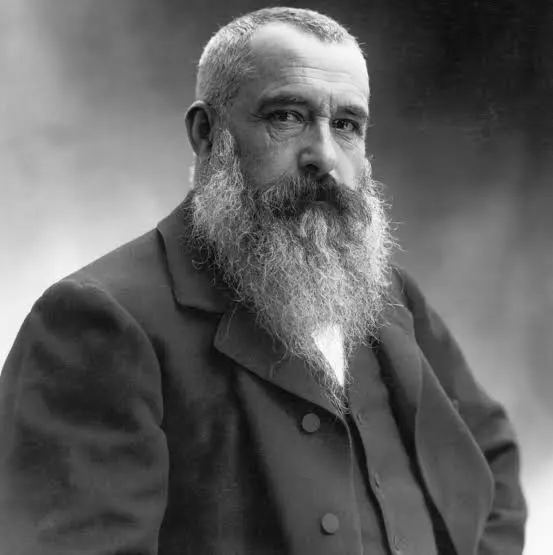
The result was a canvas roughly the size of a large book. He called it Impression, Soleil Levant — Impression, Sunrise. When he submitted it to an exhibition in Paris two years later, a critic named Louis Leroy used the title to mock the entire group of painters showing alongside him. They were, he sneered, merely impressionists. Painters of surfaces, of atmosphere, of fleeting moments that dissolved before you could properly examine them. Not real painters at all.
Monet kept the name. Within twenty years, Impressionism had transformed Western art. Within a hundred, those same canvases had become the most commercially valuable paintings in history. And Louis Leroy is remembered only because he was wrong in an interesting way.
The Coast That Changed Everything
Normandy is not, at first glance, an obvious birthplace for a revolution. It is a place of apple orchards and dairy farms, of medieval abbeys and fishing villages, of a coastline that is frequently cold, frequently grey, and frequently both at once. The light is not the blazing Mediterranean clarity of Provence. It is something softer, more ambiguous — the light of a place where the sky and the sea are in constant, unresolved negotiation.
This is precisely what attracted the painters. Monet, Boudin, Courbet, Pissarro — they came to Normandy because the light there refused to behave. It shifted constantly. It dissolved solid forms into atmosphere. It made the boundary between water and sky, between the real and its reflection, genuinely unclear. You could not paint Normandy the way you painted a Roman ruin or a mythological scene — with clean lines, stable forms, and a composition that resolved itself tidily into meaning.
To paint Normandy honestly, you had to abandon the idea that a painting should look like a finished argument. You had to accept that reality is not stable and clear. You had to paint the light as it actually was — provisional, moving, beautiful precisely because it would not stay still.
This was a more radical act than it sounds. And understanding why requires a brief detour into what the painters were revolting against.
The Academy and the Art of the Acceptable Answer
For two centuries before Impressionism, French painting had been governed by the Académie des Beaux-Arts and its annual exhibition, the Salon. The Salon was not merely a commercial gallery. It was the gatekeeper of what counted as art — what subjects were worthy, what techniques were acceptable, what a finished painting should look like.
The Académie's aesthetic was built on hierarchy. History painting — scenes from classical mythology, the Bible, great moments of political history — sat at the top. Below that, portraiture. Then genre scenes. Then landscape. Then still life. The further you moved from grand narrative toward direct observation of the ordinary world, the lower your status.
The Impressionists violated this hierarchy in the most fundamental possible way. They said: the ordinary world — a harbor at dawn, a haystack at different times of day, a woman hanging laundry, the surface of a river in afternoon light — is not a lesser subject. It is, if you look at it with sufficient attention, inexhaustible. The sacred is not in the myth. It is in the light on the water, right here, right now, before it changes.
The Salon rejected them, repeatedly. In 1863, so many artists were rejected that Napoleon III ordered a separate exhibition — the Salon des Refusés, the Salon of the Refused — to display the work the jury had turned down. The public came largely to mock. But among the rejected paintings was Manet's Le Déjeuner sur l'herbe, which is now one of the most famous paintings in the world.
The establishment was not wrong that the Impressionists were doing something different. It was wrong about what different meant.
Evidence Over Inherited Framework
There is a reason that the Impressionist revolution speaks so directly to people in analytical fields — finance, policy, academic research — even when they cannot immediately articulate why.
What the Impressionists were doing, at its core, was insisting on direct observation over inherited framework. The Académie had a theory of what a great painting looked like, and it judged everything against that theory. The Impressionists went outside — literally, physically, with portable easels and tubes of paint — and painted what they actually saw, even when what they actually saw did not fit the theory.
This is the basic move of any genuine intellectual advance. You have a dominant framework that organizes how a field sees its data. The framework is useful — it explains most of what needs explaining — but at its edges, there are things it cannot account for. Most people ignore those edges, because the center of the framework is where the rewards are. A few people go and look at the edges more carefully. They report back that something is wrong with the framework. They are rejected. Then, eventually, they are vindicated.
The Impressionists were rejected by the Salon. Turner was rejected by his queen. In finance, the analysts who correctly identified the structural fragility of mortgage-backed securities before 2008 spent years being dismissed by institutions that had very strong theoretical reasons to believe everything was fine.
The question is never whether the established framework is useful. It almost always is, for most purposes. The question is whether you are able to see the places where it fails — and whether you have the conviction to say so before the crisis makes it obvious.
Monet's Method: The Discipline of Returning
After the initial revolution of painting directly from nature, Monet's work took a turn that is less celebrated but more instructive. From the 1890s onward, he became obsessed with a single question: how does the same subject look under different conditions of light and time?
He painted haystacks in summer and winter, at dawn and dusk, in fog and in direct sun — twenty-five canvases in a single series. He painted Rouen Cathedral at different hours of the day, watching the stone change from grey to gold to white to shadow. He spent the last thirty years of his life in his garden at Giverny painting the same water lily pond, over and over, until the pond had become less a subject than a universe — a system of light and reflection so complex that he was still finding new things in it the day he died.
This is a different lesson from the early revolution. The early lesson was about looking freshly. The later lesson is about the value of depth over breadth — about what you find when you commit to one question long enough that you stop seeing the obvious answers and start seeing the real ones.
In an era that rewards novelty and punishes the appearance of repetition, Monet's haystacks are a quiet argument for the opposite. The interesting things are not always the new things. Sometimes the most interesting thing is what the thirty-seventh look at a familiar subject reveals that the first thirty-six missed.
D-Day and the Landscape of Consequence
Normandy carries another layer that cannot be ignored. The same coastline where Monet found his light became, in June 1944, the site of the largest seaborne invasion in history. The beaches that Boudin painted in the 1860s — Étretat, Honfleur, the wide flat shores of the Calvados coast — became Omaha and Utah and Gold.
There is something vertiginous about standing on the Normandy coast and holding both things in mind simultaneously. The same light. The same grey-green water. The same shifting sky that Monet watched with such absorbed attention. And underneath that beauty, a particular morning seventy years ago when the stakes of Western civilization's self-definition were settled in the space of a few hours.
Great landscape does not protect against great violence. Beautiful places are not safe places. The coast that inspired the most beloved art movement in history is also a coast of graves.
This too is a form of seeing what is actually there.
The Question It Leaves Behind
The Impressionists were not smarter than the academic painters. They were not more talented, necessarily. What they had was a willingness to trust their own direct perception over the received authority of the institution that told them how things should look.
That sounds simple. It is, in practice, one of the hardest things a trained professional ever does.
Where in your own work are you painting what you have been taught to see rather than what is actually there? And what would it cost you — professionally, socially — to report what you actually observe?
One artwork to sit with: Claude Monet, Grainstacks, End of Summer (1891), Art Institute of Chicago — two haystacks in a field, late afternoon light, the shadow side almost purple, the lit side burning orange-gold. Nothing happens in this painting. It is not about anything except the light on these specific objects at this specific moment. Sit with it for five minutes and notice what happens to your sense of time. That is what Monet was after.
Next: Post 4 — Paris 1: Revolution, Romanticism, and the Art of Righteous Anger
![Life | Greece Sanctuary] Skiathos #Escape](https://storage.ghost.io/c/2a/9e/2a9e2b04-30f6-4166-8010-a3730d2eb719/content/images/size/w720/2026/09/Skiathos.jpg)
![Life] What is your comfort food?](https://storage.ghost.io/c/2a/9e/2a9e2b04-30f6-4166-8010-a3730d2eb719/content/images/size/w720/2026/09/WhatsApp-Image-2026-09-18-at-10.11.32.jpeg)
![Life | London Sanctuary] The Grove: Place of Restoration #Retreat](https://storage.ghost.io/c/2a/9e/2a9e2b04-30f6-4166-8010-a3730d2eb719/content/images/size/w720/2026/08/WhatsApp-Image-2026-08-07-at-21.51.41.jpeg)
Comments ()