Art] What Cities Make of Us: Art, Power & the Human Condition Across Europe | London: The Fog, The Fire, and The Market (01/22)
London: How a chaotic, fog-drenched trading city accidentally became the center of the world — and what it left behind
![Art] What Cities Make of Us: Art, Power & the Human Condition Across Europe | London: The Fog, The Fire, and The Market (01/22)](https://storage.ghost.io/c/2a/9e/2a9e2b04-30f6-4166-8010-a3730d2eb719/content/images/size/w1200/2026/03/Gemini_Generated_Image_sbowymsbowymsbow-12.png)
What Cities Make of Us: Art, Power & the Human Condition Across Europe | Post 1 of 22
How a chaotic, fog-drenched trading city accidentally became the center of the world — and what it left behind
| Series | What Cities Make of Us — Post 1 of 22 |
| Reading Time | 7 minutes |
| City | London, England |
| Era | 1600s – 1900s |
| Key Figures | Shakespeare, Turner, Hogarth, Handel, Elizabeth I, Wren |
| Core Argument | A city built on commerce accidentally became the center of world culture — and the art it produced is an honest record of what that costs |
In 1834, the Houses of Parliament burned down. It was one of the most spectacular fires London had ever seen, and Londoners turned out in their thousands to watch. Among them, somewhere on the south bank of the Thames, stood a painter named J.M.W. Turner. He watched the flames consume the seat of British power and did what he always did: he painted the light.
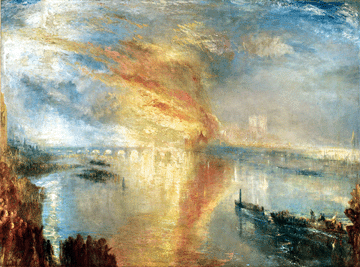
The result is one of the most extraordinary canvases in the National Gallery. The building is burning. The political establishment is literally on fire. And Turner's eye goes straight to the color of the sky — that impossible, violent orange, the Thames turned into molten gold, the smoke rising into a blue so luminous it looks almost peaceful. The destruction is total. The beauty is undeniable. And somehow, Turner makes both things true at once.
That tension — between chaos and beauty, between burning things down and building something new — is London's defining characteristic. It always has been.
A City That Built Itself on Contradiction
London should not work. It is too big, too crowded, too expensive, too grey, too loud. It has been destroyed by fire, gutted by plague, bombed into rubble, and perpetually threatened by flooding. Its weather is a standing joke among everyone who lives there and everyone who visits. Its food was, for most of its history, a source of genuine international pity.
And yet from roughly 1700 to 1945 — two and a half centuries — London was the most important city on earth. Not the most beautiful. Not the most cultured, in the way that Paris was cultured, or Vienna. But the most important. The place where the largest share of the world's money moved, where the most consequential political decisions were made, where the ships came from and the ships returned to.
This matters for understanding London's art. Because London did not produce great art the way Florence produced great art — through the concentrated patronage of a ruling family with aesthetic ambitions and unlimited funds. London produced great art the way London produced everything: chaotically, commercially, competitively, and often despite itself.
Hogarth's City: The First Great Satire of Financial Capitalism
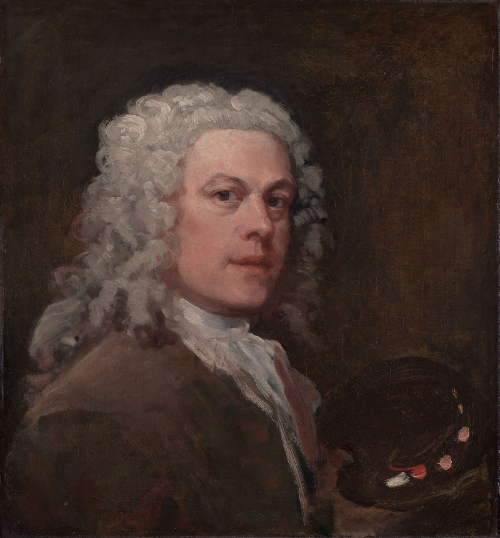
William Hogarth was born in London in 1697, the son of a failed entrepreneur who spent time in debtors' prison. He grew up watching money move — who had it, who lost it, what it did to people when they got it and when it disappeared. He became the most perceptive visual chronicler of a city in the grip of its first great financial expansion.
His series Marriage A-la-Mode, painted in the 1740s, is six canvases that tell a single story: a cash-poor aristocrat sells his son in marriage to the daughter of a wealthy merchant. Both families get what they want — the earl gets liquidity, the merchant gets a title — and everyone ends up destroyed. The son dies in a duel. The wife takes a lover. The merchant, in the final panel, removes his dying daughter's wedding ring before her body is cold.
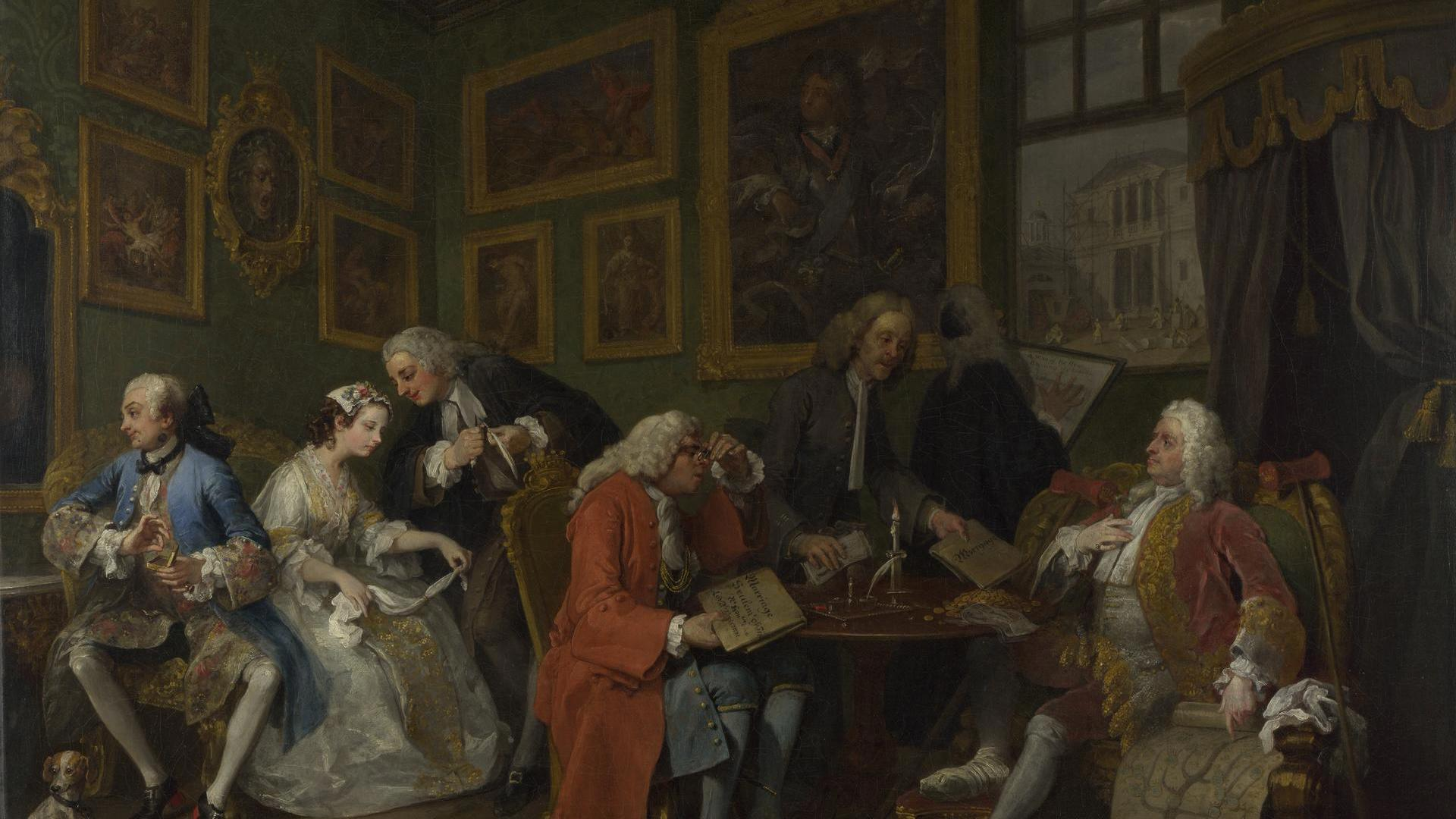
 The National Gallery, London
It is a story about a transaction masquerading as a relationship. About the difference between price and value. About what happens when a society decides that everything, including human beings, can be optimized for yield.
Hogarth painted this during the South Sea Bubble's aftermath, when London had just experienced its first great financial crisis — a speculative mania, a catastrophic collapse, and a reckoning with the gap between paper wealth and real value. Sound familiar?
What makes Hogarth remarkable is not the moral outrage — plenty of artists have been morally outraged — but the precision. He understood that corruption does not announce itself. It arrives in small compromises, in reasonable-seeming transactions, in the gap between how things are presented and what they actually are. Every detail in his paintings is a lie that somebody is telling themselves.
For anyone who works in finance or policy, Hogarth is required reading. Not because the 18th century is instructive, but because the psychology he documented has not changed at all.
Turner's Heresy: Seeing What Was Actually There
If Hogarth was London's conscience, Turner was its visionary — and for most of his life, London did not know what to do with him.
Turner spent decades painting light as it actually behaves — the way fog dissolves the boundary between sky and water, the way industrial smoke catches the sunset, the way a steam engine trailing fire through a rainstorm creates something that is simultaneously terrifying and sublime. He was painting the world as it was actually becoming: industrialized, accelerating, beautiful in ways that had no precedent and no adequate language.
His contemporaries largely hated it. Queen Victoria thought he was probably mad. Critics called his canvases "eggs and spinach." The paintings were too formless, too atmospheric, too unwilling to resolve themselves into the kind of clear, stable, readable image that a prosperous Victorian felt entitled to hang above the fireplace.
What they were really objecting to was the epistemology. Turner was saying: the world is not stable and clear. It moves. It blurs. Certainty is an illusion we impose on a reality that is, at its core, light and atmosphere and change.
Monet understood this immediately. He encountered Turner's work at the National Gallery while sheltering in London during the Franco-Prussian War, and he carried what he saw back to France. The movement we call Impressionism — which transformed Western art, which produced some of the most commercially valuable paintings in history, which is now so beloved it has become almost impossible to see clearly — began, in significant part, with an English painter whom his own country considered a madman.
This is a pattern worth noticing. The most genuinely original thinkers in any field are almost always rejected by the establishment that will later claim them. The lag between Turner's work and its recognition was roughly fifty years. The question for anyone building something new is not whether the establishment approves — it almost certainly won't — but whether you have Turner's conviction that you are seeing something real.
Elizabeth I and the Portrait as Political Instrument
Before Hogarth and Turner, before the financial city and the industrial city, there was the royal city. And no monarch understood London — understood power and image and the management of perception — quite like Elizabeth I.
She was the daughter of a king who executed her mother. She survived her teenage years by performing absolute submission to whichever faction held power, biding her time with a patience that reads, in retrospect, like cold genius. When she finally became queen at twenty-five, she understood something that many more powerful rulers have failed to grasp: that legitimacy is not given, it is constructed. And it is constructed, above all, through image.
Her portraits are not records of how she looked. They are arguments for why she should be obeyed. The famous Rainbow Portrait — painted when she was nearly seventy — shows a young, ageless woman covered in symbolic ornament: eyes and ears embroidered on her cloak, a serpent of wisdom on her sleeve, a rainbow in her hand. She has positioned herself as something between a queen and a deity, too essential to the cosmic order to be questioned or replaced.
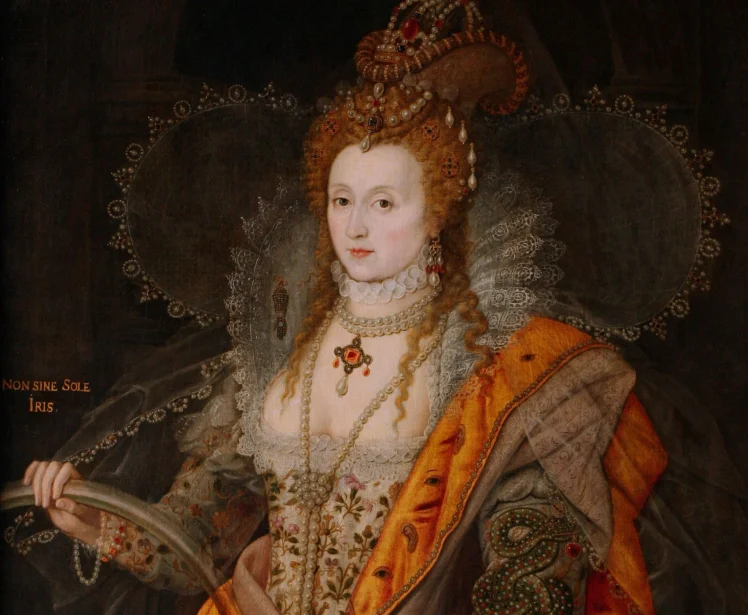
She was also standing on a globe. The message was not subtle. The execution was flawless.
What Elizabeth understood is that in the absence of the kind of raw military power that male monarchs could display, image becomes everything. She could not lead an army. She could not claim the divine authority that came automatically to kings. What she could do was control the narrative so completely that the question of her legitimacy became almost impossible to raise.
Every political leader, every CEO, every institution that depends on public trust is managing some version of this problem. Elizabeth's solution — total control of the image, the symbol, the story — remains the most sophisticated answer anyone has found.
What London Built
London's greatest contribution to human civilization is not a painting or a symphony. It is a set of institutions: the rule of law, parliamentary democracy, the free press, the central bank, the stock exchange, the limited liability company. These are not beautiful things. They are useful things, and they changed the world more completely than any artwork.
But London produced extraordinary art too — precisely because the city's commercial energy created an audience that could not be satisfied by court painters and church commissions. Handel found in London the paying public that transformed him from a Hanoverian court musician into the composer of Messiah. Turner sold paintings to industrialists who had never met an aristocrat. Shakespeare wrote for everyone who could afford a penny to stand in the Globe's yard — which is to say, for everyone.
The city's vulgarity was its freedom. The market, for all its cruelties, did not care about your birth. It cared whether you could hold an audience.
The Question It Leaves Behind
St. Paul's Cathedral survived the Blitz. Wren's dome, visible from miles away through the smoke of a burning city, became the defining image of London's refusal to be destroyed. There is a famous photograph: the dome rising above the smoke and flame, serene and immovable while everything around it burns.
Churchill understood the symbolic power of that image and made sure the Cathedral was protected at almost any cost. Beauty, he seemed to understand, is not a luxury in a crisis. It is an argument — for continuity, for civilization, for the proposition that some things are worth preserving.
What are the buildings in your own life — the institutions, the relationships, the commitments — that you would protect at almost any cost? And are you actually protecting them, or simply assuming they will survive?
One artwork to sit with: J.M.W. Turner, The Fighting Temeraire (1839), National Gallery, London — a warship that fought at Trafalgar being towed to the scrapyard by a small, ugly steam tugboat. The old ship is luminous, ghostly, magnificent. The tug is dark and squat and belching smoke. It is the most beautiful painting ever made about the relationship between what we are losing and what is replacing it. Turner called it his greatest work. Make of that what you will.
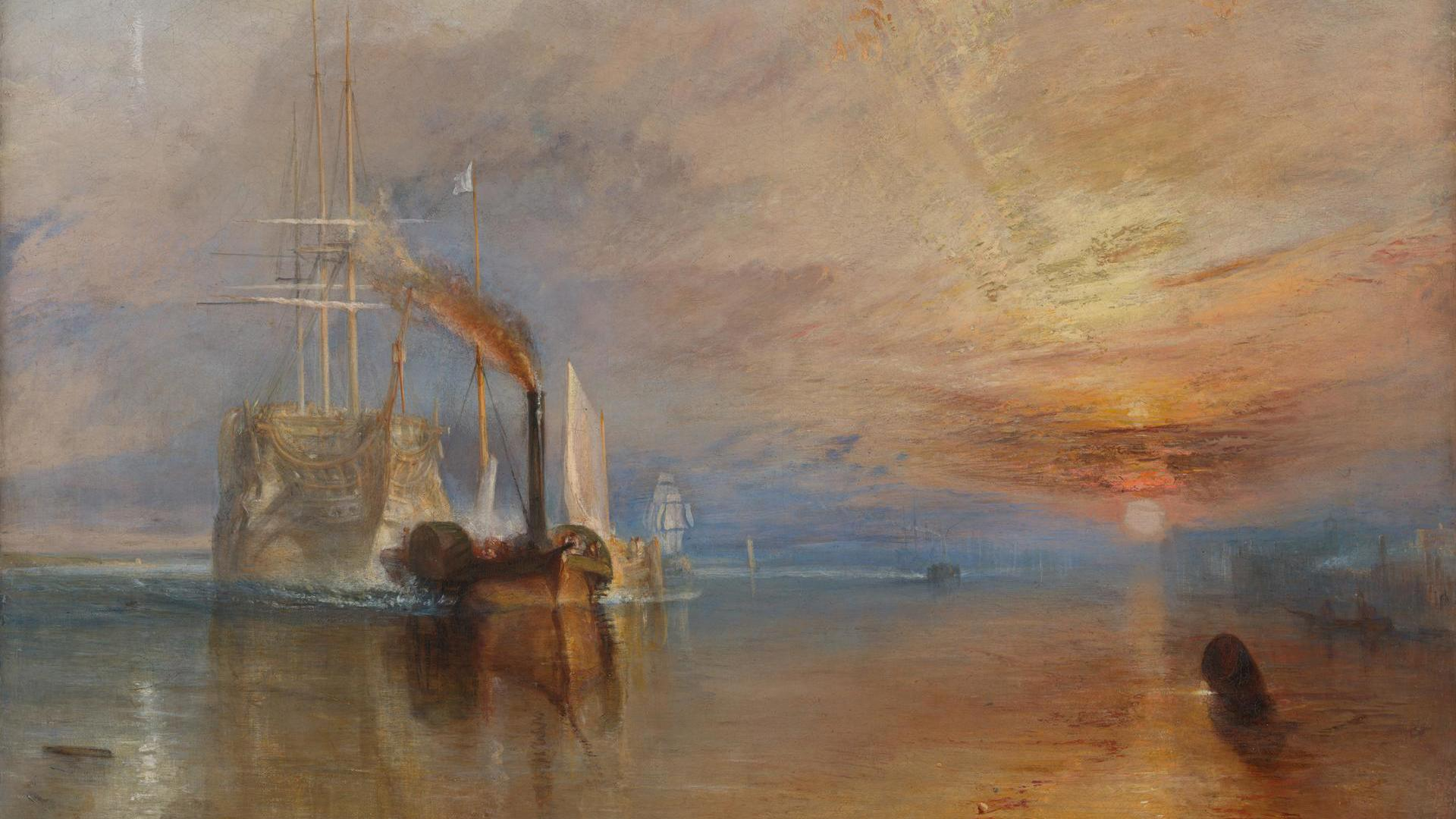
 The National Gallery, London
Next: Post 2 — Scotland: Melancholy, Myth, and the Art of Losing Beautifully
![Life | Greece Sanctuary] Skiathos #Escape](https://storage.ghost.io/c/2a/9e/2a9e2b04-30f6-4166-8010-a3730d2eb719/content/images/size/w720/2026/09/Skiathos.jpg)
![Life] What is your comfort food?](https://storage.ghost.io/c/2a/9e/2a9e2b04-30f6-4166-8010-a3730d2eb719/content/images/size/w720/2026/09/WhatsApp-Image-2026-09-18-at-10.11.32.jpeg)
![Life | London Sanctuary] The Grove: Place of Restoration #Retreat](https://storage.ghost.io/c/2a/9e/2a9e2b04-30f6-4166-8010-a3730d2eb719/content/images/size/w720/2026/08/WhatsApp-Image-2026-08-07-at-21.51.41.jpeg)
Comments ()