Obsidian Memo] Leadership Lessons from Alexander the Great. The Visionary.
Capitalism is the modern battlefield. M&A is conquest. A reflection on Alexander the Great — the myth, the man, the visionary — and the leadership lessons that still echo across boardrooms and centuries.
![Obsidian Memo] Leadership Lessons from Alexander the Great. The Visionary.](/content/images/size/w1200/2026/03/colosseo_alexander_gold.jpg)
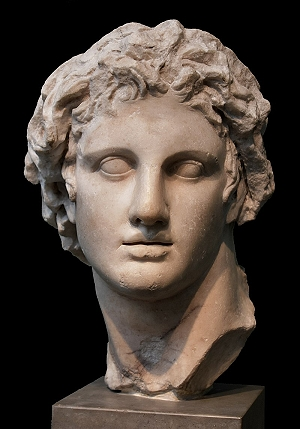
Alexander the Great. The Visionary.
"Surely he must have dreamed of the best world for his people as well beyond the expansion and his conquests," I said to my friend, standing in the Savile Club. We began talking about the "ideal" governance and rulership. My friend continued: back in those days, they too were trying to figure it out — dying young on the battlefield. They were young themselves. What could they really have known?
He was only 32 when he died. He began at 16, left in charge of Macedonia, and by 18 he was commanding the cavalry and defeating the supposedly "unbeatable" Sacred Band of Thebes.
Sometimes, I wonder what he might have envisioned as a "good" empire. How would he have defined greatness?
Legacy is not built overnight. Things take time to build. And once built, every ounce of energy must be channeled into preserving it for the next generations.
Inheritance. Heritage. Preservation.
But how, and at what cost? Can a founder's philosophy truly outlast its founder and be passed down untarnished?
The Making of a Leader — or the Unmaking of a Boy
Before we ask what Alexander built, we must ask what was built into him.
His mother, Olympias, was a formidable force — deeply mystical, fiercely ambitious. She told him, with conviction, that he was not merely the son of Philip II of Macedon. He was the son of Zeus. A demi-god. Destined.
What does that do to a child?
It installs a script that cannot be easily unwritten. It sets a standard that no earthly achievement can ever quite meet. And it creates, perhaps, the most dangerous and most productive condition a leader can carry: an inner restlessness that cannot be satisfied.
He didn't just want to win. He needed to prove something — to himself, to his mother, to the myth she had wrapped around him.
He modeled himself on Achilles. He carried a copy of the Iliad, annotated by Aristotle himself, wherever he went. Before his great campaigns, he made a pilgrimage to Troy — to stand at the grave of his hero, to feel the ground, to draw something from it. It was his ritual to go to the sacred pilgrimage before entering the battlefield. There was ritual in his ambition. Intention. He was not merely chasing territory; he was following footsteps he believed were already marked out for him.
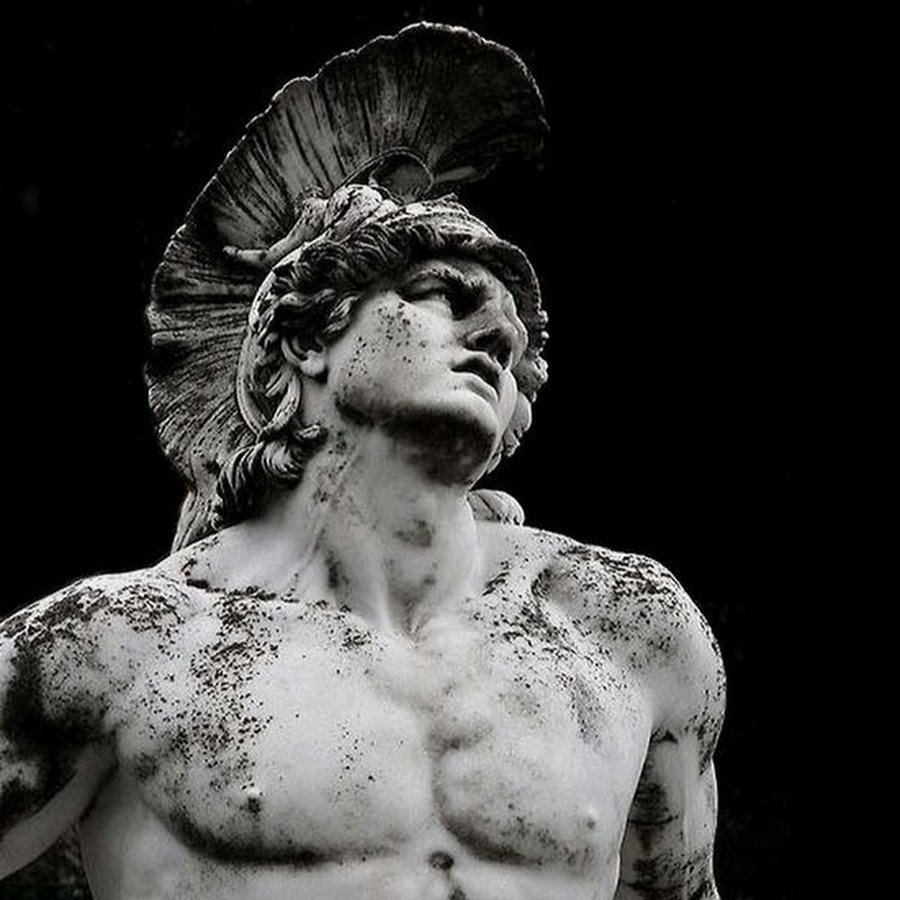
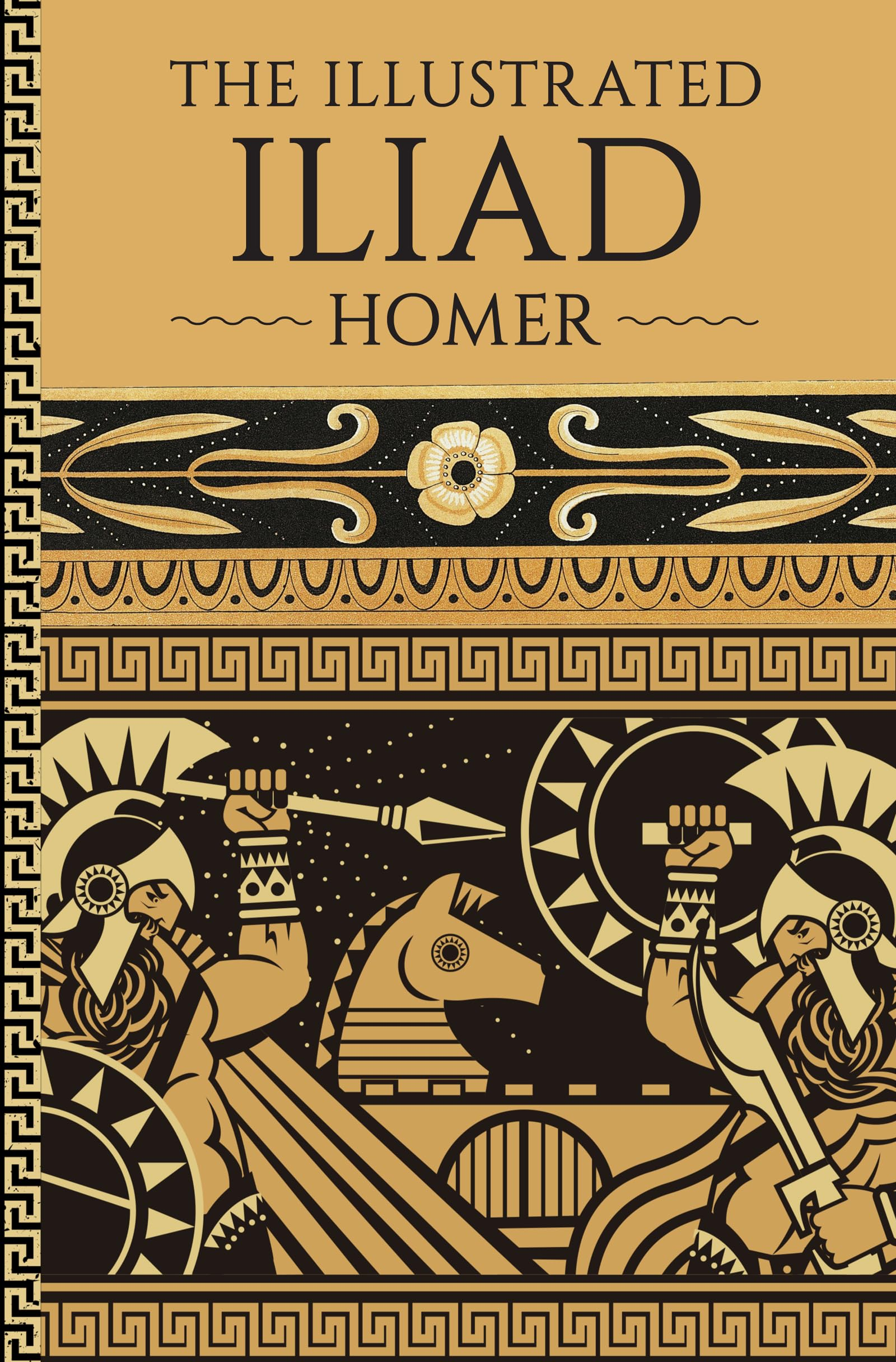
Left: Achilles / Right: Iliad
The Boy King Who Was Underestimated
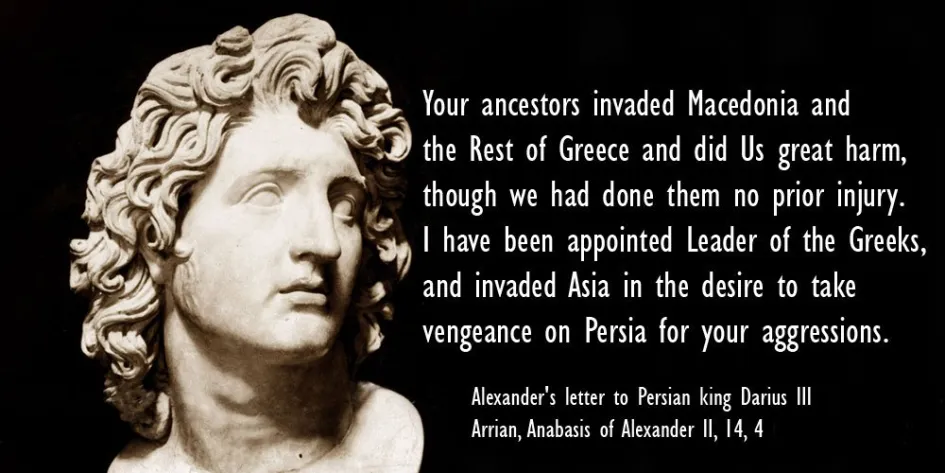
When Philip was assassinated and Alexander took the throne, the world looked at him and saw a boy. Darius III, the mighty King of Persia, reportedly dismissed him as such. A young upstart. A nuisance at best.
We know how that unfolded.
There is something worth sitting with here. The people who most underestimate a leader in the early chapters are often the same people who cannot comprehend the leader in the later ones. The mistake Darius made was not military — it was perceptual. He measured Alexander by his age, his height — 165 to 170 centimetres, unremarkable by any standard — his inexperience. He did not measure him by his hunger, his preparation, or his willingness to go further than anyone thought reasonable.
In modern business, this happens constantly. The disruptor is dismissed. The founder is called naive. The new entrant is told the market is too established, the incumbents too entrenched. And then, one morning, the map has changed.
Capitalism is the Modern Battlefield
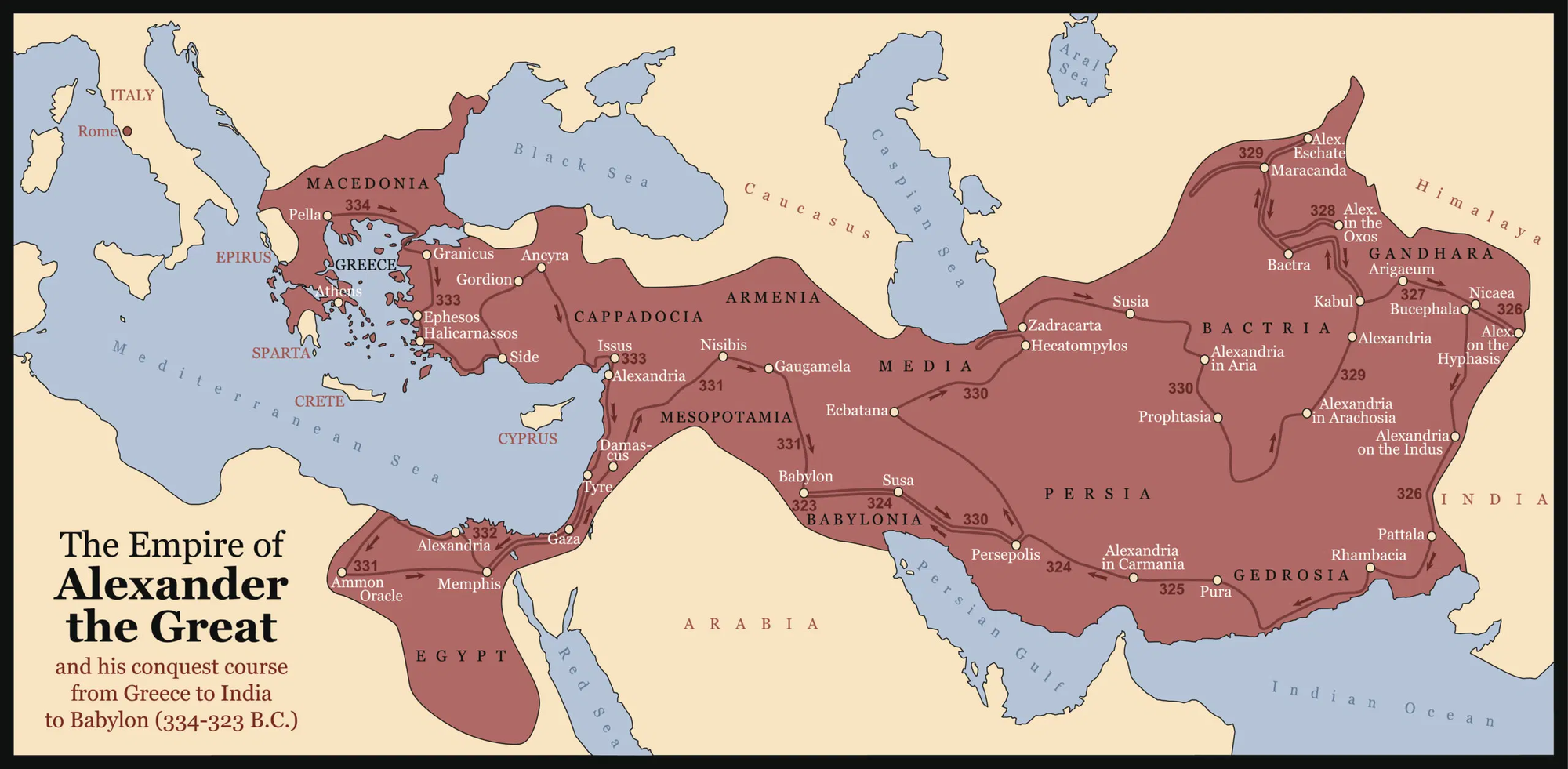
We have sanitised the language of business to the point of abstraction. We speak of "market penetration," "hostile takeovers," "war chests," "campaigns," "targeting," "capturing" market share. We speak of "boots on the ground" in new territories. We speak of "kill rates" in sales.
The language was never metaphor. It was always memory.
M&A is a modern battle. The conquest of new geographies — new markets, new cultures, new regulatory landscapes — is exactly what Alexander was doing, sword replaced by term sheet. The general who marched into Persia and Egypt is not so different, in essential spirit, from the firm that expands into Southeast Asia or the Gulf or Sub-Saharan Africa, arriving with capital, with confidence, and with assumptions about the world that will be tested.
Alexander did something that most conquerors before and since failed to do: he was genuinely curious about what he found. He did not only impose. He absorbed. He adopted Persian dress. He integrated Persian nobles into his administration. He introduced Greek culture to Central Asia, and Central Asian culture to the Mediterranean world. He was, in a real sense, the first great globaliser — not merely moving across the world, but blending it.
The greatest leaders in international business understand this instinctively. You do not simply arrive in a new market and impose your model. You adapt. You listen before you speak. You learn the hierarchy before you challenge it. The firms that fail in cross-border expansion are almost always the ones who arrived certain they already understood the territory.
The Exile. The Estrangement.
What is less often discussed is that Alexander was not always in command of his own story. He did not get along with his father, Philip II — the man who built the very army Alexander would inherit and deploy. Their relationship was volatile, marked by rivalry and mutual wounding. At one point, Alexander went into voluntary exile. He stepped away.
We rarely talk about this in leadership. The period before the glory. The falling out. The wandering. The years of not quite belonging anywhere.
But these are not gaps in a biography. They are the formation. The leaders who have known exile — whether literal or professional — carry something that the uninterrupted rise cannot produce: a deeper understanding of impermanence, a tolerance for uncertainty, and a hard-won clarity about what they actually stand for when stripped of title and position.
Some of the most consequential decisions in business history were made by people who had first been forced out, overlooked, or written off. Think Steve Jobs.
What Did He Want? What Did He Regret?
Here is the question that haunts me.
Alexander reached the banks of the Hyphasis river in what is now India, and his army, exhausted and homesick, refused to go further. He wept. Not from weakness — but from the weight of a vision that had outpaced the people around him.
He wanted to reach the end of the earth. To see what was on the other side. His was not only an empire of conquest — it was an empire of curiosity. He genuinely believed there was an ocean at the edge of the world, and he wanted to stand on its shore.
That longing — to reach the edge, to see what no one had seen — is something every true founder understands.
But I believe, if he had the stillness to reflect, he might also have carried a private grief. He had not built something that could survive him. The relationships he sacrificed in the heat of campaign — the killing of Cleitus, his closest friend, in a drunken rage; the estrangement from officers who loved him; the paranoia that crept in with absolute power — these were the costs of a life lived entirely in motion.
He was bisexual, polyamorous, fully human in his appetites and his contradictions — a man shaped by his era and yet somehow always slightly outside it. He was not a pure symbol. He was a person. And like all people who build at speed, he likely left behind things he wished he had said, relationships he wished he had tended, a succession he never properly planned.
He died at 32 with no clear heir, and within twenty years, everything he had built was divided and diminished.
The Lesson We Keep Failing to Learn
According to a study on family offices I found today, three out of four say they lack a formal succession plan but intend to train the next generation of leaders.
Intend to.
Alexander intended many things.
But this is not, at its core, a succession problem. It is a stewardship problem — and the distinction matters enormously.
Succession is a transaction. A name on a door. A title transferred. Stewardship is something far harder: the living transmission of why the institution exists, what it refuses to compromise, and how it makes decisions in the dark, when no one is watching and no policy document applies.
The founder's vision — the animating philosophy, the why beneath all the what — rarely survives in written form. It lives in instinct, in the stories told over dinner, in the judgment exercised in moments too small to ever appear in a governance framework. And when the founder leaves, what remains is the architecture without the soul. The structure without the spirit.
The next generation inherits the map. But the map was never the territory.
True stewardship asks a harder question than who leads next. It asks: have you built the conditions in which the next leader can lead from the same interior place that you did? Not mimicking you — but genuinely carrying the values, the non-negotiables, the hard-won discernment that no onboarding document can fully capture.
Not a mission statement. Not a slide deck. Something that transmits the real thing — and trusts the next generation enough to let them make it their own.
That is the work Alexander never did. It is the work most founders defer until it is too late.
Stewardship is not a chapter at the end of a leadership story. It is the discipline running quietly through every chapter — or it is nothing at all.
Leadership in the Age of AI and the Shifting Global Order
"My big thesis today is that every so often, a world order changes and I think we are in one of those moments." - Finland's president, Alexander Stubb, March 16, 2026 at LSE.
We are living through something that rhymes with Alexander's world more than we care to admit.
The global order is being renegotiated in real time. Capital flows are being redirected. Alliances — political, commercial, cultural — are being redrawn. New territories are opening, not on maps, but in technology, in data, in the architectures of intelligence itself.
AI is not merely a tool. It is a new theatre of operations. And like all new theatres, it will reward the leaders who approach it with genuine curiosity — who are willing to learn the culture, adapt their model, and resist the temptation to impose the old playbook onto a fundamentally different landscape.
The leaders who will thrive are not the ones who arrived with the most certainty. They are the ones who, like Alexander at his best, can hold a grand vision and remain genuinely open to what the journey reveals.
But they must also do what Alexander could not.
They must build something that outlasts them.
They must not wait until the banks of the Hyphasis — until the moment the team refuses to go further — to ask the deeper question: What am I actually building this for, and who will carry it forward when I am gone?
The end of the earth can wait. The succession plan cannot.
What are you building — and who knows how to carry it when you are no longer in the room?
![Obsidian Memo] Leadership Ground Truth: What Cuba, Puerto Rico, and Hawai'i Taught Me About Capital and Resilience](/content/images/size/w720/2026/02/Bad-Bunny.jpg)
![Obsidian Memo] Leadership Lessons for Founders: Building “You, Inc.” Without Burning It Down](https://images.unsplash.com/photo-1474917518260-23f84bd71c75?crop=entropy&cs=tinysrgb&fit=max&fm=jpg&ixid=M3wxMTc3M3wwfDF8c2VhcmNofDQyfHxzYWlsaW5nfGVufDB8fHx8MTc3MDkyODg3Mnww&ixlib=rb-4.1.0&q=80&w=720)
![Leadership] Inside Europe’s Economic Crises — How Christine Lagarde Leads in a Fragmented, Volatile World (ft. Francine Lacqua)](/content/images/size/w720/2026/01/Christina-Lagarde.jpg)
Comments ()