Obsidian Essay] Christmas Eve Reflection: The Lattice and the Boardroom (the Monastery and the Vow)
Personal Essay: A Christmas Eve visit to a cloistered monastery becomes a meditation on devotion, ambition, and the possibility of staying spiritually aligned while working within imperfect systems. What does it mean to keep a vow when the world demands compromise?
![Obsidian Essay] Christmas Eve Reflection: The Lattice and the Boardroom (the Monastery and the Vow)](https://storage.ghost.io/c/2a/9e/2a9e2b04-30f6-4166-8010-a3730d2eb719/content/images/size/w1200/2025/12/WhatsApp-Image-2025-12-25-at-01.12.555-1.jpeg)
A Christmas Eve encounter with silence, devotion, and the shape of a calling
“It ought to be remembered that there is nothing more difficult to take in hand, more perilous to conduct, or more uncertain in its success, than to take the lead in the introduction of a new order of things. Because the innovator has for enemies all those who have done well under the old conditions, and lukewarm defenders in those who may do well under the new. This coolness arises partly from fear of the opponents, who have the laws on their side, and partly from the incredulity of men, who do not readily believe in new things until they have had a long experience of them.”
― Niccolò Machiavelli, The Prince
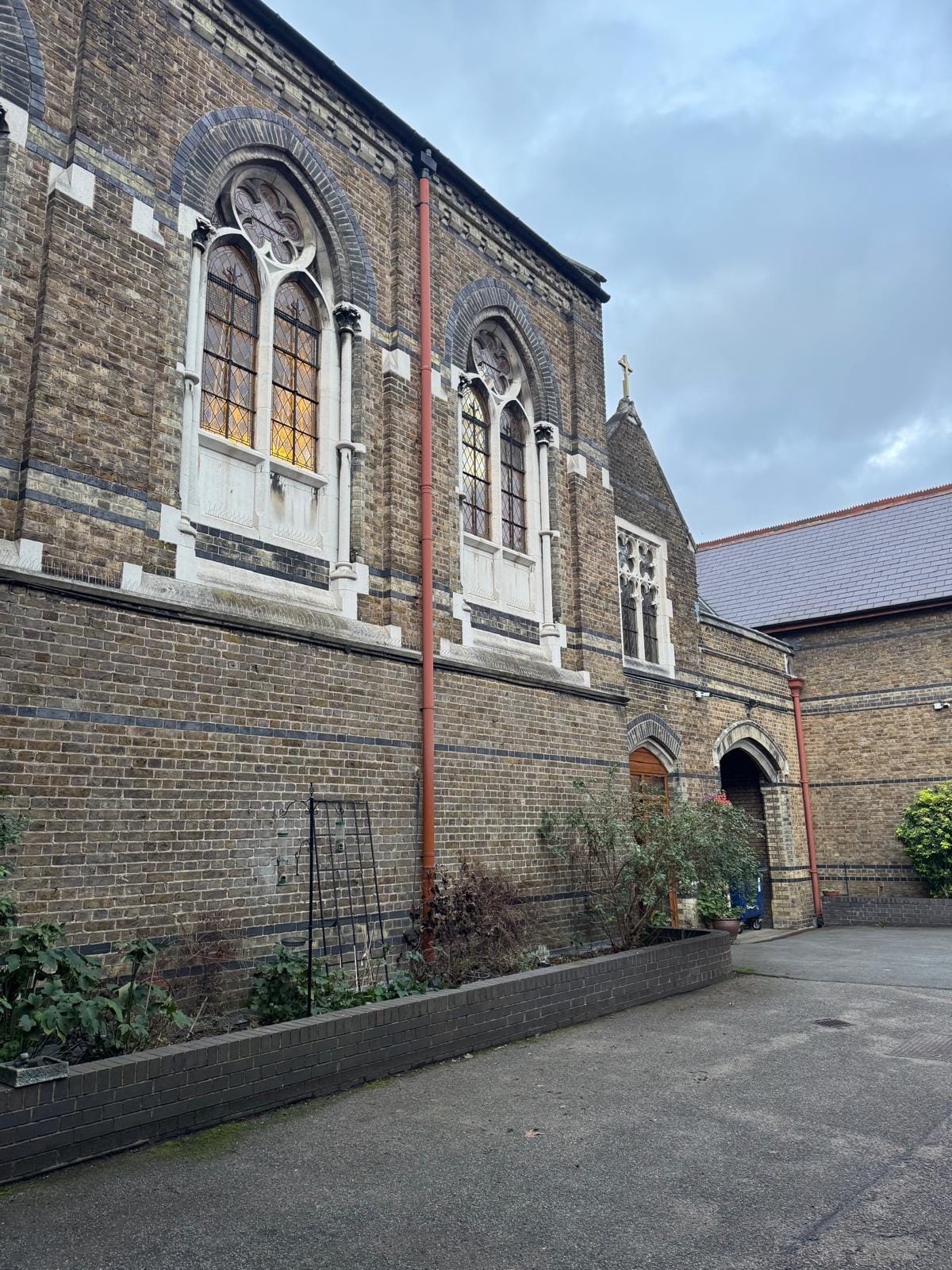
The invitation arrived quietly, as sacred things often do. Annette—whom I first met years ago at a soup kitchen, and who once guided me on pilgrimage to Fatima asked if I would join her for Christmas Eve mass at St. Charles Monastery. I said yes without hesitation, though I didn't fully understand what I was agreeing to.
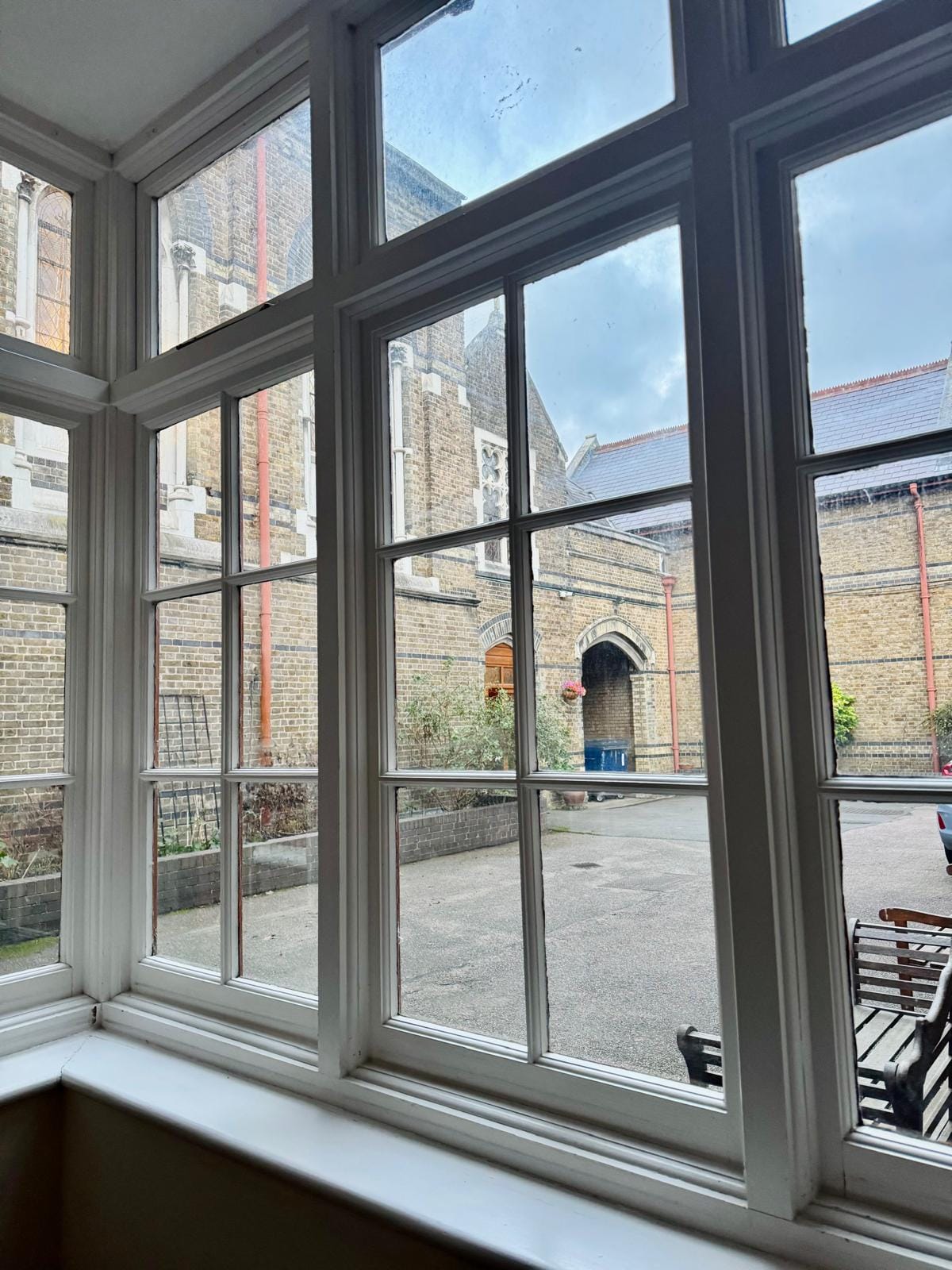
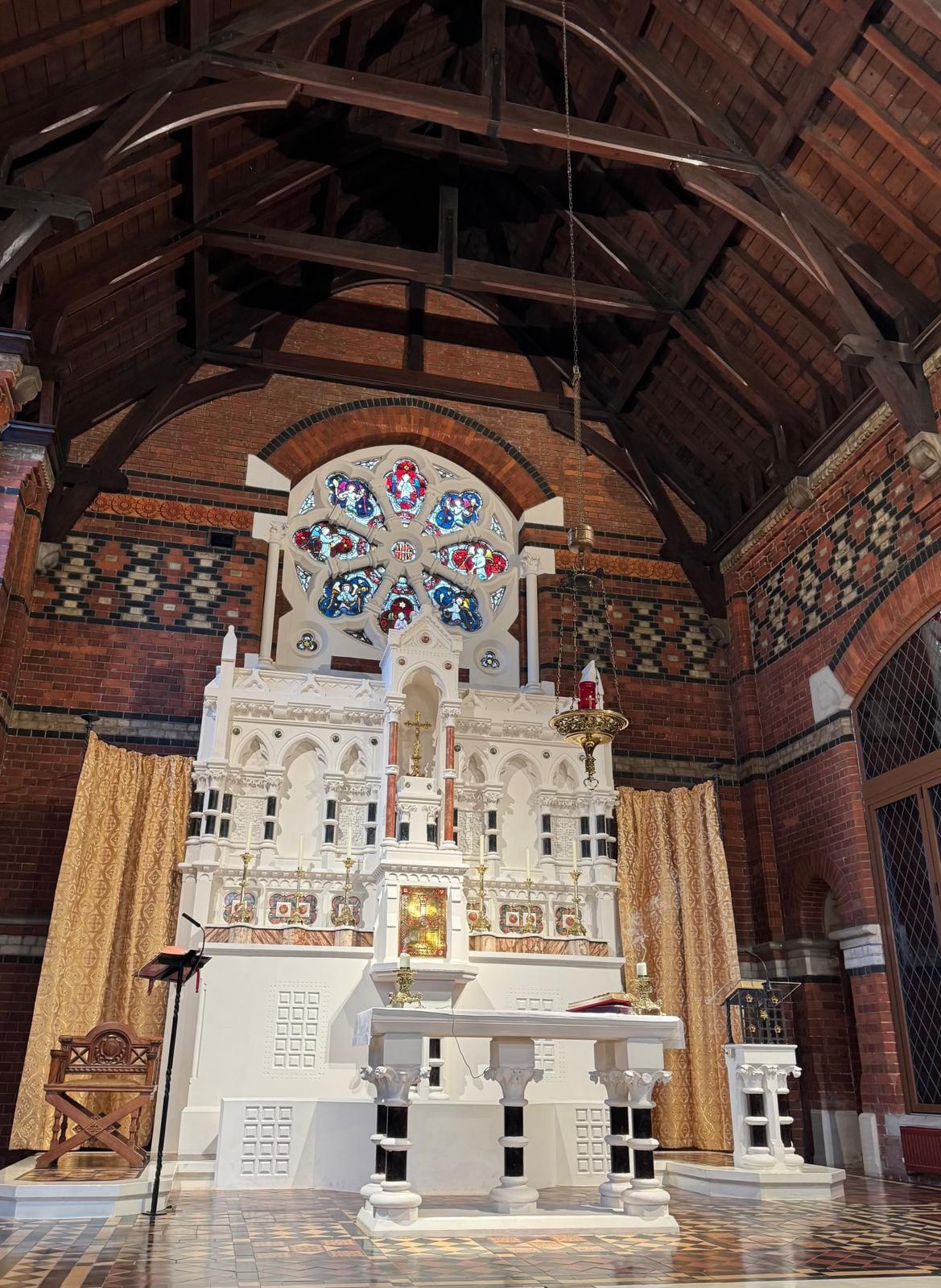
It was 8:00 AM in Notting Hill. The monastery has been cloistered since 1878. When visitors attend mass, they stand in an anteroom, separated by a wooden lattice. You can hear the sisters sing. You can watch them move through the liturgy. But you cannot reach them, and they do not acknowledge you. It is theater in the oldest sense—ritual observed.
I stood beside Annette and two other sisters who serve outside the cloister—Sister Maria and Sister Marie. The nuns inside began to chant with candles in their hands. Their voices rose and fell in unison, unhurried, as if time itself had different rules here.
What struck me most was the stillness. The quality of attention. These women had built their lives around a single commitment, and everything else had been set aside. No phones, no errands, no negotiations with the world. Just breath and devotion, hour after hour, year after year.
I have always been drawn to this kind of life. For nearly a decade, I harbored a private dream that I, too, might one day take the veil. Watching them, I felt the ache of that unfulfilled timeline—the longing to withdraw from what I'd come to think of as "the machinery." Life in a monastery felt like the purest form of service—untainted by ego, ambition, or compromise.
But somewhere along the way, a different calling took priority. Not quieter, but louder. Not simpler, but more entangled. A calling that asked me to work within the systems I found flawed—finance, politics, the machinery of capital—and try to bend them toward something better.
I got into finance 15 years ago, thinking change could only happen from within. I once thought my highest calling was to be a human rights lawyer at the UN. But my north star led me elsewhere—to finance. I believed this was where I could practically implement that vision. Yet, walking that path has been nothing short of an uphill battle.
The problem is that those arenas—the world of finance and politics—reward sharpness. Strategy. The ability to outmaneuver, outpace, outlast. And herein lies my deepest moral debate: Can you reach the top without compromising your moral values? Without learning to do harm? Or on the battlefield, does sparing others simply make you a perfect target for those who won't hesitate?
I did not come to this question theoretically. I grew up close to power—watching how succession, reputation, and leverage shape outcomes. I learned early that information is rarely neutral, and that truth is often negotiated. Silence could protect. Secrecy could steer. Transparency carried a cost.
Part of me wanted the luxury of not knowing—to move through life without reading the fine print of power. I left home young alone, built my career independently, and tried to stay unobtrusive. But I saw too much, too early, and that clarity became hard to set down. For years, I chose mercy over vengeance—learning how to stay tender without becoming naïve, even in environments that reward hardness.
Perhaps that's why I've dedicated my career to questions of transparency, governance, and systemic reform within systems. Not as abstractions, but as urgently personal questions: Is there another way to organize power? Can institutions—financial, political, even familial—be restructured around clarity rather than opacity? Around growing the pie rather than fighting over scraps?
I have found myself speaking in a dialect I never meant to learn—battlefield metaphors, zero-sum logic. In the monastery’s gentleness, the contrast startled me: the hard grain of my thinking against their quiet. I felt a brief embarrassment, like a general who has stepped into a sanctuary and realizes he’s still wearing his armor.
I sometimes wonder if these convictions are ancestral—an echo from Sung-gyeom Shin, a Korean general (9th century) remembered for staking his life on the birth of a new order (it was the birth of 'Goryeo' Dynasty where today's name 'Korea' comes from). He died on the battlefield disguised as the future king (his best friend), drawing enemy attention so his friend and ally could live to build what they had imagined. I think about the clarity required for that: what “good” becomes so real you can die for it without hesitation? He didn’t give his life to preserve a rotting system, but to make room for something new. I don’t know the contours of his vision. But I recognize the impulse: the stubborn insistence that a better nation—or a better institution—is possible.
I have also, if I am honest, carried a complicated relationship with religious institutions themselves. I am spiritual, but I have long been skeptical of the structures that claim to house the sacred. History has shown us how often they have been weaponized—used by rulers to govern their subjects, to justify conquest, to sanctify power. Doctrine can become doctrine. Ritual can calcify. And I have struggled with the tension between my reverence for the divine and my discomfort with the institutions that mediate it.
But sitting in that anteroom, watching the sisters move through their prayers with such firm integrity, I found myself softening. These women were not the institution. They were something else—practitioners of a devotion so sincere it transcended the politics and imperfections of the structures around them. They had not made a vow to an institution. They had made a vow to something deeper. And they returned to it, day after day, regardless of what the world outside had done with the name of God.
After the service, I turned to Sister Maria. She has lived in the monastery for fifteen years. I asked her the question I had been carrying: What about temptation? How do you stay on course?
She smiled, not unkindly. "I return to the vow," she said. "The vow I made to God and to myself. Alignment is the key. Temptations are passing wind. Your conviction and devotion are lasting ground. God is inside you. Always call on him."
Her words were simple, but profound. I realized that I, too, have made a vow—though not to a convent. A vow to stay engaged with the mess and complexity of the world, even when it would be easier to retreat. To believe that transformation is possible not only in sanctuaries, but in boardrooms. Not only in prayer, but in capital deployment.
I had been carrying the assumption that those two paths—the spiritual and the strategic—must remain separate. That to be effective in the world, I must harden. And that to be holy, I must withdraw.
Sister Maria's answer suggested otherwise. Alignment, she said. Not location. Not perfection. Just a return, again and again, to what you have promised yourself.
Perhaps that is the answer to my ambivalence about institutions as well. The question is not whether the structure is flawed—it almost always is. The question is whether I can remain aligned with something truer than the structure itself. Whether I can work within imperfect systems without letting them define the shape of my devotion.
Walking back through Notting Hill, I understood that the question isn't how to avoid the violence of competitive arenas entirely. It's how to return to the vow underneath it. To use whatever proximity to power I have in service of something greater than me. To choose transparency over opacity, even when opacity would be easier. To grow the whole rather than hoard my share.
And perhaps the structure itself isn't as rigid as I've believed. The pyramid model assumes a zero-sum game: only one person at the top, someone must fall for another to rise. But what if it's actually circular? What if leadership operates more like seasons—people stepping in and out depending on the phase of their lives, their capacity, their calling? There's only one CEO or one president at a time, but that doesn't mean four or five people can't hold that role across time.
One of the most surprising things I've learned since leaving my competitive, Type-A upbringing: not everyone wants to be at the top. One of my executive mentors at a large global financial institute told me - not everyone wants to be an MD. They think it is too much responsibility and too risky. Not everyone sees the world through the lens of a power game or dominance. Some people don't want to rule. Some simply want to enjoy their lives without the weight of that particular responsibility. And that's not weakness—that's wisdom about what they're built for.
The objection is obvious: this sounds naive to anyone who's watched succession battles or rounds of restructuring destroy institutions or people's humanity. I'm not arguing that everyone will voluntarily rotate like enlightened philosopher-kings. I'm arguing that when we design systems assuming pyramid logic is inevitable, we create the conditions that make it true. But we can build 'mission locks'—legal structures, dual-class shares, steward ownership models—that act like the monastery walls. They bind the institution to its purpose so that when the temptation of a quick exit or an unethical profit arises, the organization’s own bylaws say no. It builds a system where returning to the vow is the path of least resistance, protecting the soul of the company even when the leaders are tired, tempted, or replaced.
Maybe the violence I've internalized comes from believing there's only one shape power can take. One trajectory. One definition of success.
I still use battlefield metaphors more often than I'd like. I still feel the pyramid's logic pressing down. But Sister Maria was right. It's not about location. It's about what you return to when the noise gets loud.
The nuns will continue their prayers behind the lattice. I'll continue mine in boardrooms. Both are forms of devotion. Both require faith that the work matters even when the evidence is thin.
Both are vows worth keeping.



![Obsidian Essay] Leadership | The Queen Behind the Screen ft. Jeongsun of Joseon (정순왕후) - Life and Leadership Lessons](https://storage.ghost.io/c/2a/9e/2a9e2b04-30f6-4166-8010-a3730d2eb719/content/images/size/w720/2026/09/Screenshot-2026-09-13-024407.png)
![Obsidian Essay] Consciousness and the Universal Law...Quantum Computer](https://images.unsplash.com/photo-1614926037384-4159c33e196b?crop=entropy&cs=tinysrgb&fit=max&fm=jpg&ixid=M3wxMTc3M3wwfDF8c2VhcmNofDIzfHxnYWxheHl8ZW58MHx8fHwxNzg4NjEyNTA5fDA&ixlib=rb-4.1.0&q=80&w=720)
![Obsidian Essay] The Walk - Even Commanders Debrief ft. Admiral McRaven](https://storage.ghost.io/c/2a/9e/2a9e2b04-30f6-4166-8010-a3730d2eb719/content/images/size/w720/2026/08/wp-GettyImages-172044198_master.jpg)
Comments ()