Obsidian Essay] The Monastery and the Vow: A Capitalist's Christmas Reflection
A Christmas Eve visit to a cloistered monastery becomes a meditation on devotion, ambition, and the possibility of staying spiritually aligned while working within imperfect systems. What does it mean to keep a vow when the world demands compromise?
![Obsidian Essay] The Monastery and the Vow: A Capitalist's Christmas Reflection](/content/images/size/w1200/2025/12/WhatsApp-Image-2025-12-25-at-01.12.555-1.jpeg)
A Christmas Eve encounter with silence, devotion, and the shape of a calling.
The invitation arrived unexpectedly, as sacred things often do. Annette—whom I first met years ago at a soup kitchen for the homeless in London, and who once guided me on pilgrimage to Fatima—asked if I would join her for Christmas Eve mass at St. Charles Monastery at 8 am. I said yes without hesitation, though I didn't fully understand what I was agreeing to.
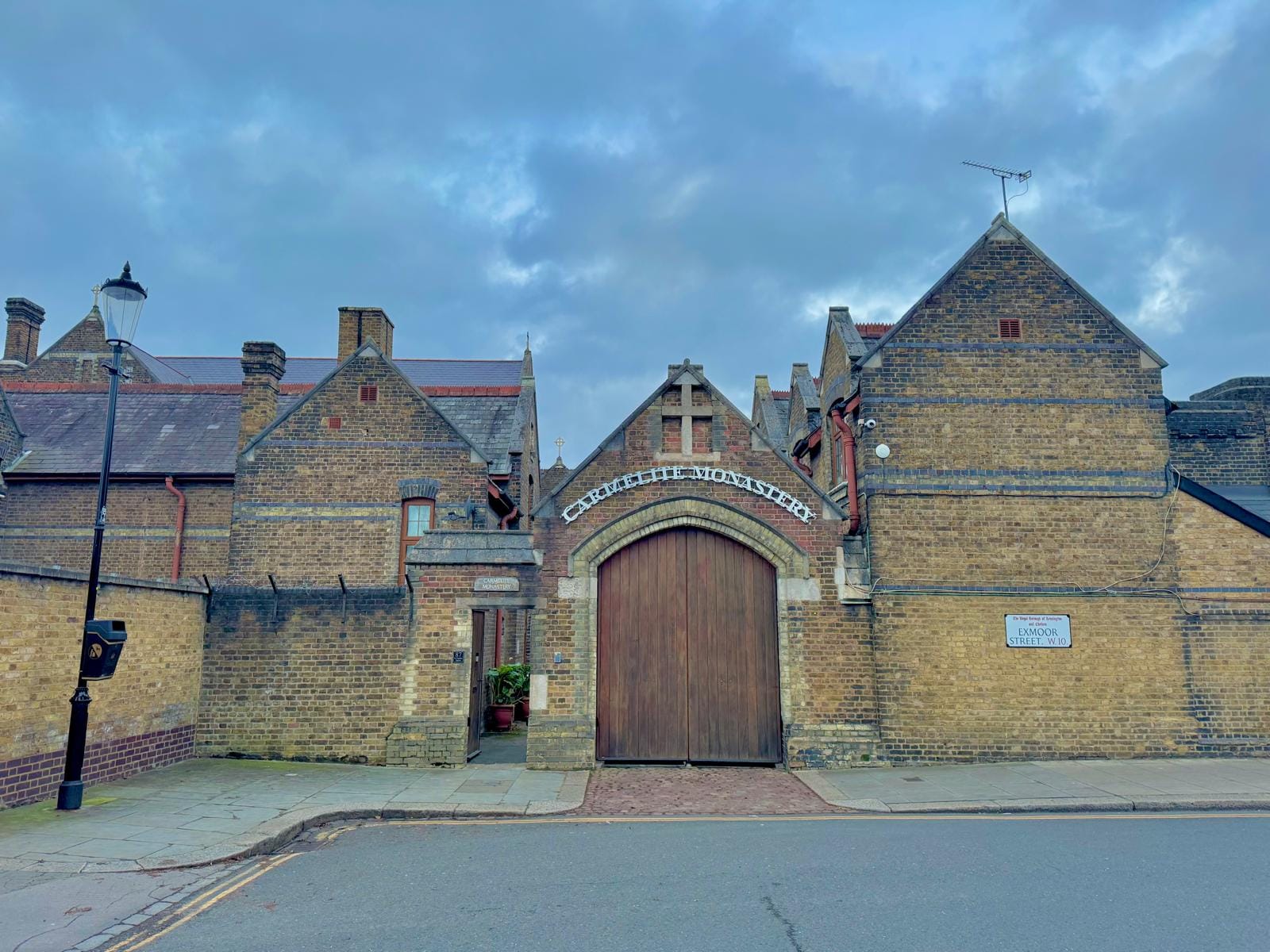
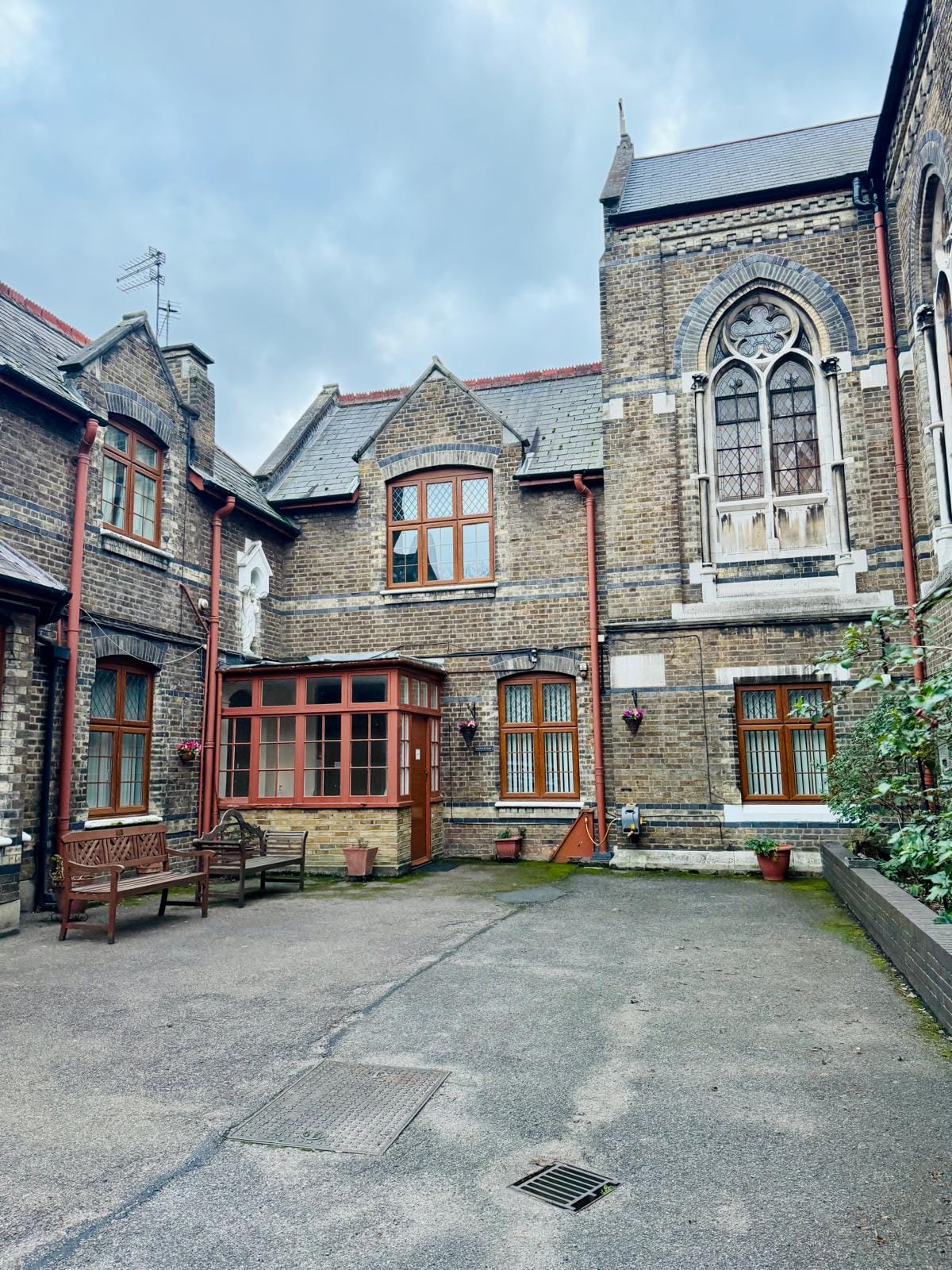
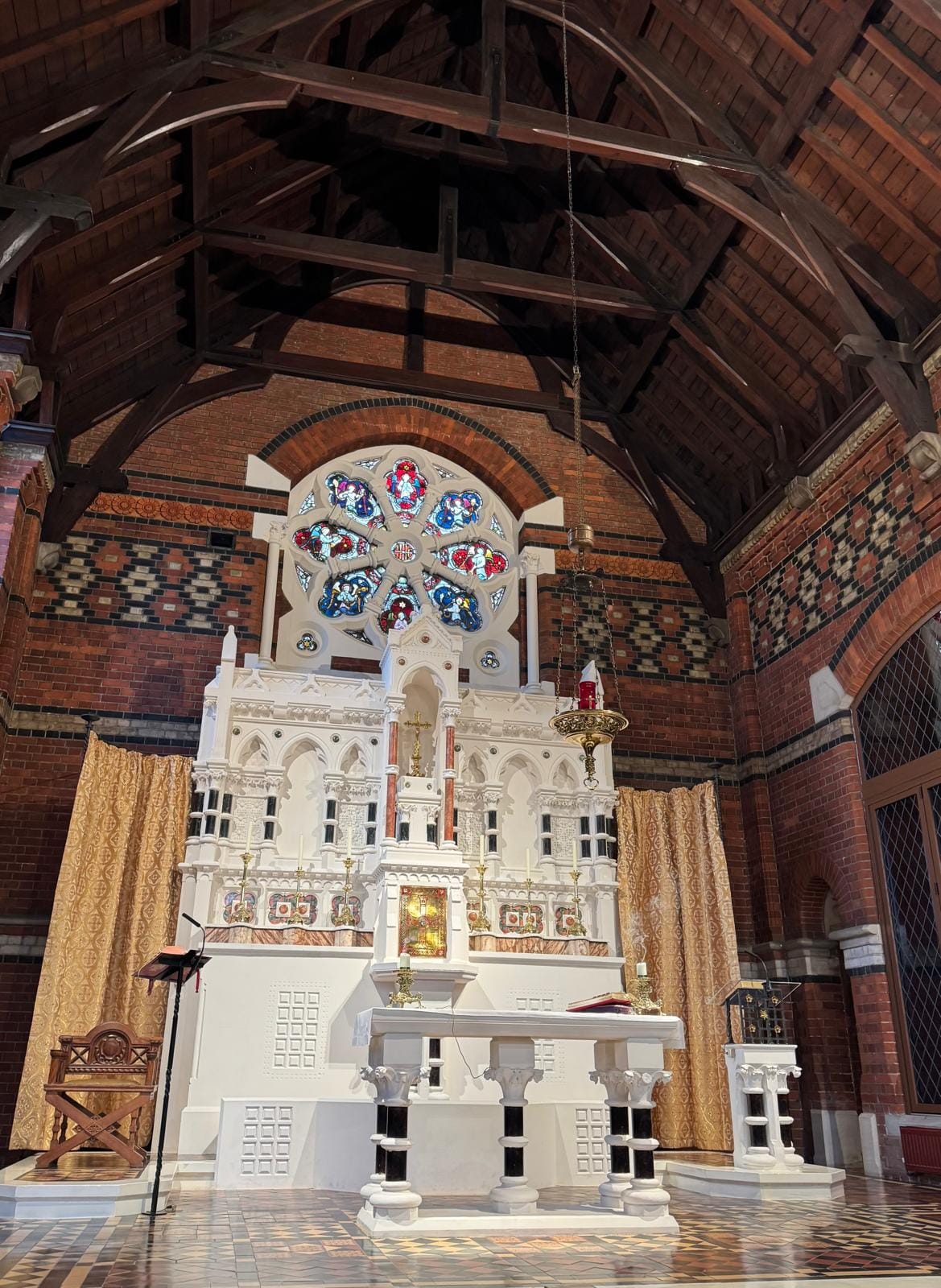
In the middle of Notting Hill, yet the monastery is cloistered since 1878. The nuns who live there have chosen a life of enclosure, speaking to no one beyond their walls, their days organized entirely around prayer. When visitors attend mass, they stand in an anteroom, separated by a wooden lattice. You can hear the sisters sing, holding a candle. You can watch them move through the liturgy. But you cannot reach them, and they do not acknowledge you. It is theater in the oldest sense—ritual observed.
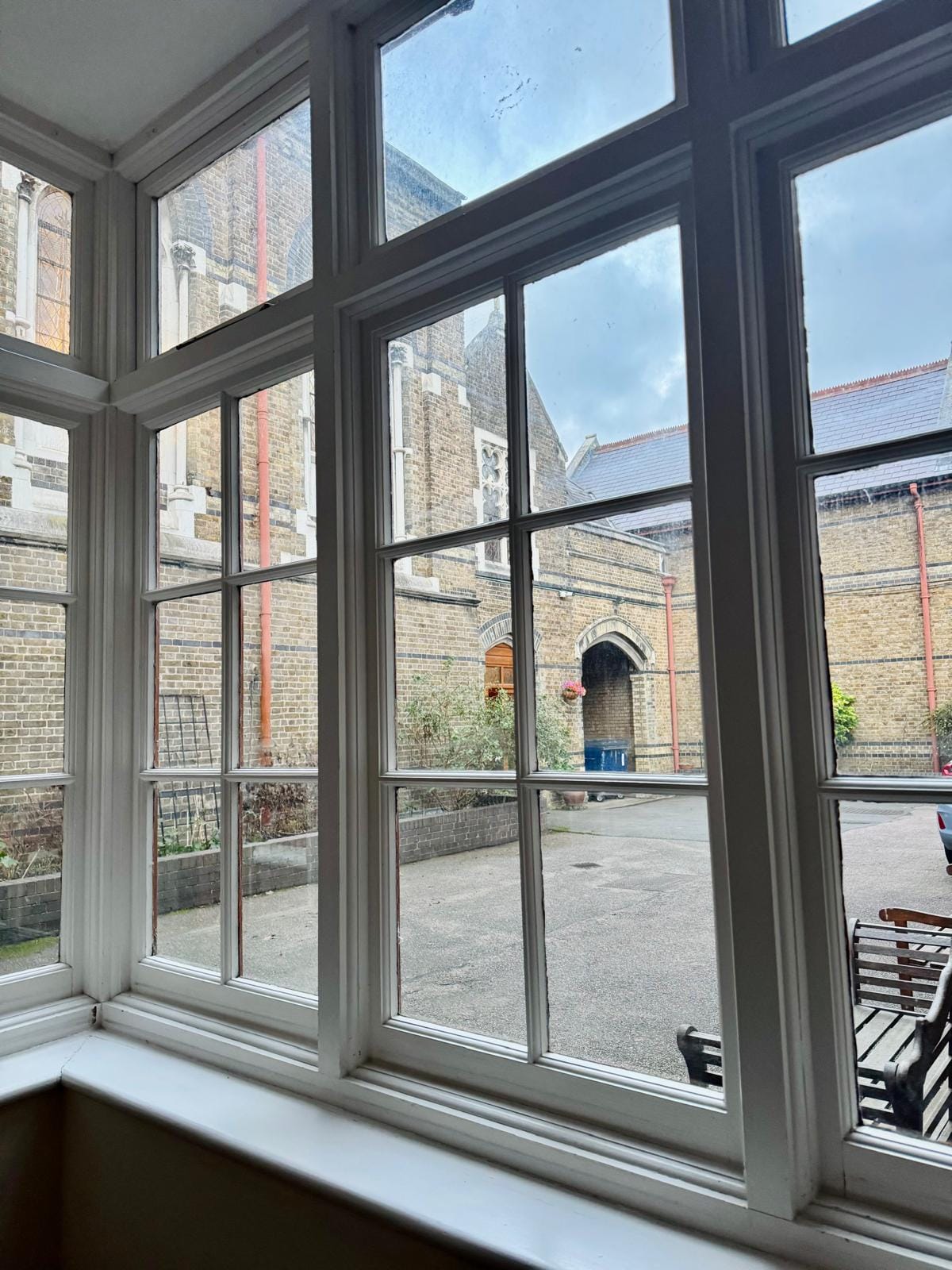
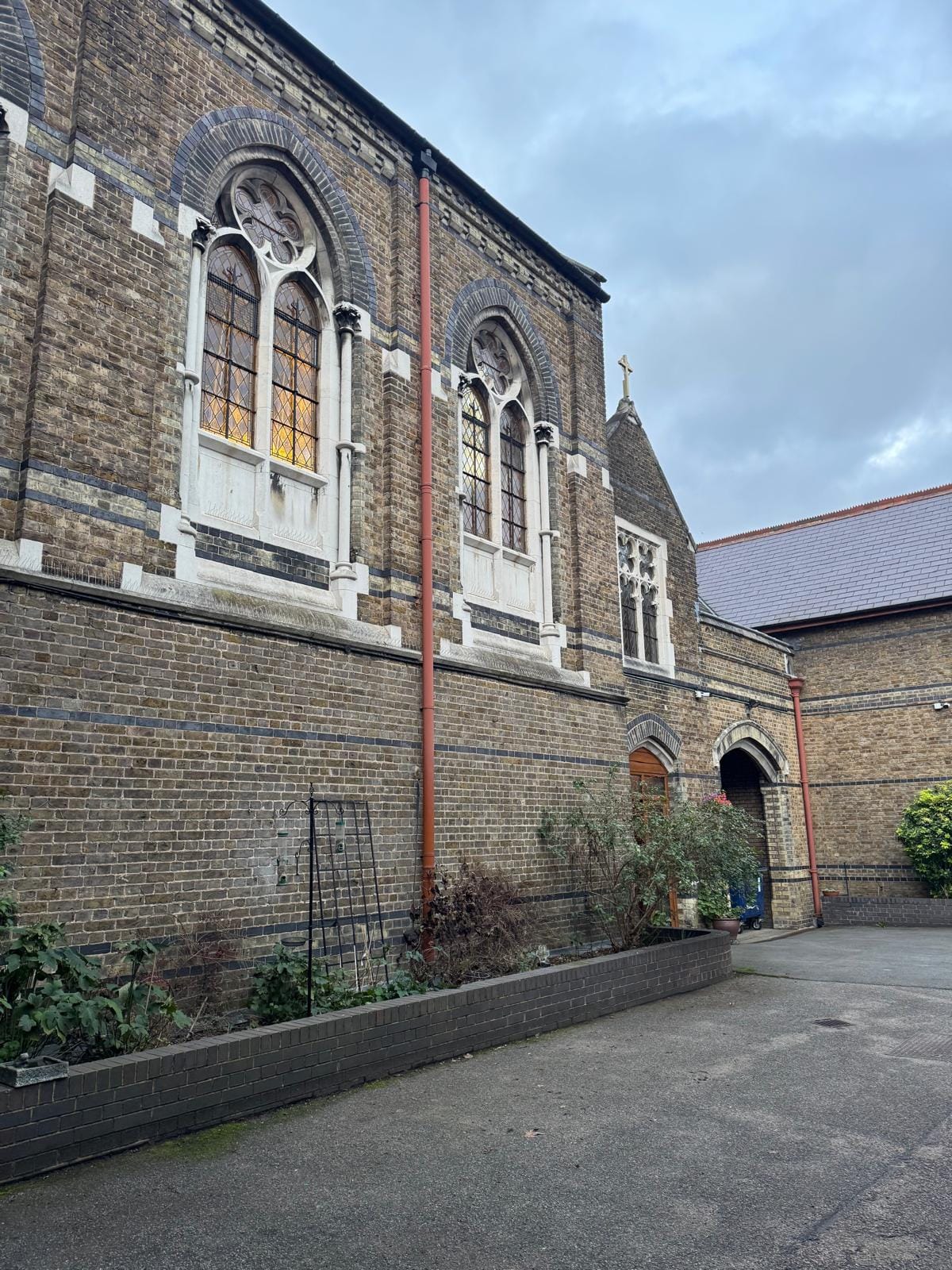
I stood beside Annette and two sisters who serve outside the cloister—Sister Ancey and Sister Marie. The morning light came through the stained glass in soft, muted colors. The nuns inside began to chant. Their voices rose and fell in unison, unhurried, as if time itself had different rules here.
What struck me most was the stillness. Not the absence of sound, but the quality of attention. These women had built their lives around a single commitment, and everything else had been set aside. No phones, no errands, no negotiations with the world. Just breath and devotion, hour after hour, year after year.
I have always been drawn to this kind of life. For nearly a decade, I harbored a private dream that I, too, might one day take the veil. I was looking at them, thinking about my unfulfilled dreams in this life...that I had painfully relinquished to fulfill the other assignment. Life in a monastery felt like the purest form of service—untainted by ego, ambition, or compromise. But somewhere along the way, a different calling took priority. Not quieter, but louder. Not simpler, but more entangled. A calling that asked me to work within the systems I found flawed—finance, policy, the machinery of capital—and try to bend them toward something better.
The problem is that those arenas do not reward kindness. They reward sharpness. Strategy. The ability to outmaneuver, outpace, and outlast. The hierarchies are often based on the zero-sum game hypothesis—shaped like pyramids where to rise often means someone else must fall.
For nearly four decades, my question has been: Is there a way to get to the top without tainting one's hands with blood? Without killing anyone on the battlefield? I do not want to kill anyone, yet oftentimes, sparing others makes you a perfect target for a ruthless enemy. I wondered if we could grow the pie and rise all together, yet reality seems to reflect something else. I have found myself using language I never imagined I would—battlefield metaphors, kill-or-be-killed logic. Perhaps these are memories from my ancestor—a ninth-century general who fought for the vision of a new kingdom and died on behalf of a soon-to-be King so that the nation might survive.
And standing there in the monastery, surrounded by such profound gentleness, I felt the violence of my own thinking. The roughness of my inner world compared to theirs. I even felt embarrassed for a moment.
I have also, if I am honest, carried a complicated relationship with religious institutions themselves. I am spiritual, but I have long been skeptical of the structures that claim to house the sacred. History has shown us how often they have been weaponized—used by rulers to govern their subjects, to justify conquest, to sanctify power. Doctrine can become doctrine. Ritual can calcify. And I have struggled with the tension between my reverence for the divine and my discomfort with the institutions that mediate it.
But sitting in that anteroom, watching the sisters move through their prayers with such quiet integrity, I found myself softening. These women were not the institution. They were something else—practitioners of a devotion so sincere it transcended the politics and imperfections of the structures around them. They had not made a vow to an institution. They had made a vow to something deeper. And they returned to it, day after day, regardless of what the world outside had done with the name of God.
After the service, I turned to Sister Maria. She has lived in the monastery for fifteen years. I asked her the question I had been carrying: What about temptation? How do you stay?
She smiled, not unkindly. "I return to the vow," she said. "The vow I made to God and to myself. Alignment is the key. Temptations are passing wind. Your conviction and devotion are lasting ground. God is inside you. Always call on him."
Her words were simple, but they lodged somewhere deep. I realized that I, too, have made a vow—though not to a convent. A vow to keep trying. To stay engaged with the mess and complexity of the world, even when it would be easier to retreat. To believe that transformation is possible not only in sanctuaries, but in boardrooms. Not only in prayer, but in policy.
But I also realized how much I have been carrying the assumption that those two paths—the spiritual and the strategic—must remain separate. That to be effective in the world, I must harden. And that to be holy, I must withdraw.
Sister Maria's answer suggested otherwise. Alignment, she said. Not location. Not perfection. Just a return, again and again, to what you have promised yourself.
I left the monastery that morning with no grand revelation, only a quiet recalibration. I still do not know if my work in finance will yield the change I hope for. I still wrestle with the harshness required to navigate those spaces. For that, I often visualize the spirit of crusaders. But I left reminded that devotion is not defined by where you stand—it is defined by what you return to when the noise gets loud.
The nuns behind the lattice will continue their prayers, undisturbed. And I will continue mine, in a different way.
Both are forms of faith. Both require a vow.
![Obsidian Essay] The Death of the Enemy: Notes on UK Citizenship and Sovereignty](/content/images/size/w720/2025/12/citizenship-ceremony-7-1.jpg)
![Obsidian Essay] 🍁 Softening is a Form of Strength: A Thanksgiving from the ICU](/content/images/size/w720/2025/12/KakaoTalk_20251128_034620737-2.jpg)
![Obsidian Essay | Culture Shocks] From Seoul to Toronto to New York to London: A Life in Translation](/content/images/size/w720/2025/10/Emily-in-Paris.jpg)