Obsidian Essay] The Odyssey by Chris Nolan. Homecoming & Hero's Journey.
![Obsidian Essay] The Odyssey by Chris Nolan. Homecoming & Hero's Journey.](https://storage.ghost.io/c/2a/9e/2a9e2b04-30f6-4166-8010-a3730d2eb719/content/images/size/w1200/2026/08/WhatsApp-Image-2026-08-02-at-23.51.31-1.jpeg)
EJ's note
Have you ever had that feeling where you feel elevated, more sophisticated, just because you came in contact with another human being — or that human being's work? In a way, the inner work of the soul. You get to see what's inside one's head, or the creation of the soul, and one's light. Brilliant creativity. The scale so vast and so huge that it takes a while for you to catch your breath and to comprehend even the whole scale of it!
Christopher Nolan. Goethe. J.R.R. Tolkien. Bertrand Russell.
These are the creators who are inspiring me these days.
EPIC. That is the only word that can describe the scale of their life's work. LEGACY.
One of my mentors once told me that when he hit his mid-forties, instead of going through a midlife crisis, he delved into all of the Greek classics — and reflected on his life through them. It has been his summer tradition ever since. I wonder if I will emulate him and follow his lead — a summer odyssey of my own, every year. This summer, it seems, I already have begun.
Side note: Christopher Nolan's Odyssey was a perfect excuse for me to start that. And I have to note this is the movie you have to watch in the IMAX theater, because it was filmed with IMAX cameras.
Enjoy!
I. Refresher: The Story
The story itself, for those whose Homer is a little dusty. (And for my American readers: you may remember this as mandatory reading in university. I do. Revisiting it — re-reading it alongside the film — has been the highlight of my summer thus far.)
Odysseus, king of Ithaca, sails off to fight in the Trojan War — a ten-year siege of a city thought to be impregnable. It is Odysseus who ends it, not with strength but with cunning: the Trojan Horse. A giant wooden 'gift' left at the gates, hollow, with Odysseus and his men hidden inside its belly. The Trojans wheel it in. The Greeks pour out in the night. Troy burns.
A victory. A legend. And yet — at what cost?
The poem is about the coming home. Ten years of war, and then ten more years of wandering — storms, monsters, temptations, the Cyclops in his cave, the sorceress Circe, the nymph Calypso who holds him captive on her island. Twenty years away from Ithaca. Twenty years away from Penelope, his wife, who waits — surrounded by suitors devouring her household, pressing her to declare her husband dead and take a new one. Twenty years away from Telemachus, the son who barely knew his father's face.
That is The Odyssey: not the story of a hero winning, but the story of a man trying to return to who he was before the war made him someone else.

II. What Nolan Depicted
And here is where Nolan's genius shines. He gives us a haunted one.
I loved the cinematic gravitas... and the matte shade... In the beginning, I confess, I was distracted — sudden transitions, an element of rough CGI in one scene — and yet it was the moment the Cyclops appeared in the cave that it hit me: indeed, I am looking at an odyssey. The legend. The fiction, and not real life.
Just like Dune, I thought to myself, I must watch this more than once.
Nolan's Trojan Horse is claustrophobic — men crammed inside a wooden belly for days, silent, waiting — less a war spectacle than a heist held together by nerve. And what follows is not glory but consequence. In Nolan's telling, the Horse — Odysseus's most celebrated achievement — is also his original sin. Deception dressed as a gift. A violation of the sacred law of hospitality — 'Zeus's law,' the ancient code that a stranger must be received with dignity — and the gods do not forget. His decade of wandering is not bad luck at sea. It reads as penance. Guilt, wearing the costume of a curse.
Time itself is shuffled — past, present, memory, story-within-story folding into one another, the way our own minds actually work. Nolan has always been fascinated by time, but here it serves grief: for a man carrying twenty years of regret, every moment is present tense.
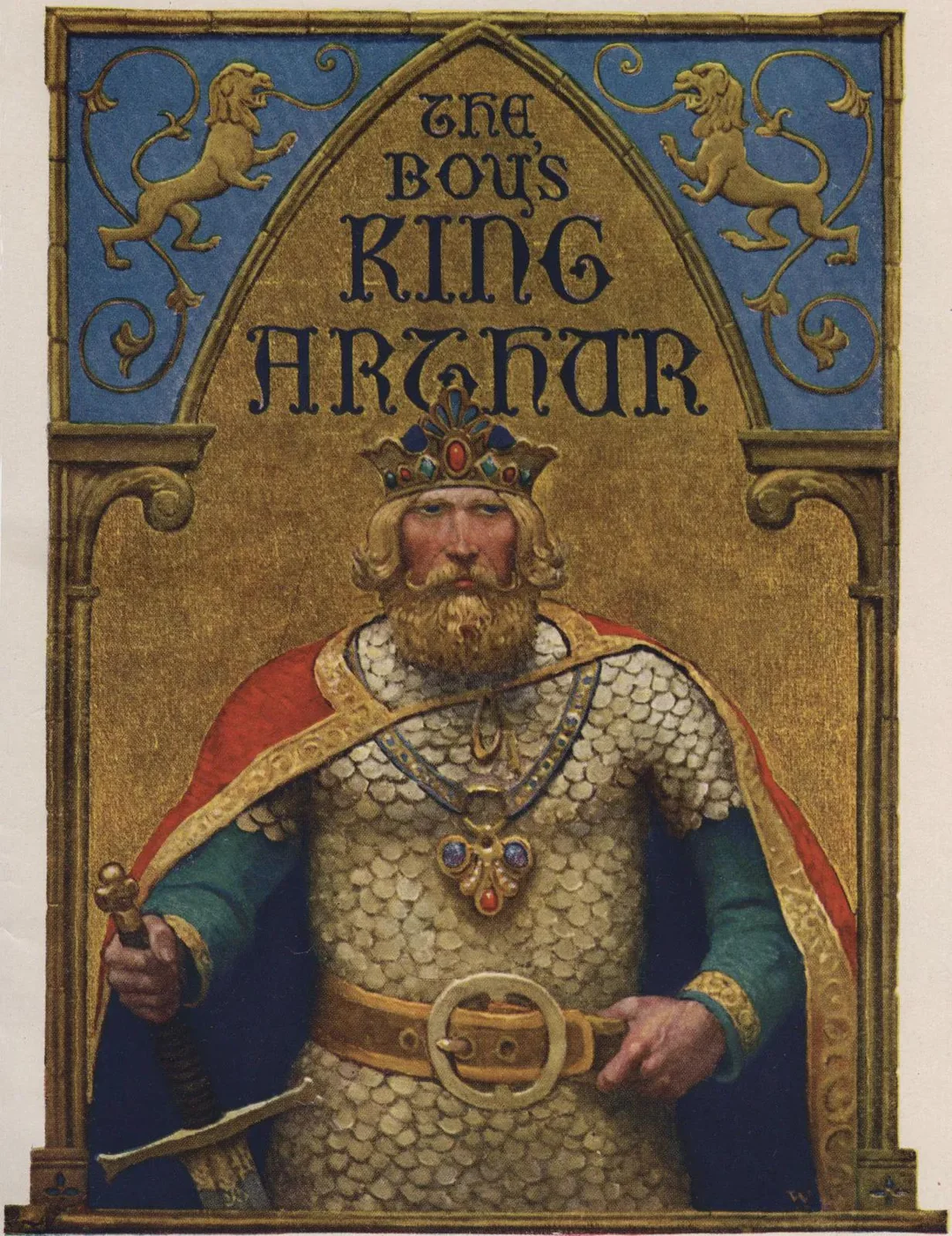
The Trojan War — his regrets — reminded me of my visit to Tintagel, where I could feel the echoes of 'human vice.' King Arthur's remorse, and his knights'. One of my ancestors was a tenth-century general — and sometimes, in my meditation and dreams, there were moments I could feel his weary soul and tired body on horseback, the life he led relying solely on the horse's body as one with his own on the battlefield. Numerous ones. You cannot help but wonder about such a man's regret — the countless bodies, in the name of justice and peace... and to what end?
III. The Surrender
There is one scene that stuck with me.
Matt Damon's Odysseus — after everything, after the schemes and the fighting and the losses — simply surrenders. He throws himself onto a small floater, a scrap of wood on an indifferent ocean, and gives himself to the waves. Let the sea carry me home, or let the god of the sea take me altogether. Total surrender. This-or-death surrender.
If you have read Joseph Campbell's hero's journey, you will recognise the moment instantly. The belly of the whale. The abyss. The point where the hero stops striving and lets go — and only through the letting go is the return made possible. We are all main characters of our own lives. And we play a character, each moment.
My friend Saras told me today: hold the perspective that these are all experiments in the universe. Whatever we experience — joy, peace, bliss, love, pain, regret, fear, the outcome we did not want — all of it is transitory. An extraction of a point in time. Pass the test, and we move on to the next life scenario. Life seen as a trajectory of multiple possibilities.
I find myself drawn to the way some interpretations of quantum physics gesture at this — the idea that observation shapes reality; that re-observing the past differently can shift the trajectory of present and future, because we step onto a different path among many possible ones. The wormhole theories, too — crossing between times through a tunnel in the folded planes of the universe. I am not a physicist, and I will not pretend the science is settled. But as a metaphor for a human life, it rings entirely true to me: change the story you tell about your past, and you change the trajectory you are on.
Odysseus on his floater is exactly this. He stops trying to author the outcome. He surrenders the pen — and only then does the current turn toward home.
And the scene where he finally returns — he says his death will be exile... the family will go to the far west, and he will pay his tributes. I sat with that one a long time.
Side note re: change the story you tell about your past, and you change the trajectory you are on. (this section was written with the help of AI)
Quantum physics really does say that observation matters. In the famous double-slit experiment — confirmed with single particles as recently as 1989 — a particle behaves like a spread-out wave of possibilities... until it is measured. Then the universe, so to speak, commits. One outcome. That much is a century old and rock solid. Why it happens is what physicists still argue about — and that argument is where my belief lives.
The skeptics say 'observer' simply means a detector. A physical interaction. Not a conscious mind. On their reading, consciousness shaping reality is poetry trespassing on physics.
But the dissenters were no cranks. John von Neumann (1932) and Nobel laureate Eugene Wigner (1961) argued that consciousness itself collapses possibility into fact. John Wheeler's 'delayed-choice' experiment — proposed 1978, performed 2007 — showed that how we measure a particle now appears to reach back and shape what it was doing before. He called it a participatory universe. Feynman (1948) proved a particle behaves as if it takes every possible path at once. And the 'many worlds' interpretation (1957) holds that every possibility is realised, each in its own branching universe. Multiple trajectories are not mysticism. They are on the blackboard.
The wormholes belong to Einstein (1935): tunnels through folded space-time, permitted on paper, awaiting an exotic energy no one has found. The skeptics say: waiting forever. To that, I say: the black hole waited half a century for its photograph.
I stand with Wheeler. I believe the observer participates. And when I re-observe my past — the grief as a test, the wound as a curriculum — I step onto a different trajectory among the possible ones. Change the story you tell about your past, and your present and future genuinely change. They call it psychology. I call it physics arriving at what the soul always knew. Either way — the trajectory bends.
IV. HOMECOMING. Becoming Oneself, More.
HOMECOMING.
The return to oneself. Odysseus does not come home the same man who left — he cannot. The war unmade him; the wandering remade him. The twenty years were not a delay of his life. They were his life — the trials, the monsters, the temptations, the surrender — each one stripping away what was false until what remained could truly be called Odysseus. Home is not where the journey ends. Home is who you become by making the journey.
This is why the Greeks made us read these stories. Not to memorize the names of gods, but because one day — mid-voyage, mid-war, mid-grief — we would need them.
V. The Performances
In terms of acting, I found Robert Pattinson's performance the most formidable — the most pronounced through the screen. I could see Matt Damon did a lot of inner work; it shows, the way inner work always shows.
Anne Hathaway — elegant, an emblem of the dutiful wife of virtue, her loyalty never shaken — plays Penelope. Surrounded by suitors who cannot wait to take the throne in Odysseus's absence by taking her hand, she waits... and cannot wait for these people to get out of her house. In grief and in uncertainty, she never gives up her hope. She waits for her husband — or should I say, until her son grows old enough to take the throne himself against the suitors. I admired her resilience and strength. Waiting, done with open eyes and intact dignity, is not passivity. It is iron.
And Charlize Theron (such a beauty). And Zendaya — I don't know much about her, but her presence and aura alone, without her opening her mouth, dictate the scene. And Lupita Nyong'o — her short yet powerful scene was impactful; in her interview she was grateful for Nolan's creativity and imagination in casting her and giving her the role. Throughout the film, this was the most diverse cast I have ever seen in terms of representation — a Chinese actor and an actor of Indian background featured as well. A side note, but a note worth making.
VI. My key takeaways
1. Homecoming is becoming: Every trial is a test, and every test passed is a self-recovery. We are not delayed by our detours; we are made by them.
2. Surrender is not defeat: There comes a point in every hero's journey — Campbell knew it, Homer knew it, Nolan filmed it — where the way forward is to let go. This-or-death surrender. And the sea, mysteriously, carries you home.
3. Victory and grief can live in the same body: Odysseus is celebrated in ballads for the very act he cannot forgive himself for. My ancestor on his horse. The knights at Tintagel. All of us wondering, at some point: I did what I had to do... but to what end?
4. Everything is transitory — an experiment of the universe: As Saras reminded me: the painful exercise, the unwanted outcome — an extraction of a point in time. Pass the test, and the next scenario opens. Life as a trajectory of multiple possibilities.
5. Waiting is its own heroism: Penelope does not fight monsters. She holds a household, a throne, a hope, and her own dignity — for twenty years. Resilience is the quietest epic there is.
All in all, I feel more elevated and sophisticated... my breath more worthwhile and purified, just because I have been in the vicinity of this refined, fine work of art by Christopher Nolan and his crew.
Question: What did you take away from The Odyssey — Nolan's, or Homer's, or your own? What is the war you came home from? What did you have to surrender before the current turned in your favor? And who are you becoming, on your way home?
If you have time...




![Life | Greece Sanctuary] Skiathos #Escape](https://storage.ghost.io/c/2a/9e/2a9e2b04-30f6-4166-8010-a3730d2eb719/content/images/size/w720/2026/09/Skiathos.jpg)
![Life] What is your comfort food?](https://storage.ghost.io/c/2a/9e/2a9e2b04-30f6-4166-8010-a3730d2eb719/content/images/size/w720/2026/09/WhatsApp-Image-2026-09-18-at-10.11.32.jpeg)
![Life | London Sanctuary] The Grove: Place of Restoration #Retreat](https://storage.ghost.io/c/2a/9e/2a9e2b04-30f6-4166-8010-a3730d2eb719/content/images/size/w720/2026/08/WhatsApp-Image-2026-08-07-at-21.51.41.jpeg)
Comments ()