Personal Finance | Obsidian Memo] Closing the Circle: The Family Legacy Conversation We Are Not Having Enough - Family Office Example
Inheritance and family legacy don't have to carry darkness and dysfunction. A new framework for how families can pass forward wealth, values, and responsibility — with clarity, integrity, and light. Drawing on a conversation with Christina Wing, Harvard Business School professor.
![Personal Finance | Obsidian Memo] Closing the Circle: The Family Legacy Conversation We Are Not Having Enough - Family Office Example](https://images.unsplash.com/photo-1564679477577-15a98abb4ee8?crop=entropy&cs=tinysrgb&fit=max&fm=jpg&ixid=M3wxMTc3M3wwfDF8c2VhcmNofDl8fGNpcmNsZXxlbnwwfHx8fDE3NzU5MDI4NjV8MA&ixlib=rb-4.1.0&q=80&w=1200)
Reformed Heritage.
Close this circle so the bloodline can be freed into ease.
Carry the future line as keeper and steward — so that peace may return.
Let the worlds collapse so the future can write itself — in purity.
In abundance. In light. And in integrity. - EJ Elena Shin
Reformiertes Erbe.
Schließe diesen Kreis, damit die Blutlinie in Leichtigkeit befreit werden kann.
Trage die zukünftige Linie als Hüterin und Verwalterin – damit der Frieden zurückkehren kann.
Lass die Welten zusammenfallen, damit die Zukunft sich selbst schreiben kann – in Reinheit.
In Fülle.
In Licht.
Und in Integrität. - EJ Elena Shin
Personal Note
Hi All,
Let me start with something a little lighter before we go deep.
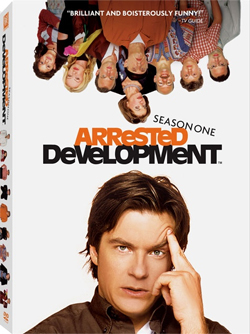
Growing up, I loved Arrested Development. If you know the show, you know the Bluth family — a wealthy, dysfunctional mess of a family where nobody knows where the money actually is, nobody talks about it honestly, and everyone is either gaming the system or completely in the dark about it. The patriarch built an empire and kept every card close to his chest. His children grew into adults who were brilliant in their own chaotic ways but completely unprepared — financially, emotionally, structurally — for any kind of real stewardship. It is comedy gold. It is also, if you look at it straight, a documentary.
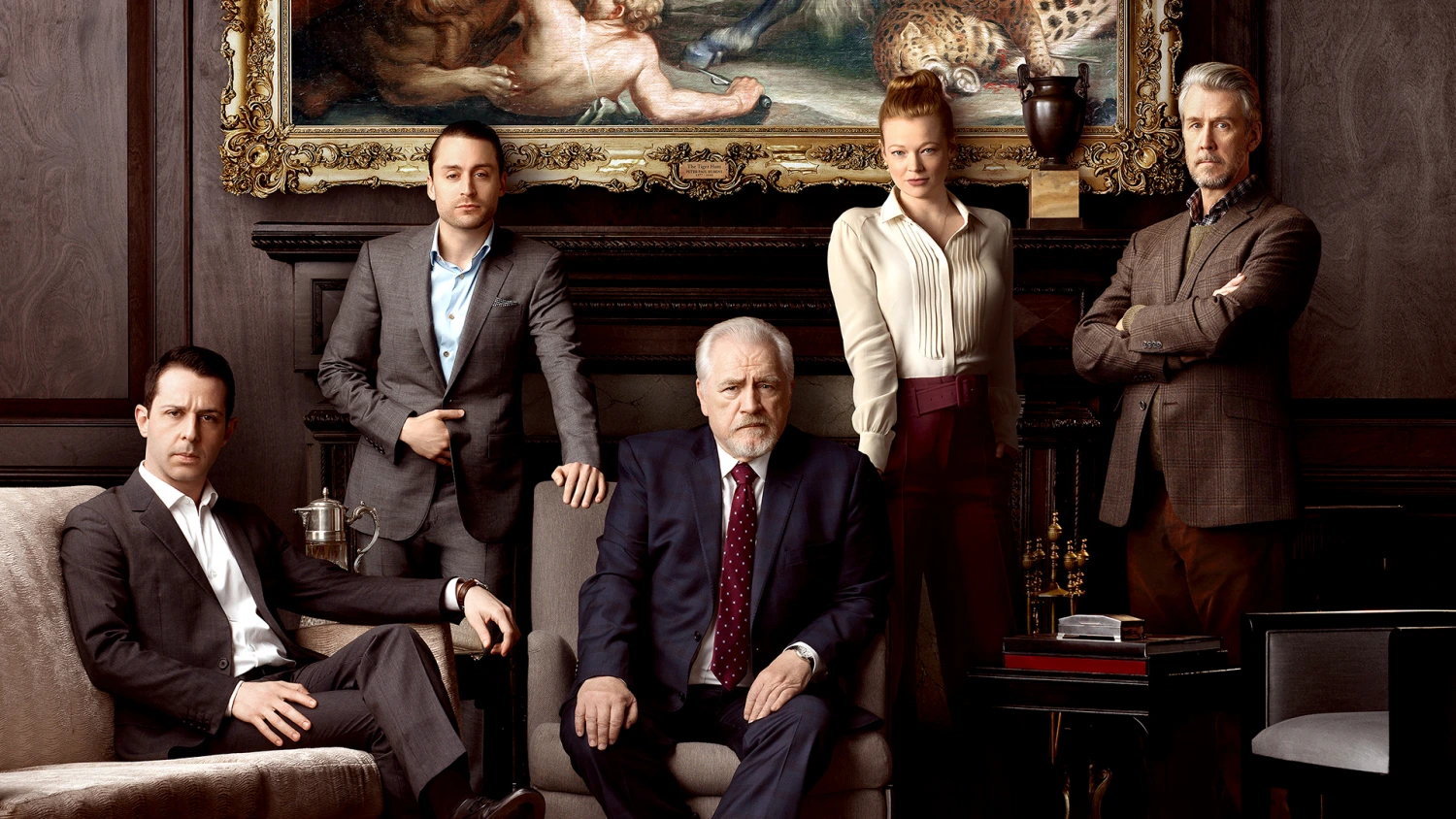
Then there is Succession. Less funny. Much darker. The Roy family as a portrait of what happens when inheritance becomes a weapon — when the conversation about succession never really happens, it just becomes a game of power and manipulation that nobody wins. Logan Roy's children spend the entire series auditioning for a role their father never intends to give them. They are smart, ambitious, capable in their own ways — and completely hollowed out by the ambiguity of what they are supposedly inheriting and whether they are even wanted in it.
I bring these up not to be glib. I bring them up because both of these fictional families are everywhere in real life, and because I believe we can do so much better — and I am genuinely excited about the possibility of that.
Enjoy!
I. Why This Topic Does Not Have to Be Dark
When people hear "family office" or "inheritance" or "generational wealth," there is an immediate gravitational pull toward the darker associations. Secrecy. Suspicion. Stories of corruption, manipulation, coercion. The idea of old money operating behind governments and above ordinary rules. People with more power than accountability. Children used as pawns in dynasties.
I understand where that comes from. Some of it is real.
But I refuse to let that be the only story.
What I am passionate about — what genuinely lights me up — is the other possibility. What it looks like when a family decides to do this with integrity. With transparency. With a real mission and real values and real conversations that most families are too afraid to have. The family office or family trust not as a vehicle for concentrating power but as a structure for releasing the bloodline into ease — carrying the future line as keeper and steward, so that peace can return.
That is the vision. That is what Reformiertes Erbe means to me. Reformed heritage. Not rejecting what came before, but consciously, deliberately choosing to carry it forward differently.
This post is for everyone thinking about that — whether you have material wealth to pass on, or whether your inheritance is a name, a set of values, a community, a way of doing things that matters. Legacy is not only about money.
II. The Business Nobody Wants to Call a Business
Here is a truth that Christina Wing, who teaches the family enterprise course at Harvard Business School, puts plainly: roughly ninety percent of family offices are structured incorrectly.
Not because the families are not smart. Not because they do not care. But because they do not treat the family office as what it actually is — a business.
The moment a family creates a formal structure to manage wealth and legacy across generations, it has created a business. And like any business, it needs a clear purpose, a plan, the right people in the right roles, and metrics that actually mean something.
Instead, what often happens is: someone has a liquidity event, or inherits wealth, and they hire their best friend or their cousin because they trust them. Trust is beautiful. Trust is not a job description. And trusting someone with your personal life is genuinely different from trusting them to grow, protect, or deploy generational capital.
The best family offices — the ones that actually hold up over time — go slow to go fast. They ask the question that sounds almost too simple: what is this money actually for?
Is it for preservation? For growth? For giving away? For creating jobs and building businesses? These are not the same answer and they do not lead to the same team, the same structure, or the same definition of success.
Structure matters because it protects people — the family, the employees, and the mission itself. Separating the investment function from the administrative function from the philanthropic function is not bureaucracy for its own sake. It is how you give each person a clear mandate, a clear way to measure their work, and the dignity of knowing what they are actually accountable for. When everything is tangled together, nobody can answer the most basic question: did we do our job?
III. The Conversation That Is Not Happening
This is the part of a recent podcast episode with Christina Wing that struck me the most — and that I have not been able to stop thinking about.
In many families, nobody talks about the inheritance. Nobody talks about the succession plan. And the bigger the wealth, the more opaque and last-minute the conversation tends to be.
Which means that so many Gen 2 and Gen 3 and beyond grow up in total darkness about what they are stepping into — or being asked to step into, or being quietly excluded from. They see the private plane. They feel the weight of a name. They sense that something large exists. But nobody will name it, quantify it, or tell them what their role in it might be.
And here is what I want to ask directly: how are you supposed to plan your life with that ambiguity?
How do you make career decisions? Partnership decisions? Decisions about who you want to be, what you want to build, what risks are yours to take — when you genuinely do not know what resources or responsibilities you might one day be holding?
The fear behind this silence is understandable. Parents worry: if I tell my children how much there is, they will stop trying. They will lose hunger. They will become the cautionary tale.
But the evidence does not really support this fear. What the evidence does support is that children raised in this ambiguity either guess — and often guess wrong — or they wait, indefinitely, in a kind of suspended animation that makes it nearly impossible to build a real autonomous life. The silence is not protection. It is, however unintentionally, a form of control.
And separately from the money: nobody talks about death either. Nobody talks about what the succession plan actually says, or whether there is one, or what happens to the team, the structure, the assets when the founders are gone. These are not morbid conversations. They are the most caring conversations a family can have.
IV. In Defense of Gen 2 and Gen 3
I want to say this clearly because I feel strongly about it and I have seen it with my own eyes.
The stereotype that Gen 2 and Gen 3 are soft, entitled, without grit or drive — I think it is often profoundly unfair and I think it misses what is actually going on.
Gen 1 founders are extraordinary people. They are also, frequently, extremely difficult people. Intense to the point of their own detriment. Flaws in character that got baked in alongside the strength that built the empire. Controlling. Often emotionally unavailable in the specific way that people who have bet everything and won tend to be. Extremely resistant to change. Exhausting to be around and to be raised by.
So when we look at Gen 2 and wonder why they are different — why they do not have the same raw hunger, the same all-in recklessness, the same willingness to blow everything up in service of the vision — I think we owe them some empathy. They grew up in that household. They absorbed all of it. The weight of the legacy, the silence about the money, the impossible standard of a parent who built something from nothing and can never quite let anyone else touch it.
And still — so many of them are hungry. Hungry to create their own story. To not just carry a name but to do something worthy of it. To take what was built and use it to change something real in the world. I have seen this. It is real.
What Christina says: what they need is not lower expectations. What they need is a clear invitation. They need Gen 1 to say — genuinely — our family is built on entrepreneurship. That is the thing you are inheriting. Go build something. The form can change. The spirit cannot.
And they need to be allowed to fail. Not catastrophically. But meaningfully. If every mistake is treated as evidence of unworthiness, the rational response is to stop trying anything that could end in a mistake. You produce caution. You produce risk-aversion. You produce people who look like they have no drive when really they have just learned that drive is dangerous in this family.
Give Gen 2 and Gen 3 the information. Give them the invitation. Give them a safe container for failure and a clear sense of what the mission actually is. Most of them will rise to it.
V. What It Could Look Like Instead
This is what Christina shared — a template, a framework, a new kind of family office or family trust structure that is built on a completely different foundation. Not secrecy but transparency. Not control but stewardship. Not ambiguity but clarity — about the money, the mission, the roles, the values, the plan.
Some of what this looks like in practice:
- Start with the mission, before anything else: What is this structure actually for? What are the family's values? What does success look like across generations — not just financially but humanly? This question has to be answered before you hire anyone, create any legal entity, or make any investment decisions. You cannot build the right team without a clear mission. You will just build a team.
- Separate what needs to be separate: Investment management, administrative and concierge services, philanthropic strategy — these are three different functions and they thrive under three different kinds of accountability. Keep them clear. Let each have a mandate. Let each be measured honestly.
- Pay people as if their work matters: Because it does. The talent required to steward generational wealth is being recruited every day by private equity, by hedge funds, by venture capital. The pitch that family offices offer — permanent capital, no fundraising treadmill, genuine autonomy, long time horizons — is genuinely compelling. But only if the reality matches the pitch. Pay competitively. Align incentives with mission. Give people a reason to stay and to push.
- Have the conversation about money: With your children, starting earlier than feels comfortable, with increasing depth as they mature. Not as a disclosure event. As a relationship. As an ongoing, honest, evolving conversation about what the family has built, what it values, and what it hopes to pass forward.
- Have the conversation about death: About succession. About what the estate plan says. About who leads what and what happens when the founders are gone. This is love. This is the most responsible thing.
- Treat the rising generation as partners, not heirs on probation: Include them in governance. Let them make decisions. Let them make some mistakes. Define what entrepreneurship means for their context and hold them to the spirit of it — not as a test but as an expression of shared identity.
VI. Closing the Circle
Reformiertes Erbe. Reformed heritage.
Not a rejection of what Gen 1 built. A conscious, deliberate, luminous continuation of it. Carrying the future line as keeper and steward. Letting the worlds converge so the future can write itself — in purity, in abundance, in light, and in integrity.
This is possible. It is not the dominant story yet, but it is being built in pockets by families who are willing to do the hard work of honesty — with each other, with the next generation, with the people they bring onto their teams.
The Bluths make us laugh because the alternative — watching a family get it so spectacularly wrong without the laugh track — is just heartbreak. The Roys make us uncomfortable because we recognize something in them. The inheritance question handled badly, the conversation avoided for too long, the next generation left holding ambiguity where a plan should have been.
You do not have to be either of those families.
The circle can be closed differently. The bloodline can be freed into ease.
That is what I am working toward. I would love to hear if it resonates with you.
This post was inspired by a conversation with Christina Wing, who teaches the family enterprise course at Harvard Business School and advises families through her private practice, Wingspan. Her work on family offices as businesses — and her advocacy for the rising generation — informs much of what is explored here.
Other resource you might want to check out:
![Leadership] What Rick Rieder Taught Me About Global FI Markets/Macro Before Anyone Else](/content/images/size/w720/2026/04/Rick-Reider.jpg)
![Obsidian Essay | Cooking] My Easter Table: A British & New England Tradition](https://images.unsplash.com/photo-1618418359809-0758e4cc4f3f?crop=entropy&cs=tinysrgb&fit=max&fm=jpg&ixid=M3wxMTc3M3wwfDF8c2VhcmNofDN8fGVhc3RlcnxlbnwwfHx8fDE3NzU0Mjk4NzB8MA&ixlib=rb-4.1.0&q=80&w=720)
![Obsidian Essay] On Finding Maria — and Finding Words for a Childhood](/content/images/size/w720/2026/04/I-am-maria-1.webp)
Comments ()